Iowa
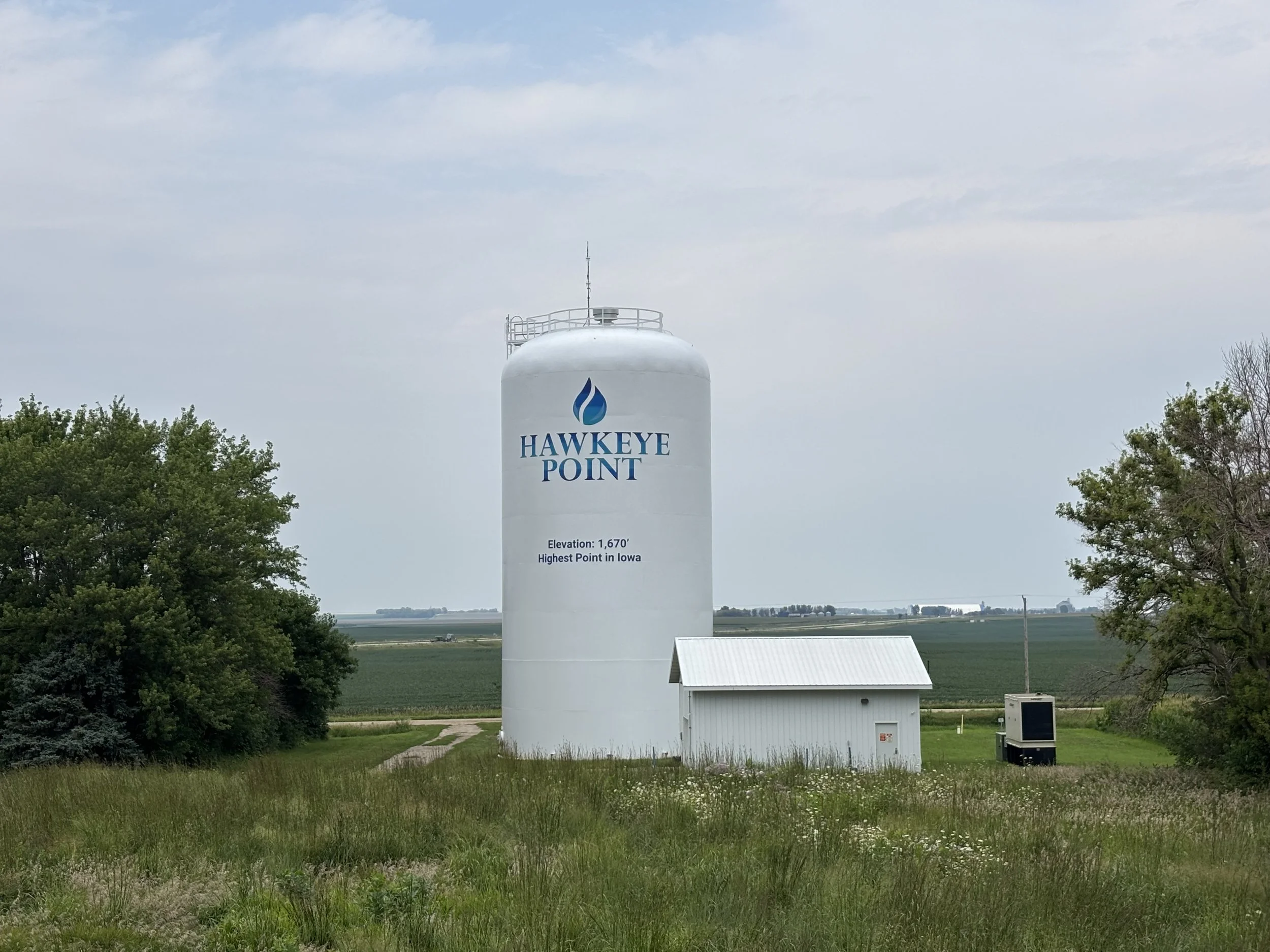
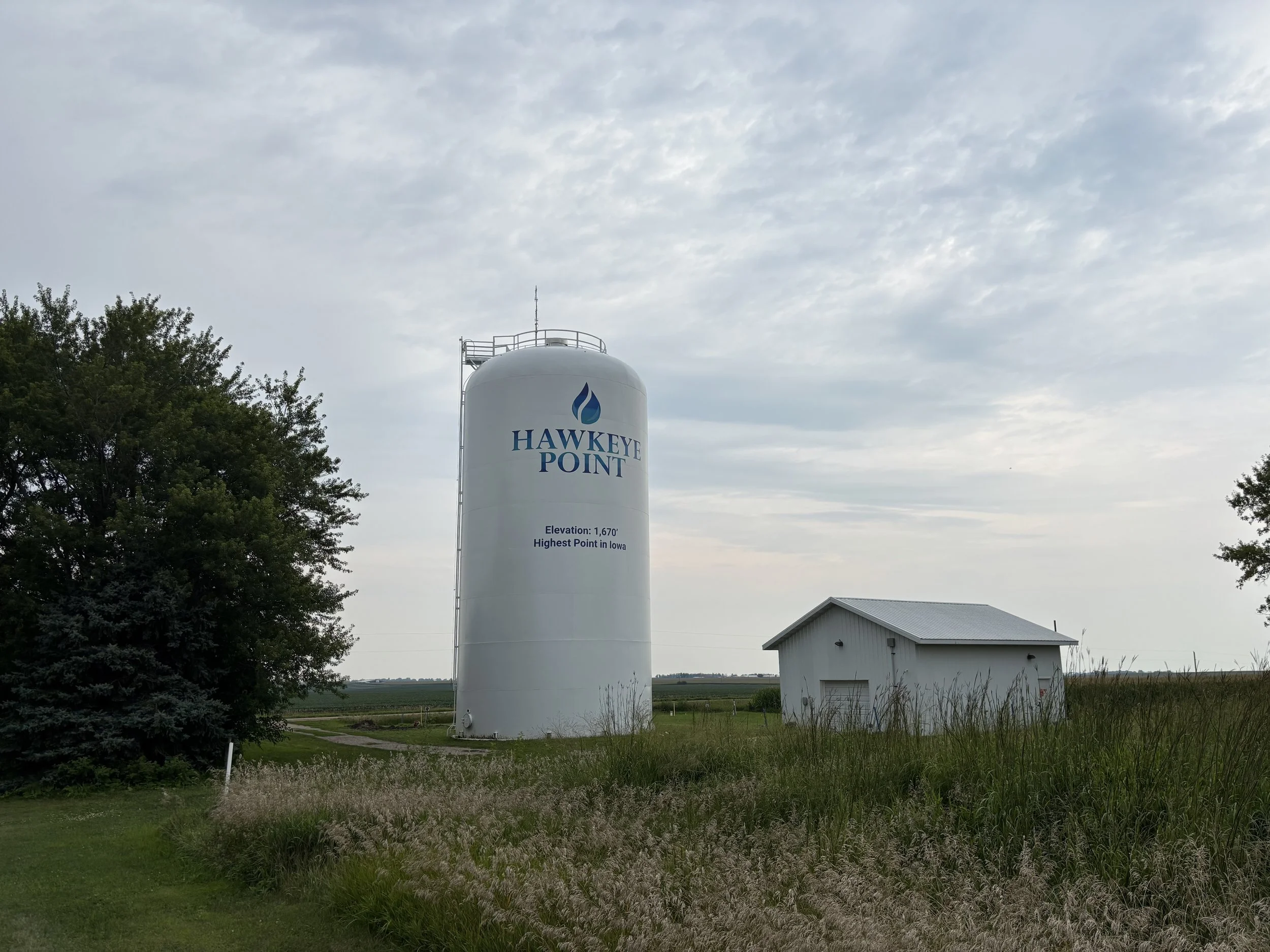
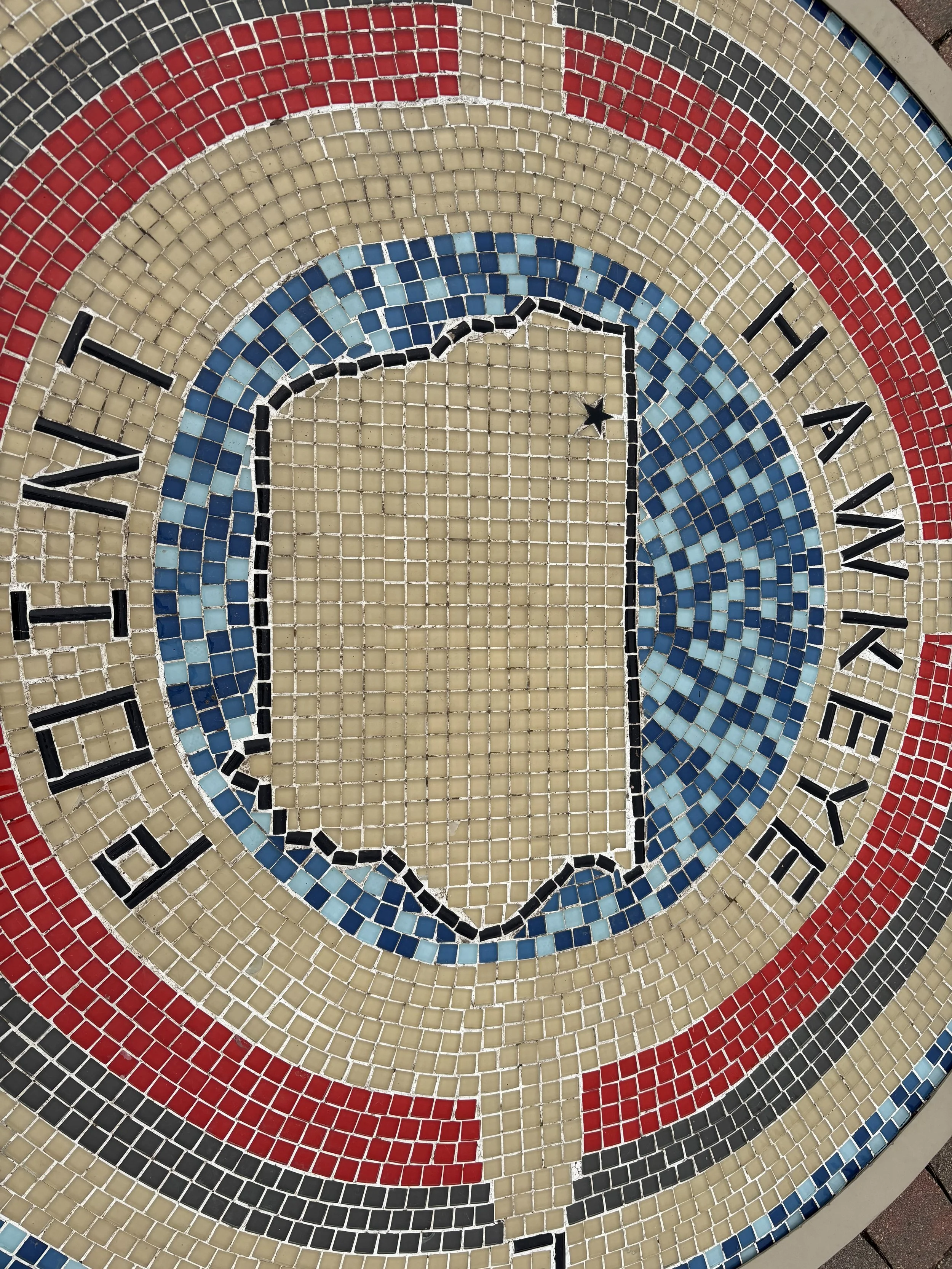
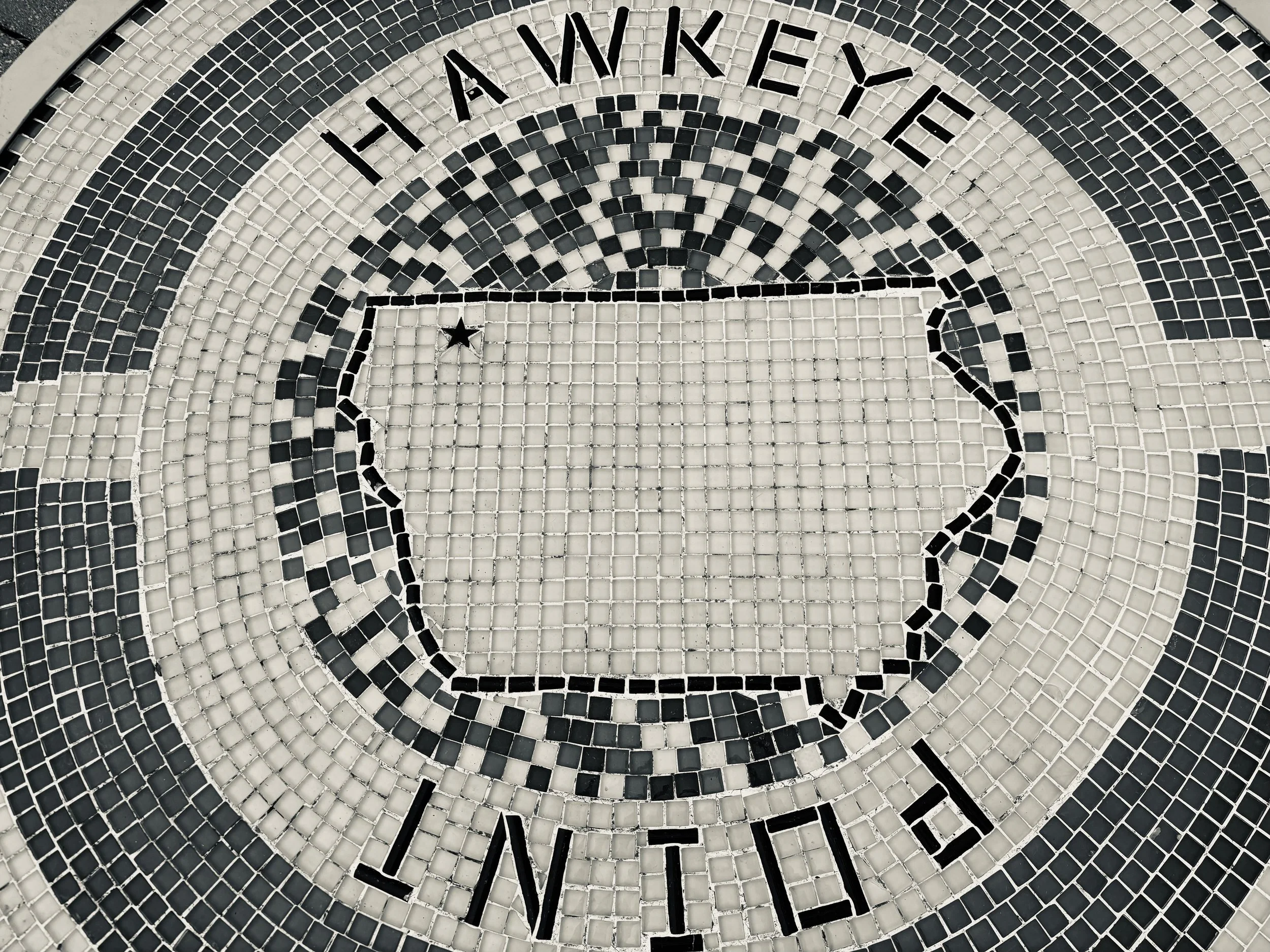
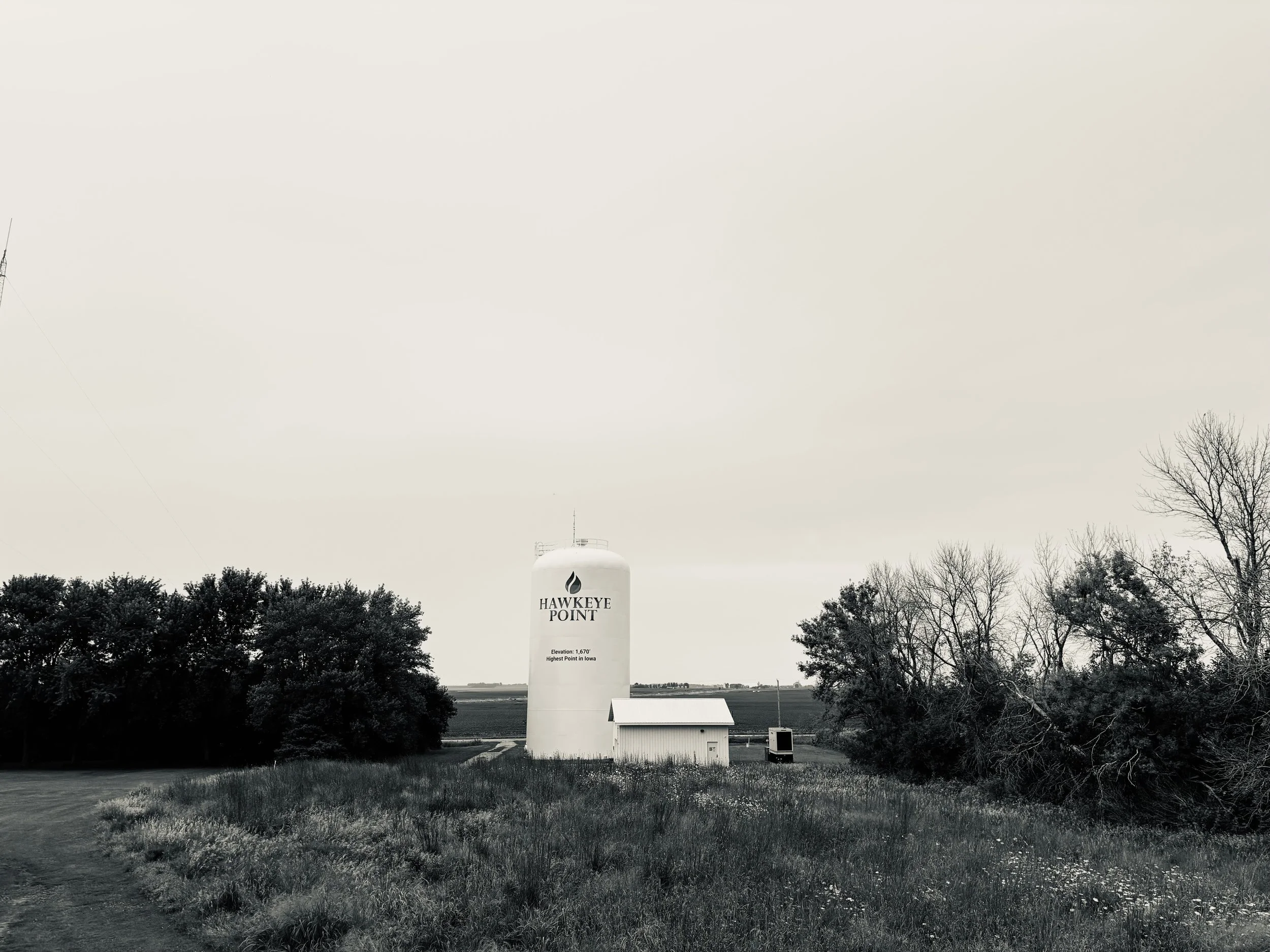
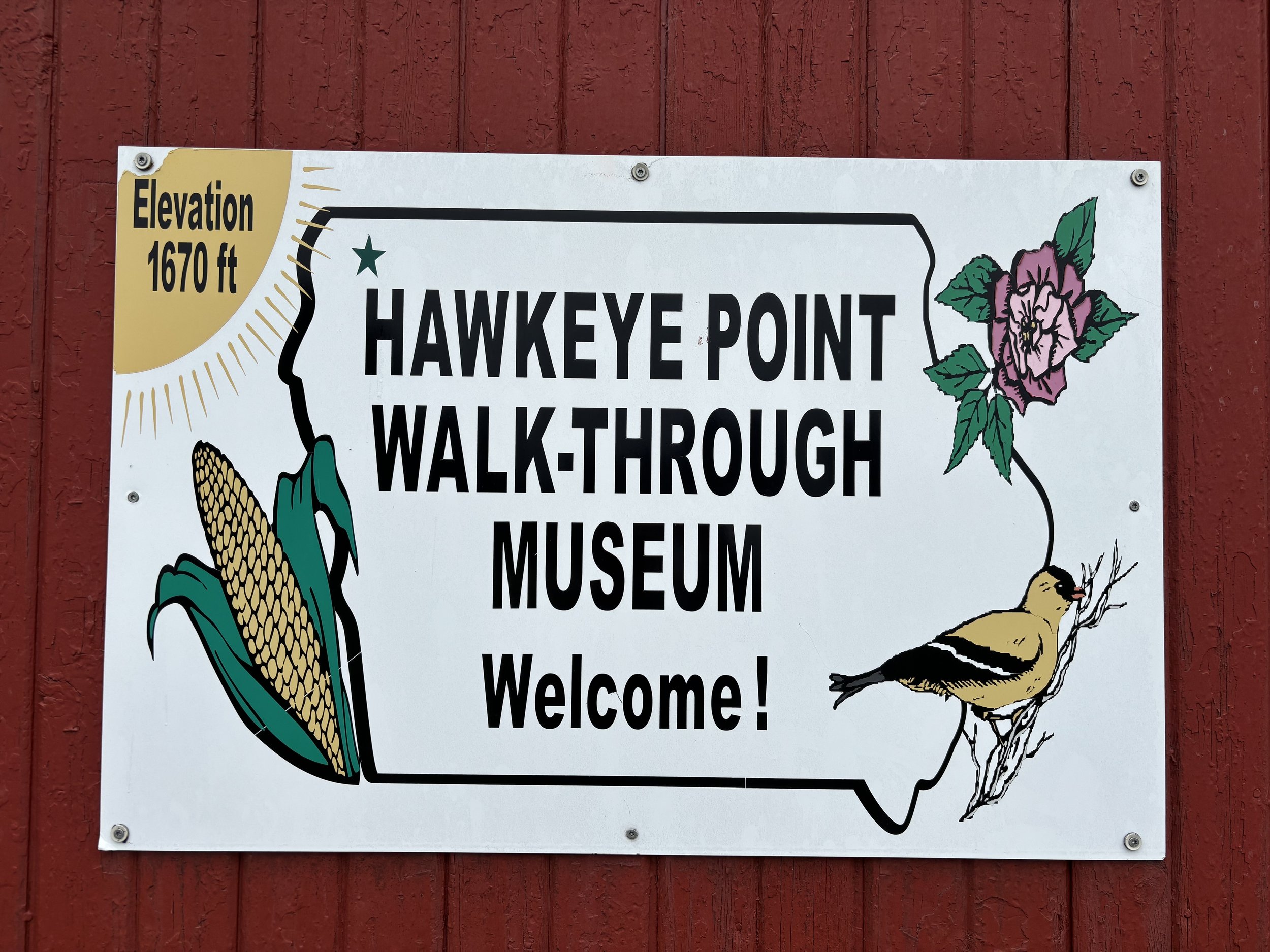
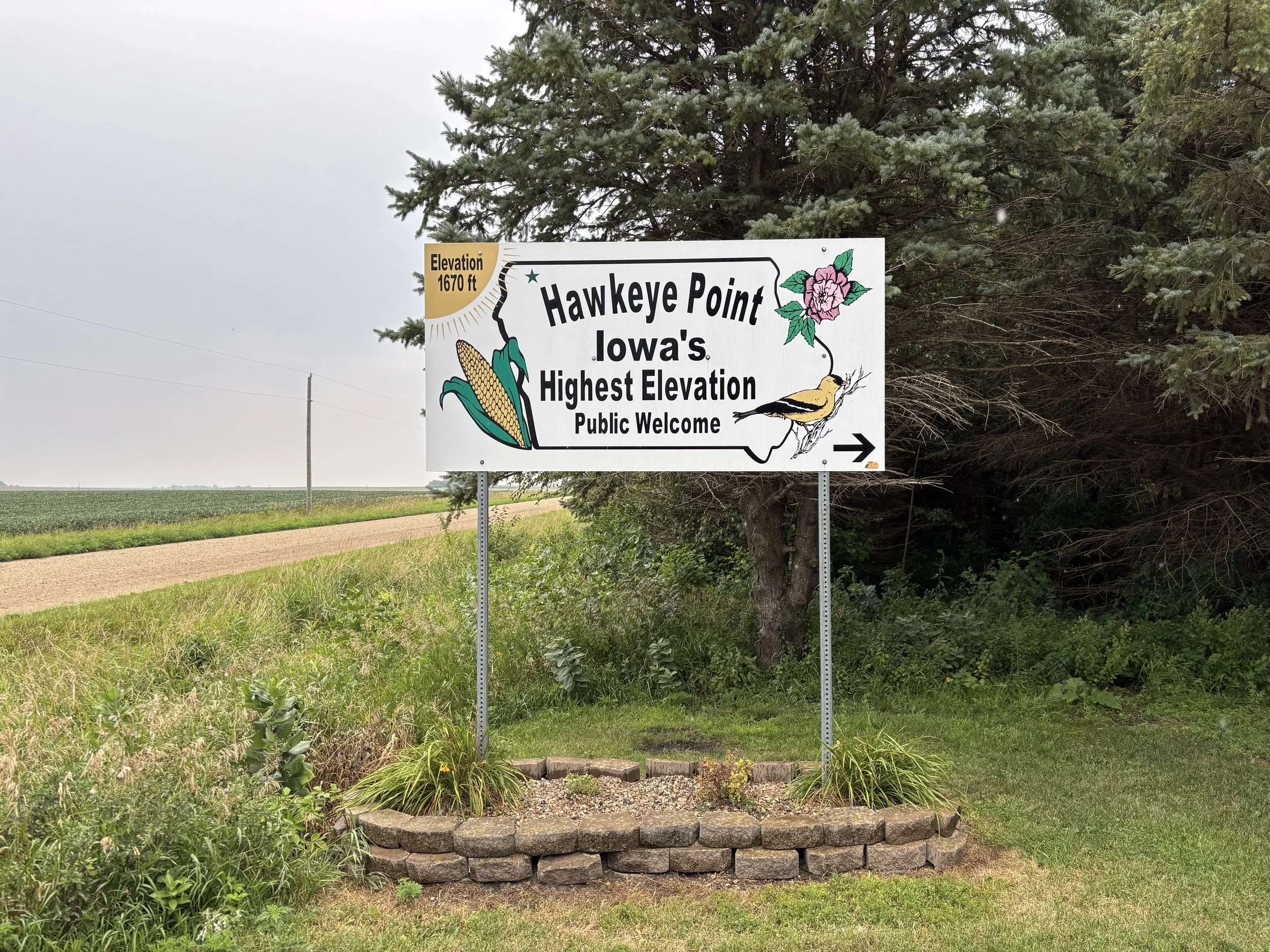
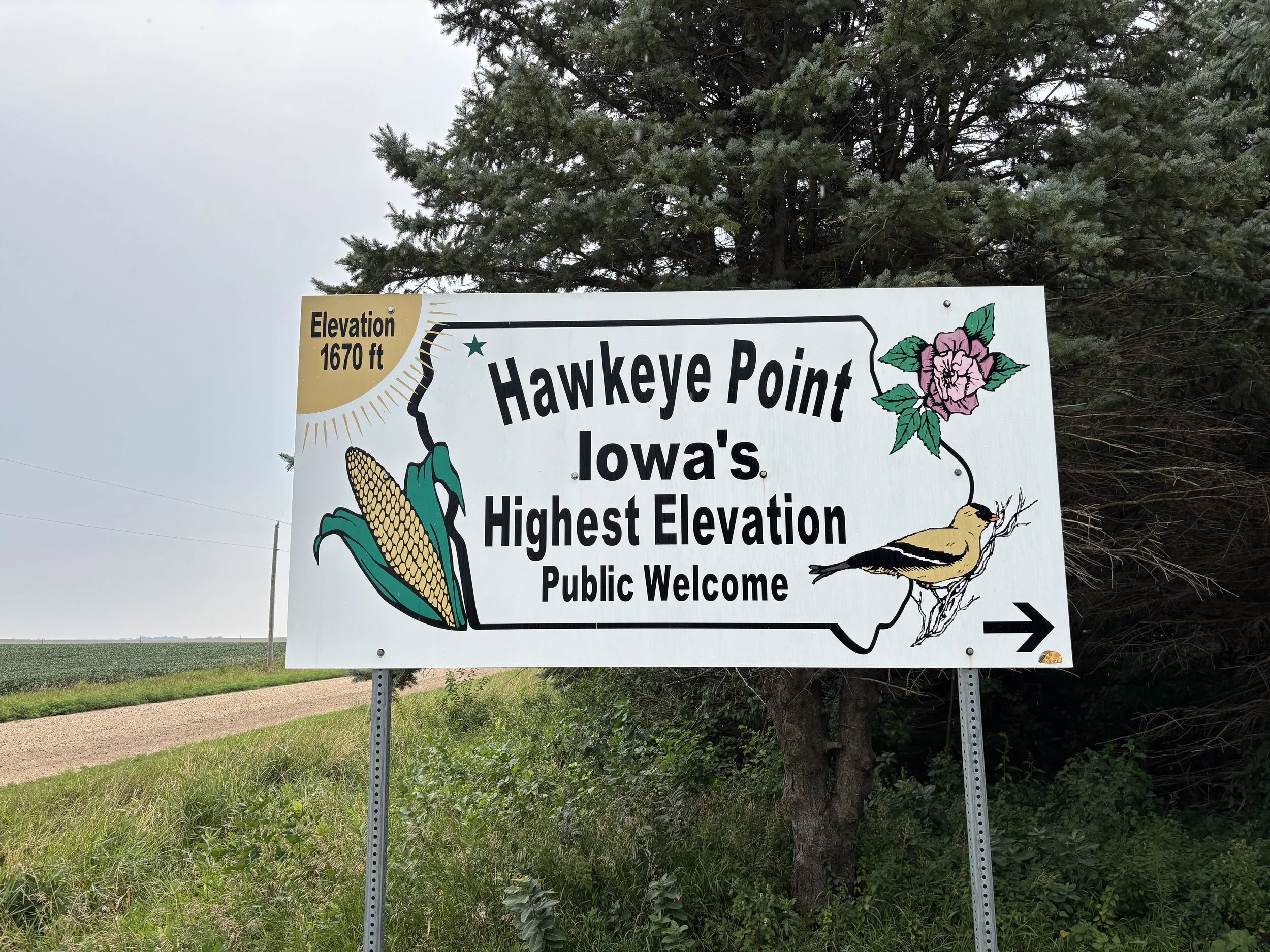
#37 Hawkeye Point, elevation 1,670 ft.
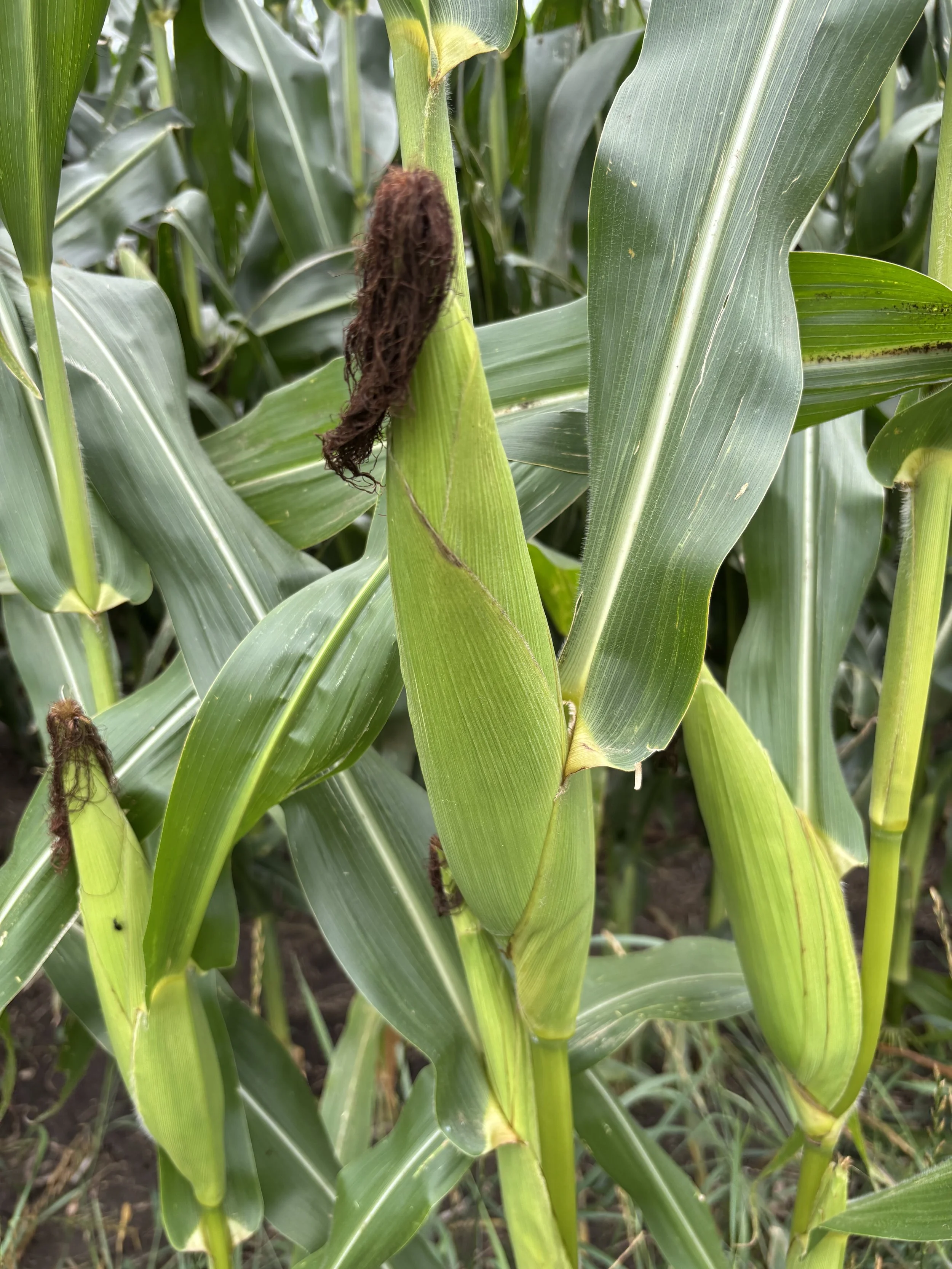
Wilco tributes, hangry teens, and corn, corn, corn!
The two-day drive across Iowa with my daughter brought back Norwegian-laced World Cup fever, if only for a day.
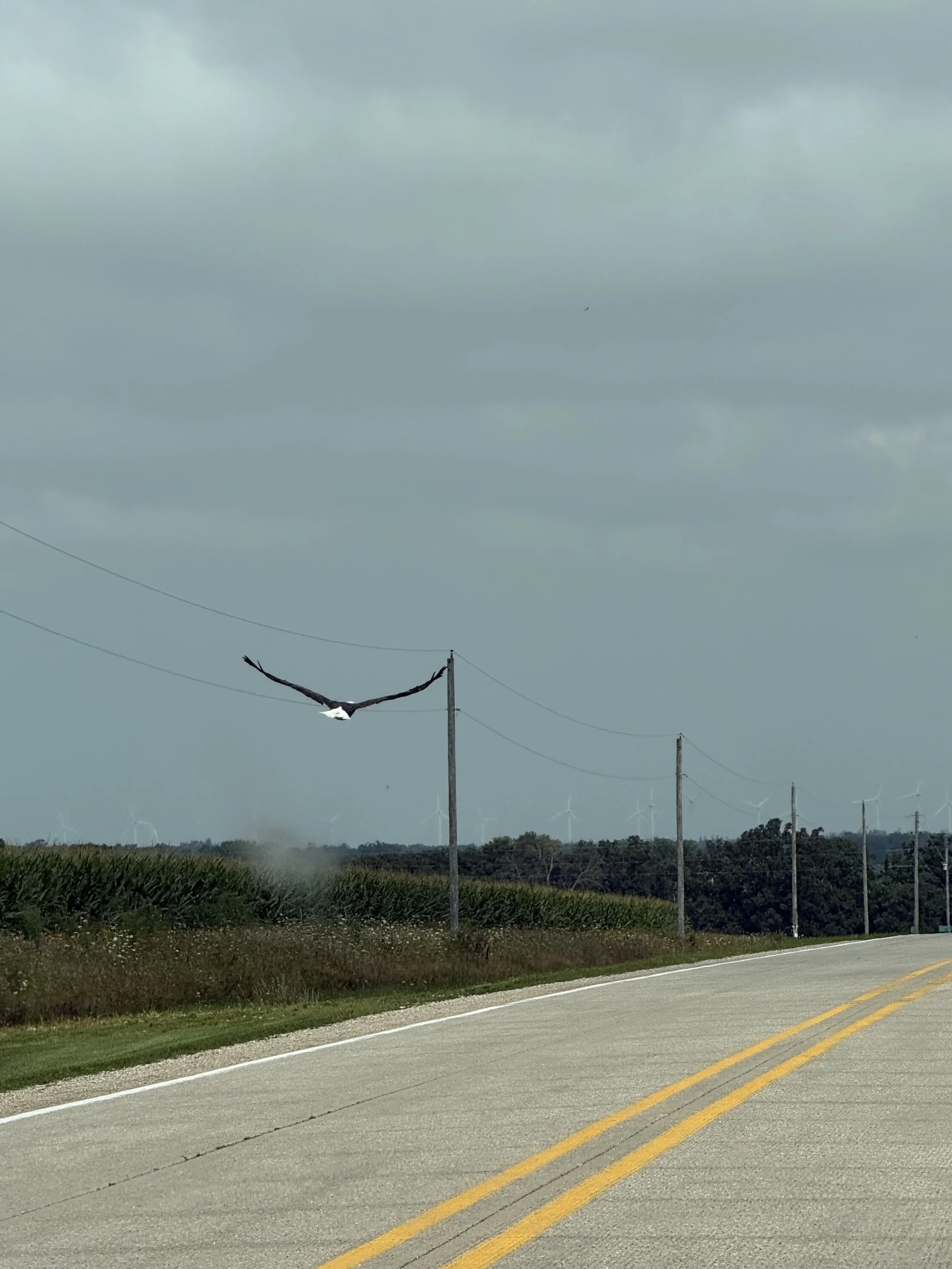
We drove west from Chicago only hours after I had fetched her, grudgingly, in the single-digit hours of late night from a club where Ethel Cain was playing in conjunction with Lollapalooza 2026 (see the Charles Mound page for more). We had a late breakfast at Perkolatr, my appointed Chicago artisinal coffee fix—up the road from the house we were staying at via bus—and drove for a few hours before crossing the Mississippi at Dubuque. Lunch was piping hot savory pastries from a Colombian cafe, enjoyed before we drove due north along the river, passing, in short order, via a series of at first inexplicable roundabouts, a multiacre John Deere factory.
Our first destination after tractor heaven was Effigy Mounds National Monument, where an indigenous people known as the Moundbuilders, working in the Late Woodland Period (1400–750 BCE), built funerary structures—some in the shape of animals—over a widespread area of Iowa, Wisconsin, Minnesota, and Illinois. The mounds are easily perceived from aerial photography but difficult to discern or parse from the ground.
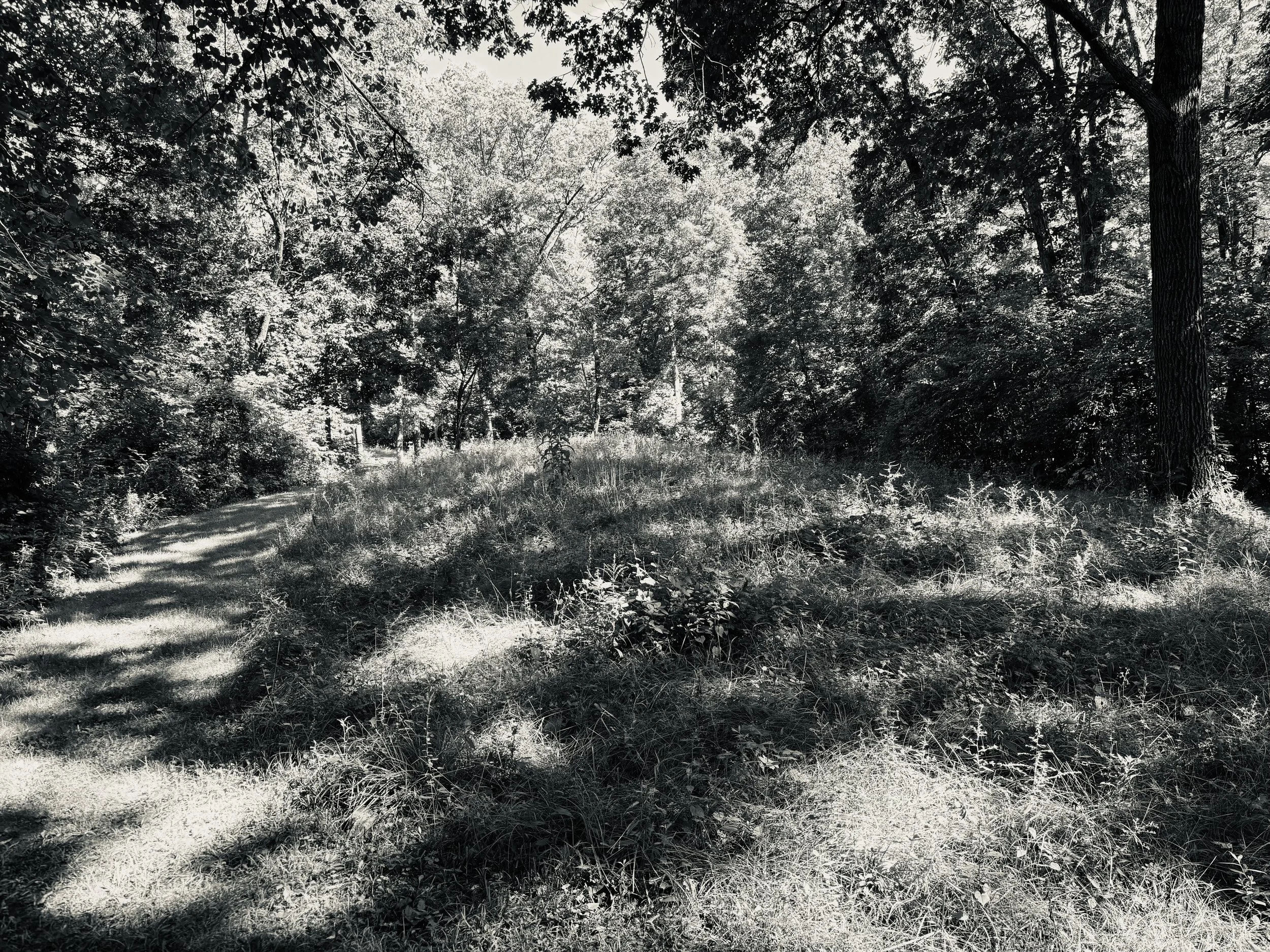
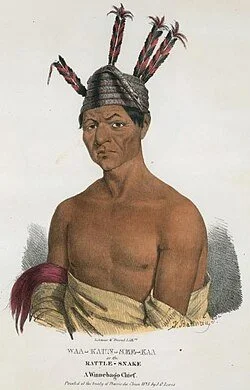
From the monument we drove a short while through the Iowan Alps, a region of rare dust-blown soil accumulations known as loess. Our destination was the small town of Decorah, seat of Winneshiek County, a hotbed of Norwegian cultural remembrance and the site of a major impact crater formed some 470 million years ago (thank you, Wiki). The naming of the town, by tradition, recognizes a Ho-Chunk warrior named Waukon Decorah (son of one Buzzard Decorah), whom Wiki describes as a “diplomatic leader” during the Winnebago War of 1827. This name, in turn, was given to an extinct species of arthropod (Pentecopterus decorahensis) found fossilized beneath the city among the sediment deposited when an ancient body of water flowed into the impact crater.

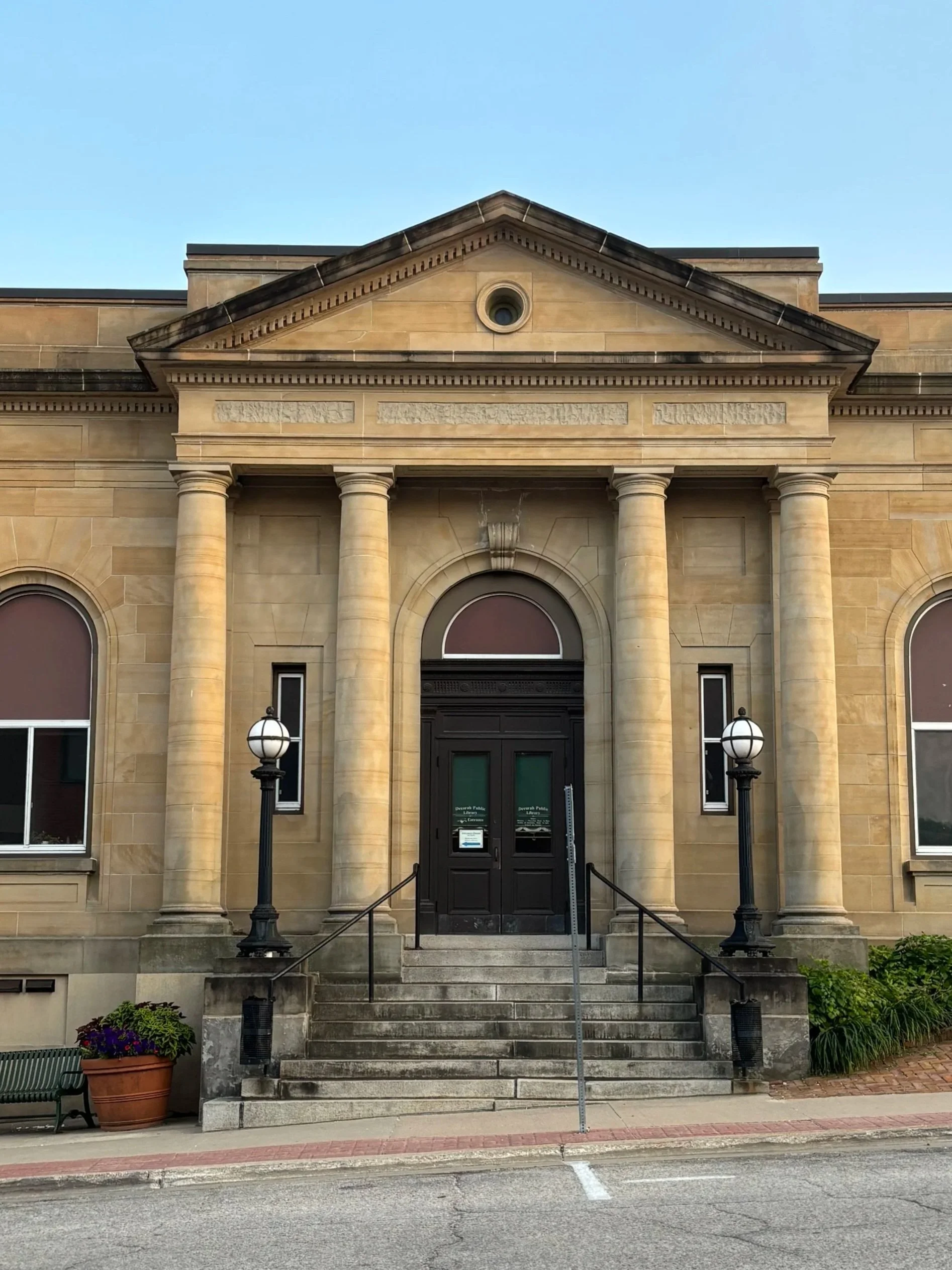
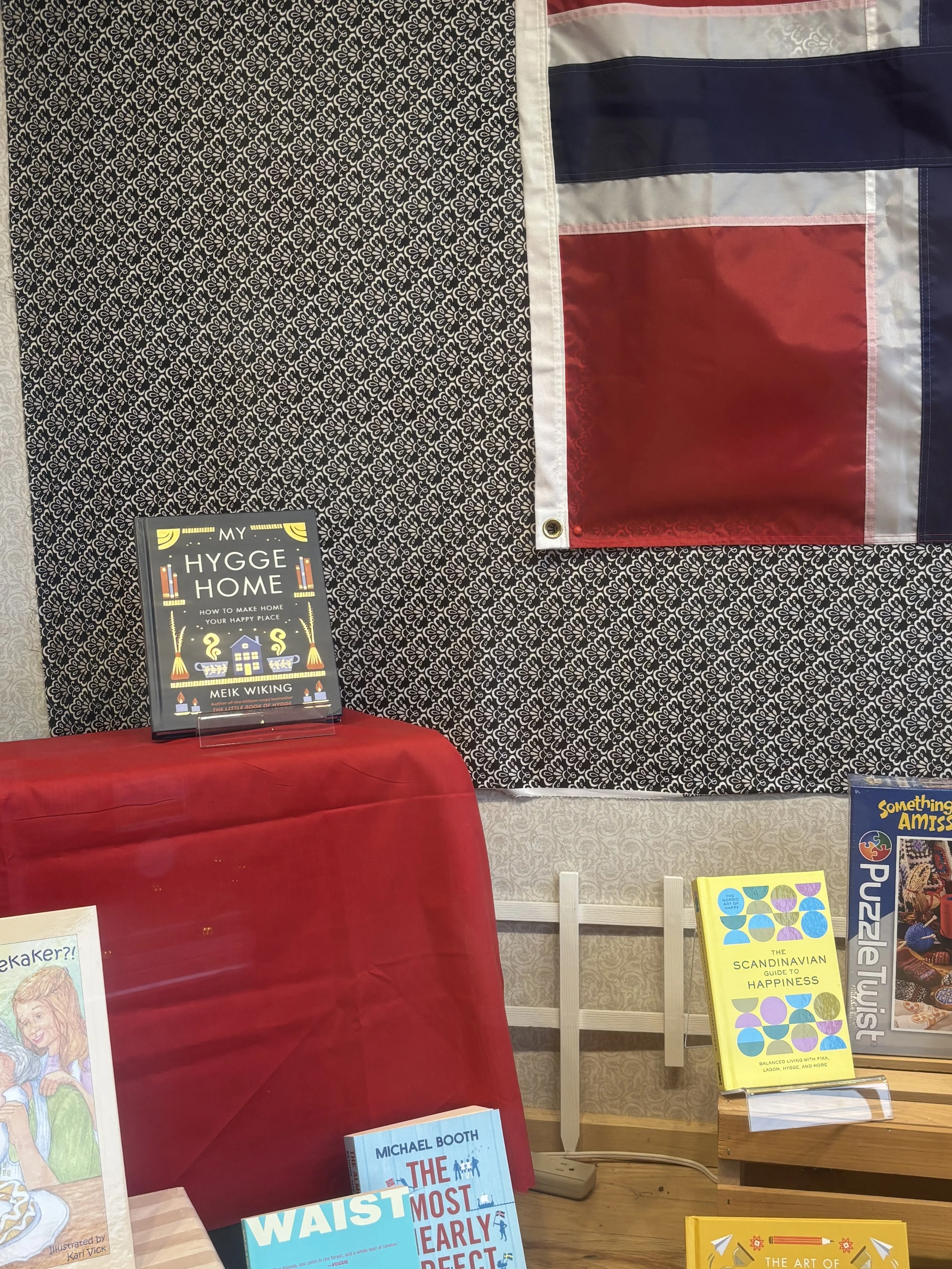
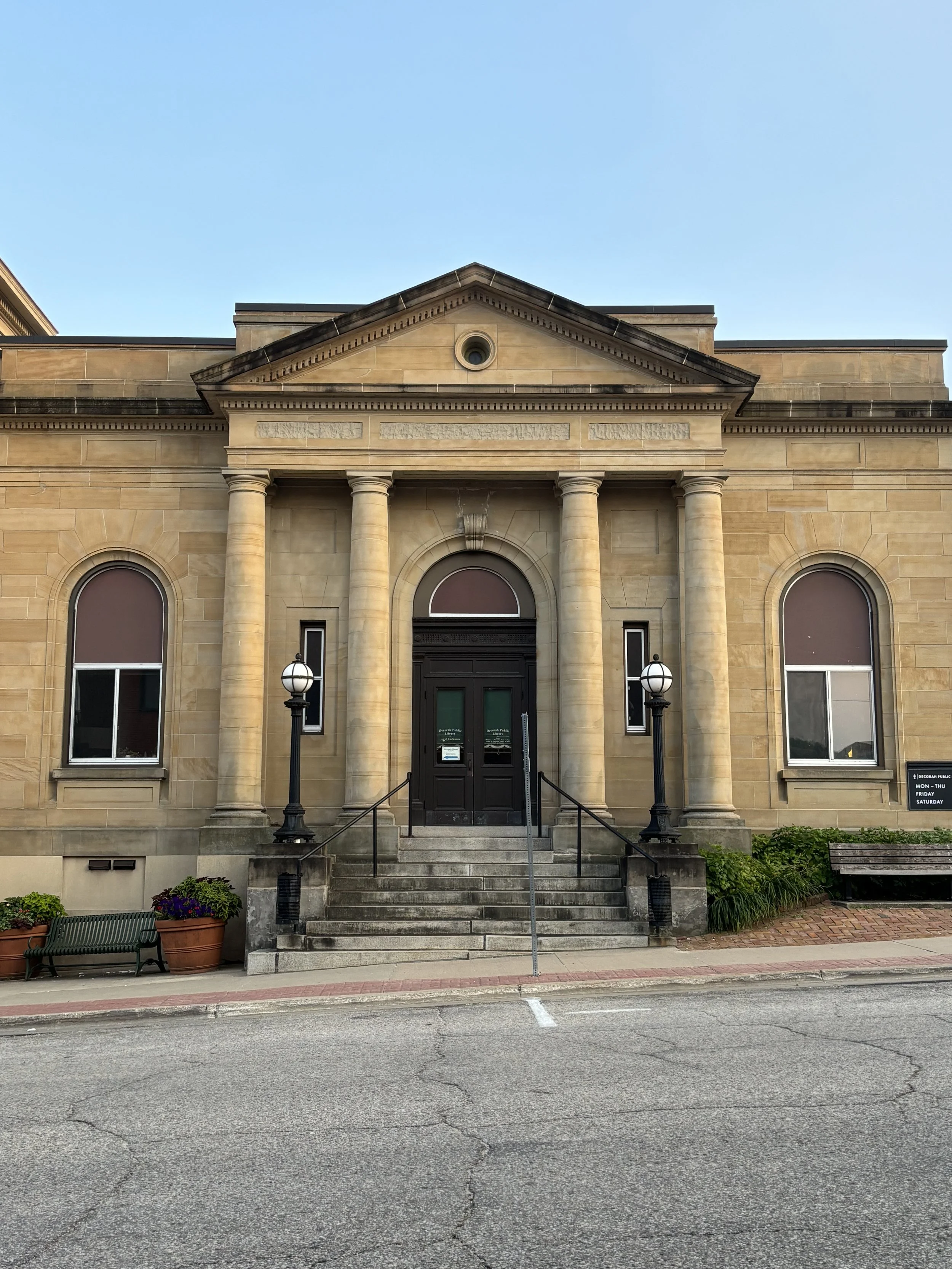
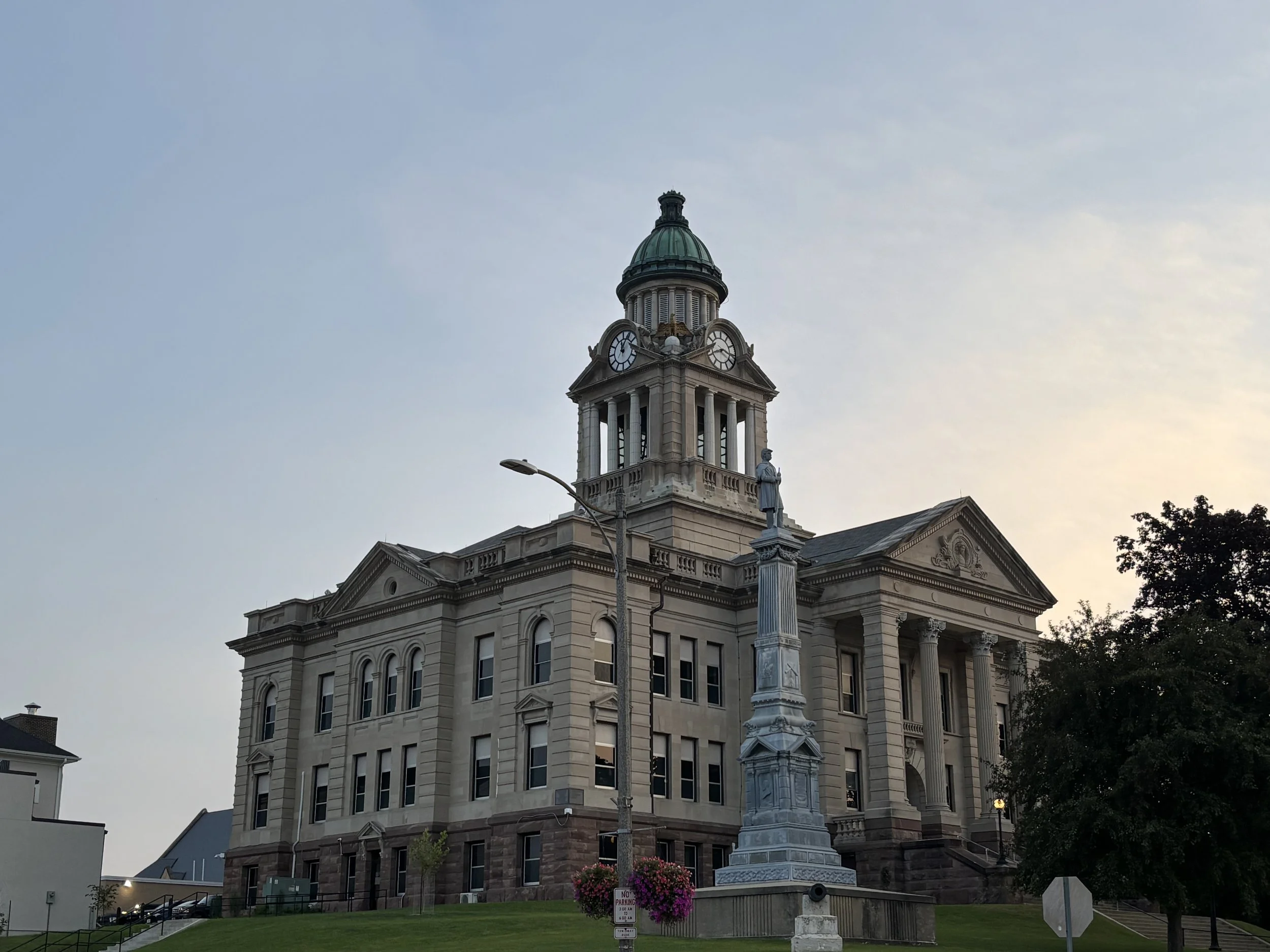
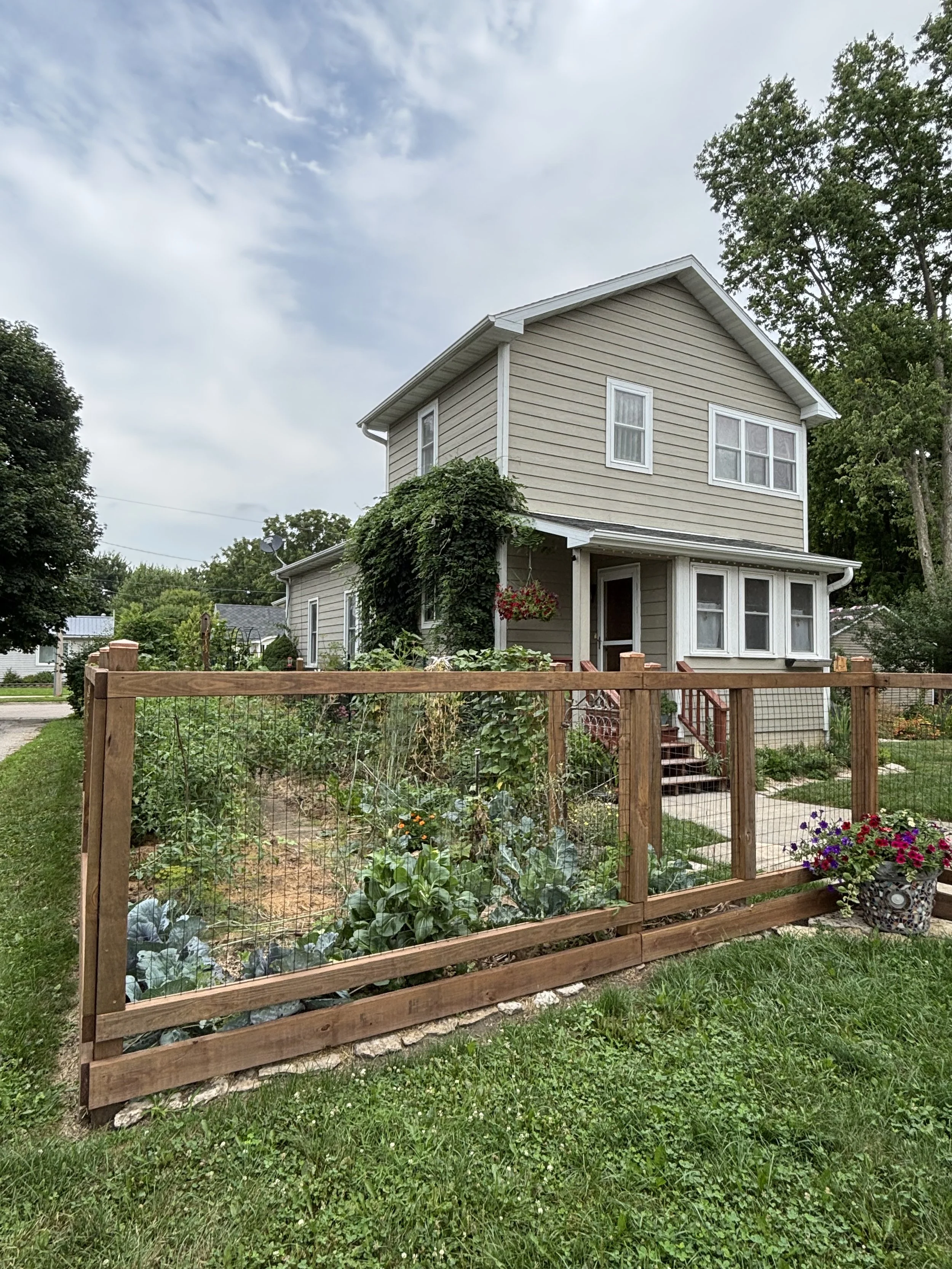
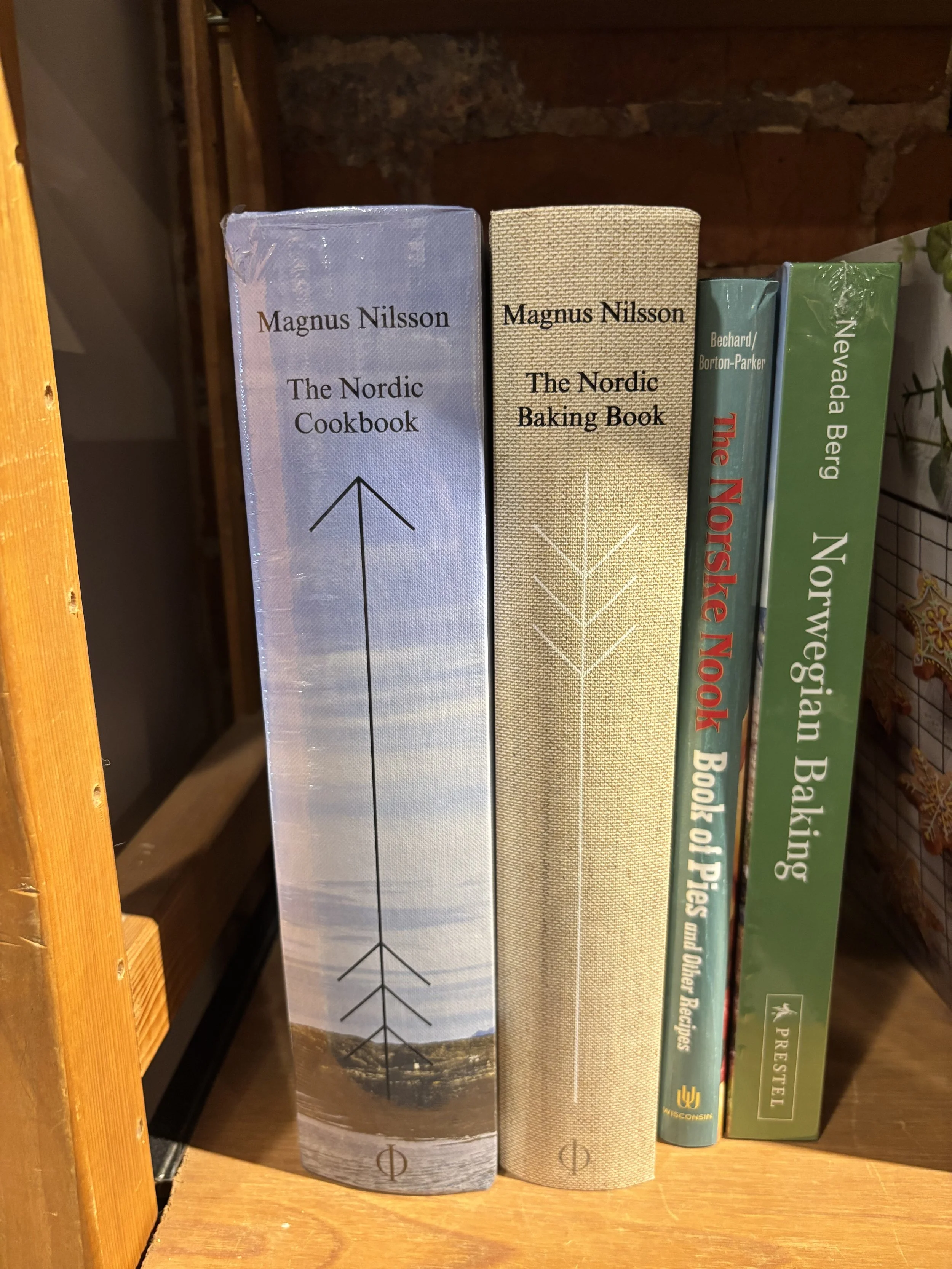
As hinted above, Decorah is home to the Vesterheim Norwegian-American Museum, a cultural center, folk art school, and archive of materials related to the history of Norwegian immigrants. I took a quick spin through the museum while Bea was sleeping and after having spent a quiet morning hour at Impact Coffee, an excellent shop with an odd name whose significance remained unknown to me until I read about the ancient meteor crater. The fragrance of roasting beans followed me along the sidewalk, through the neoclassically infused institutions of small-town America, and back to the rented farmhouse where we were staying.

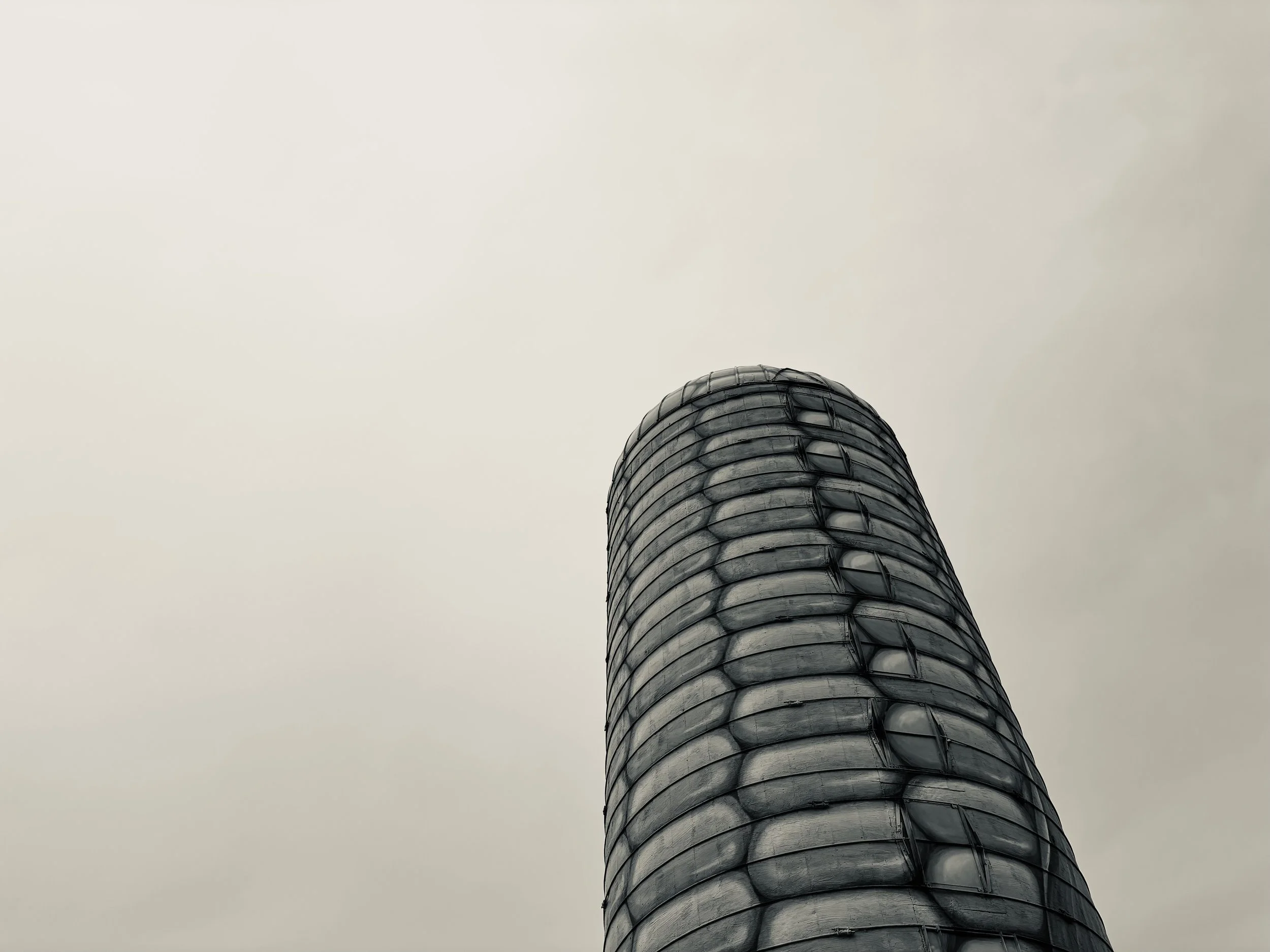
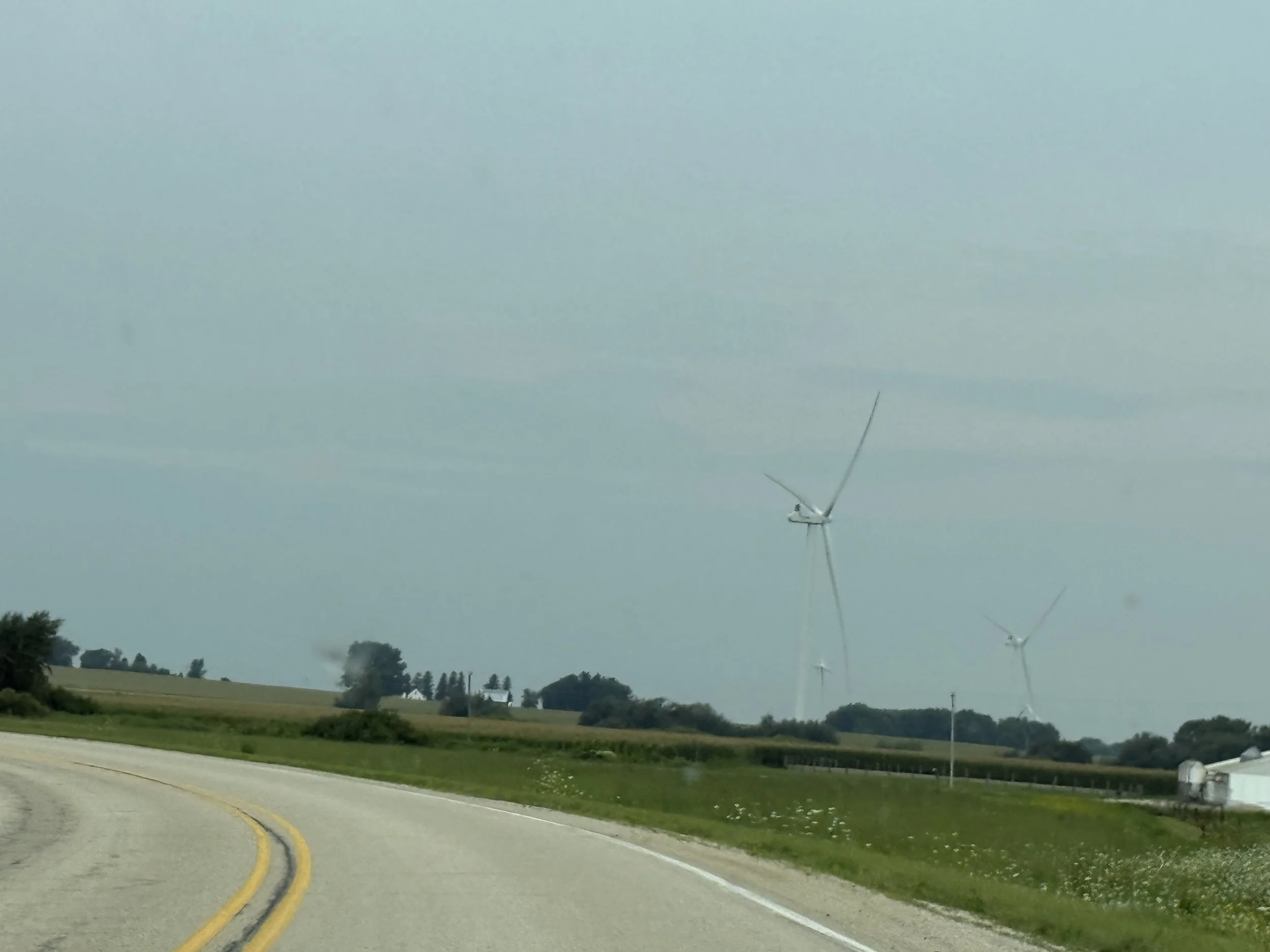
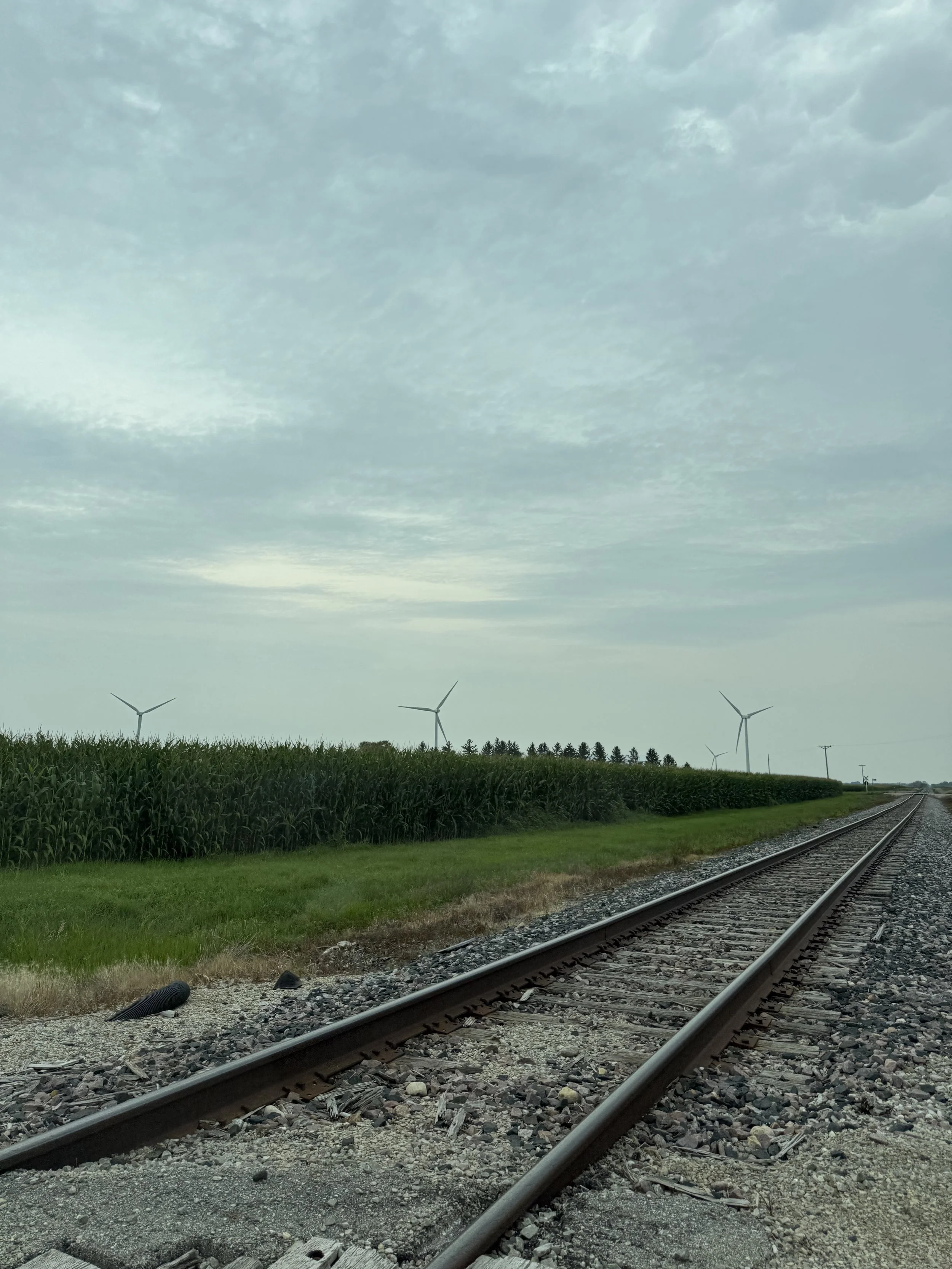
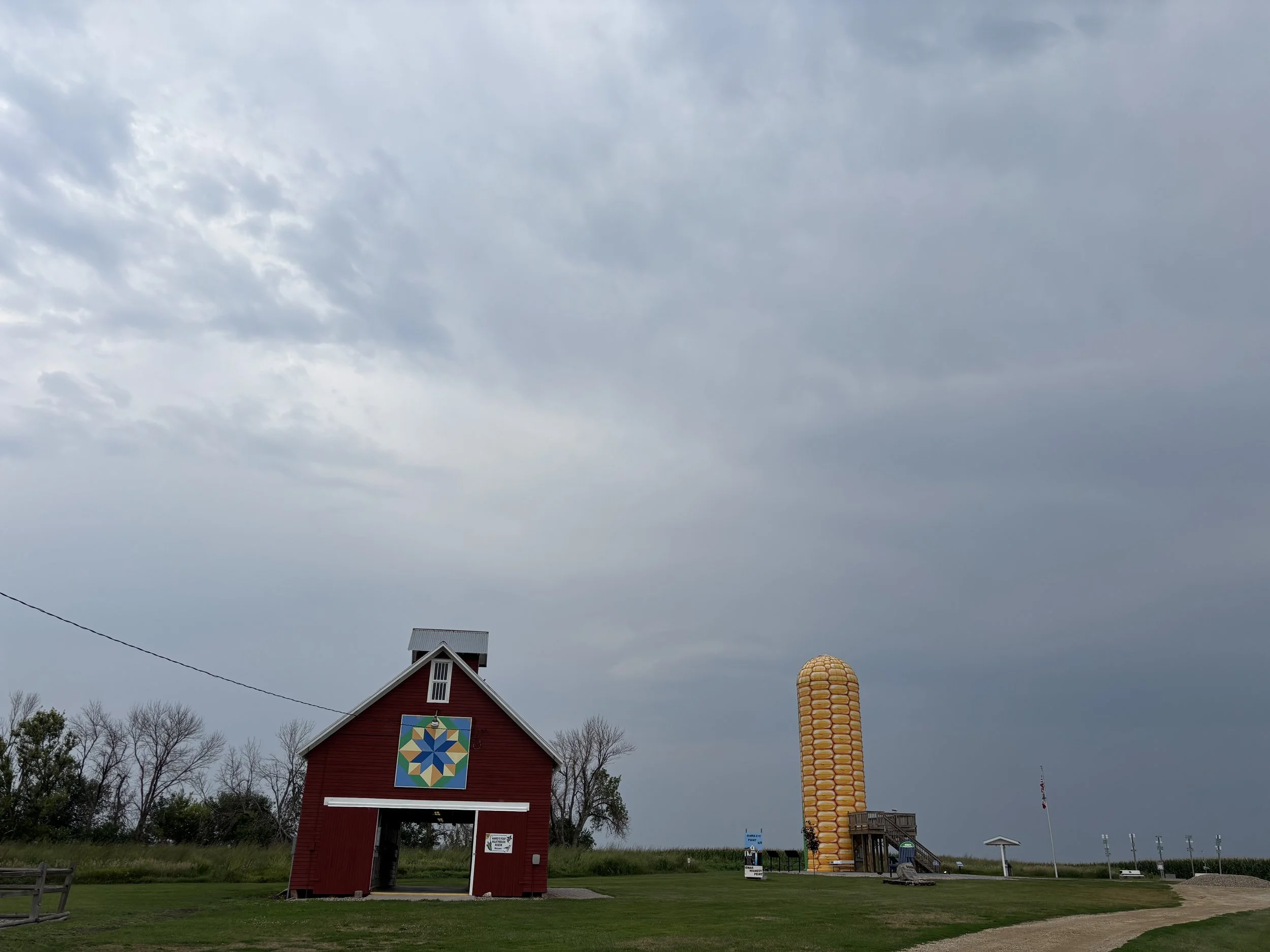
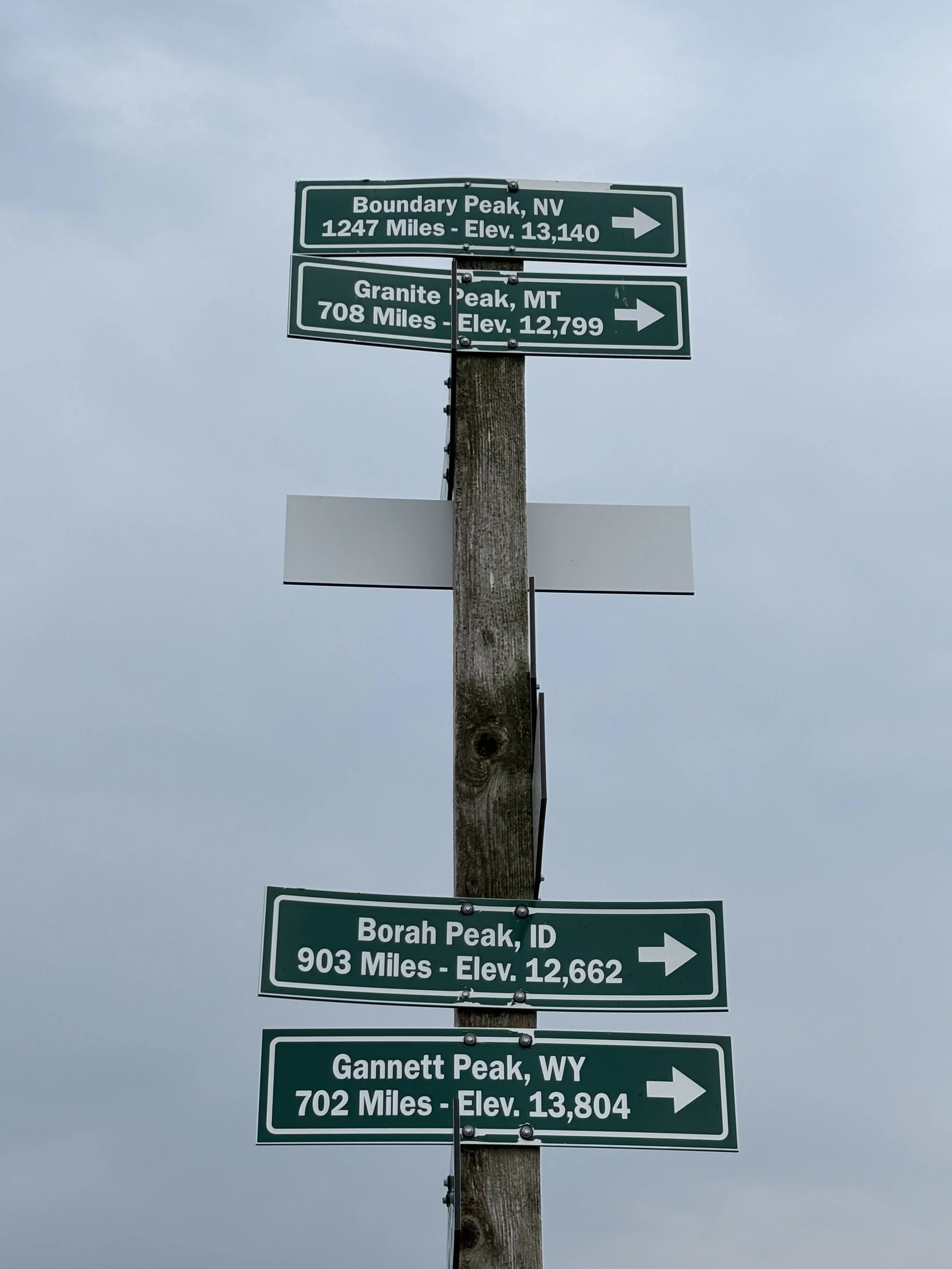
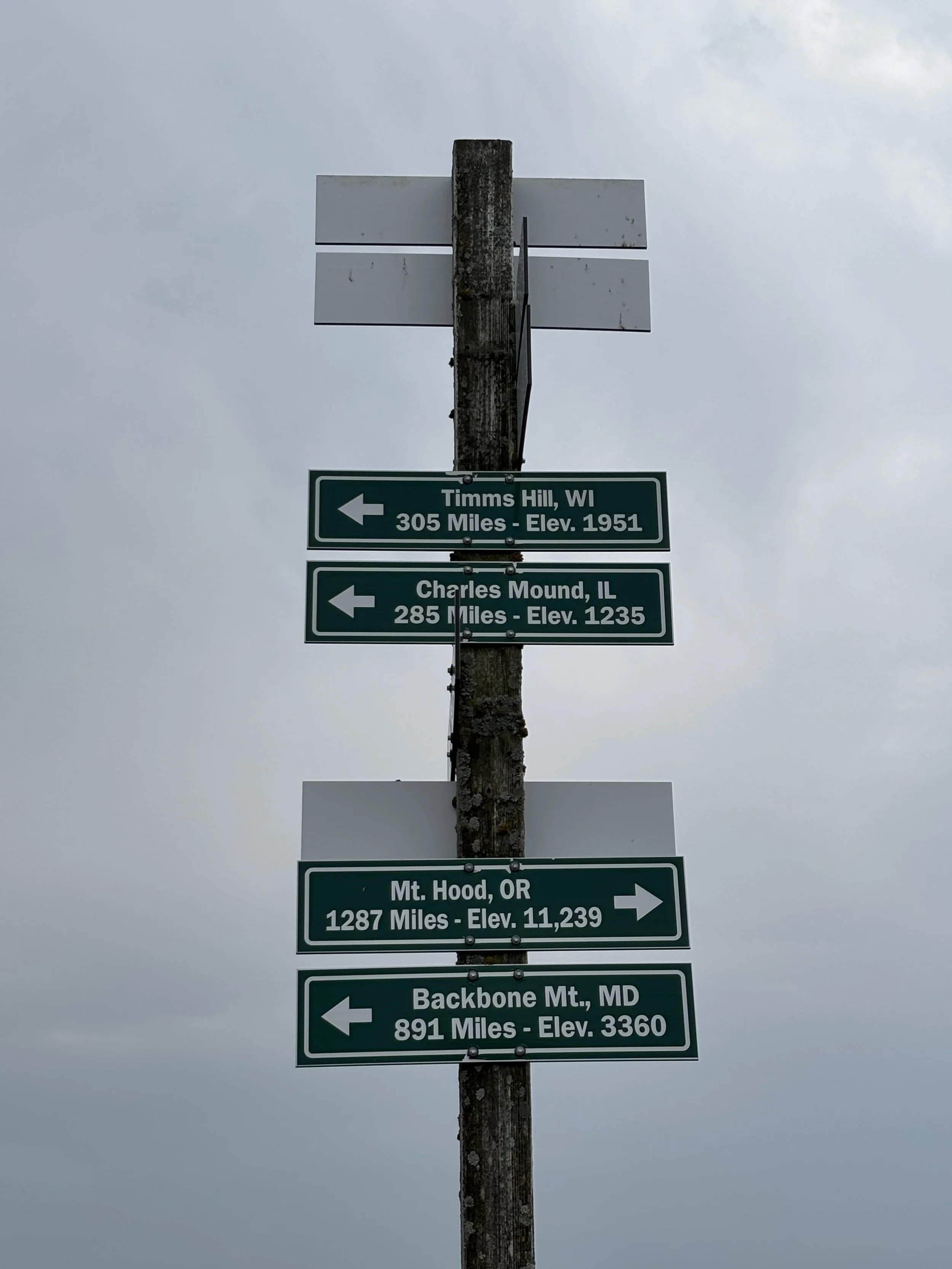
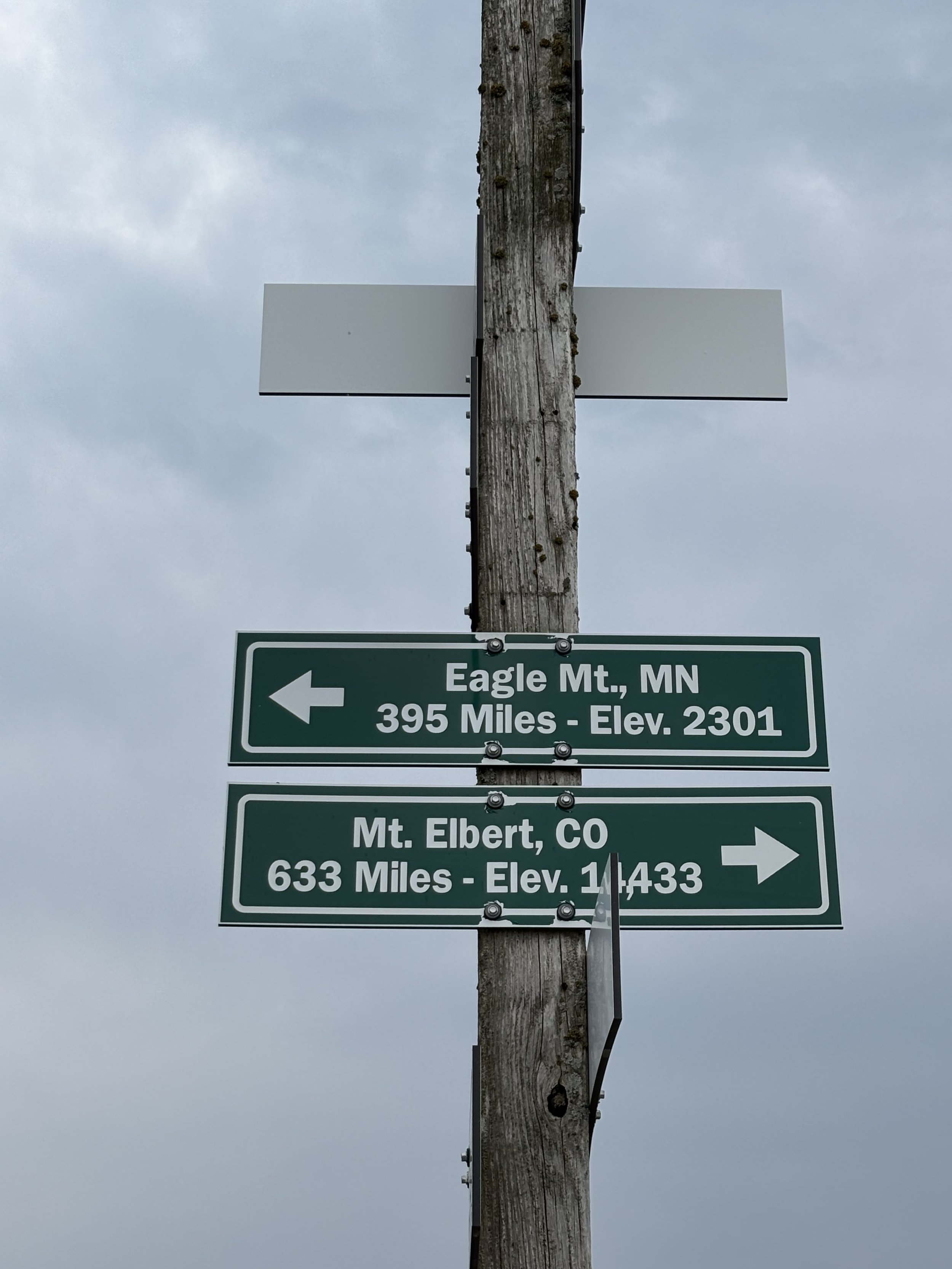
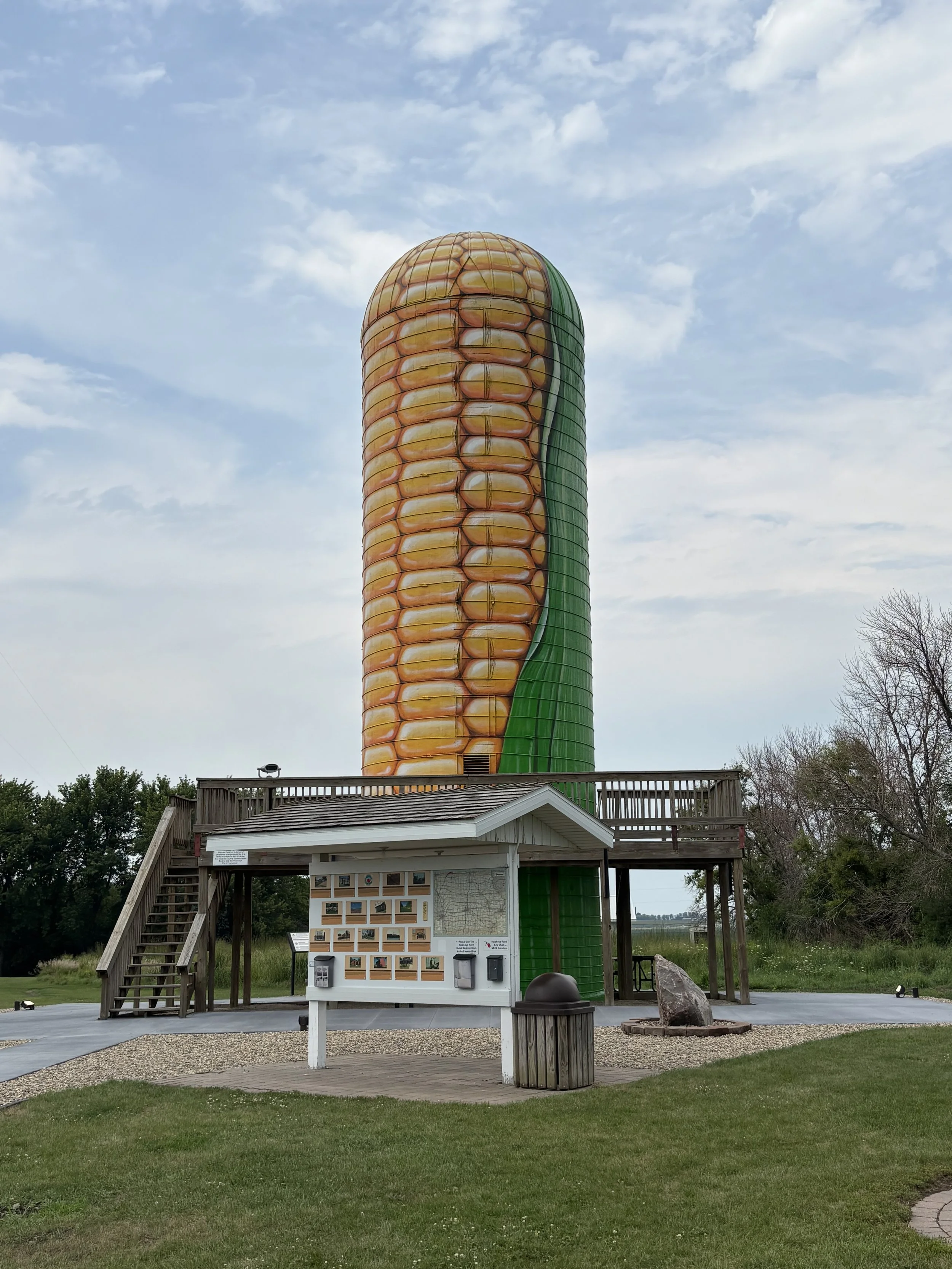
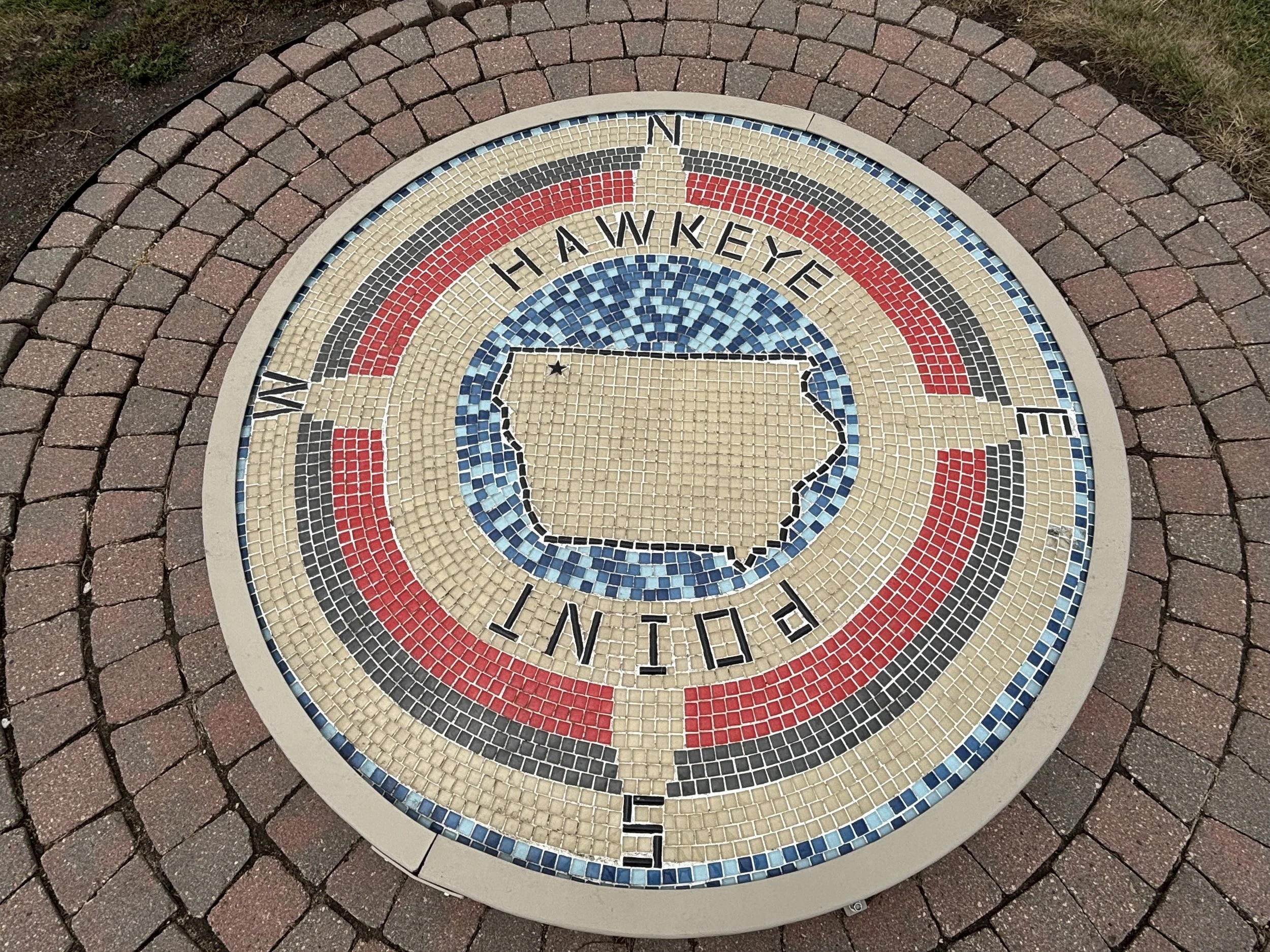
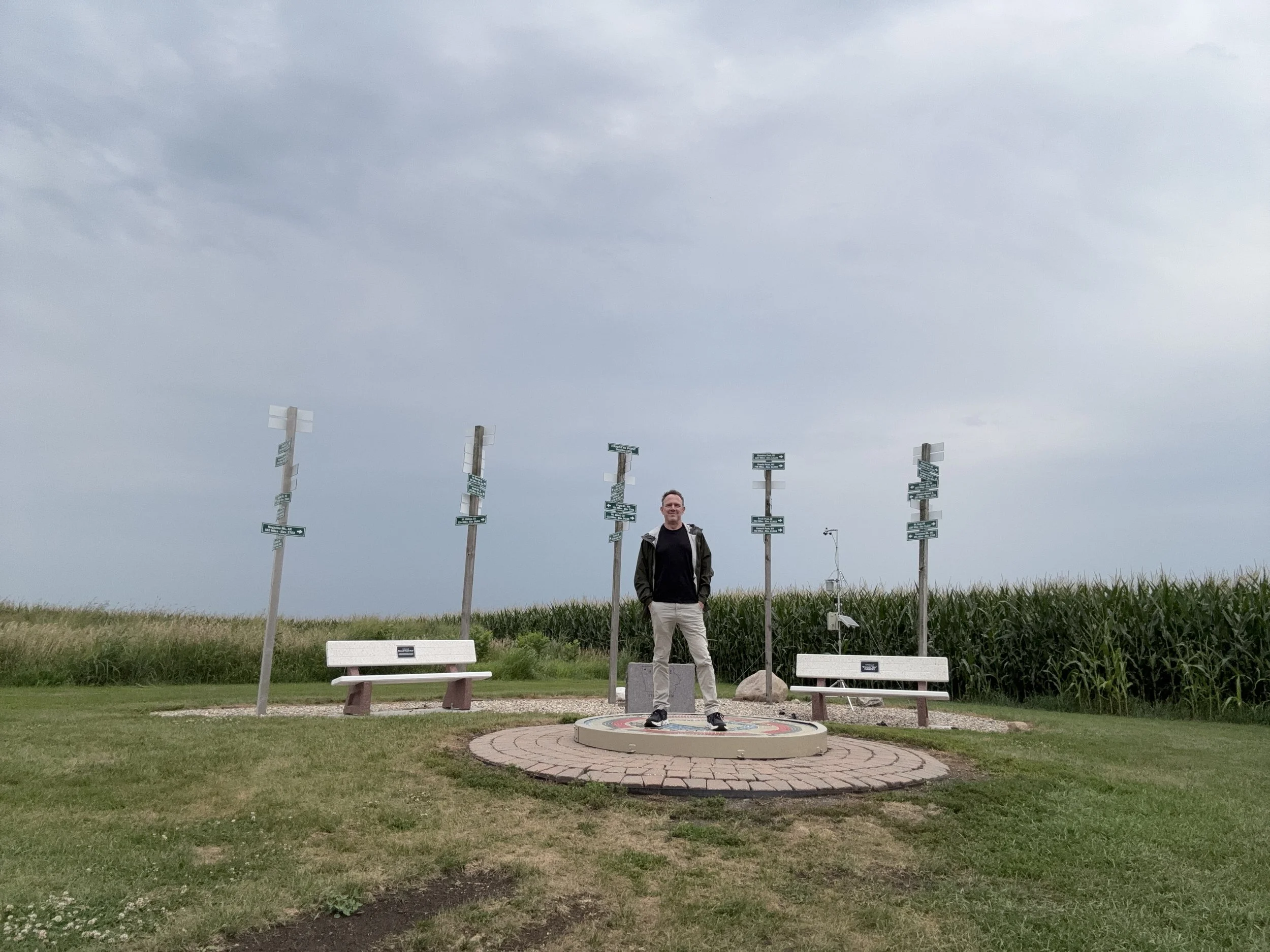
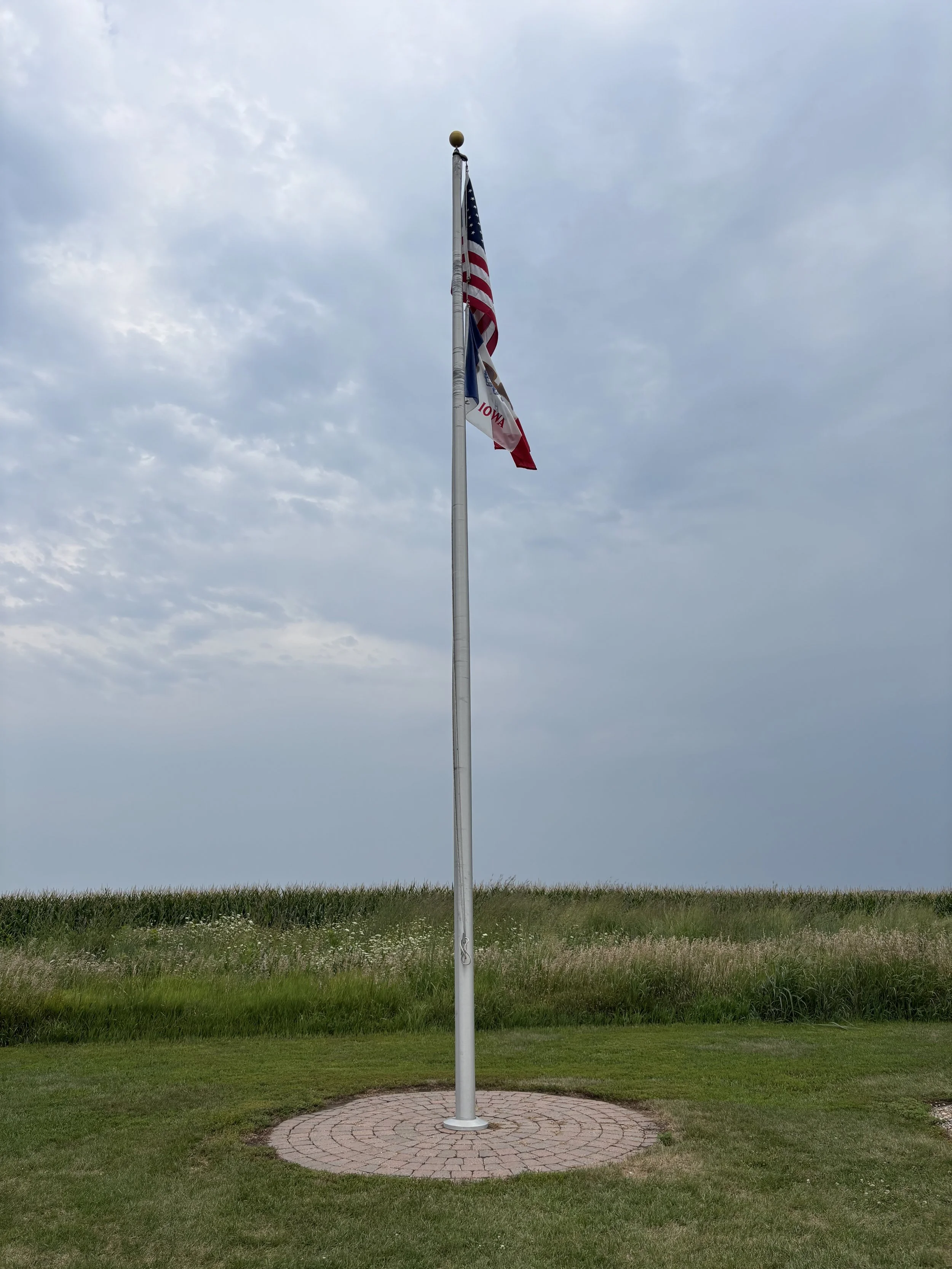
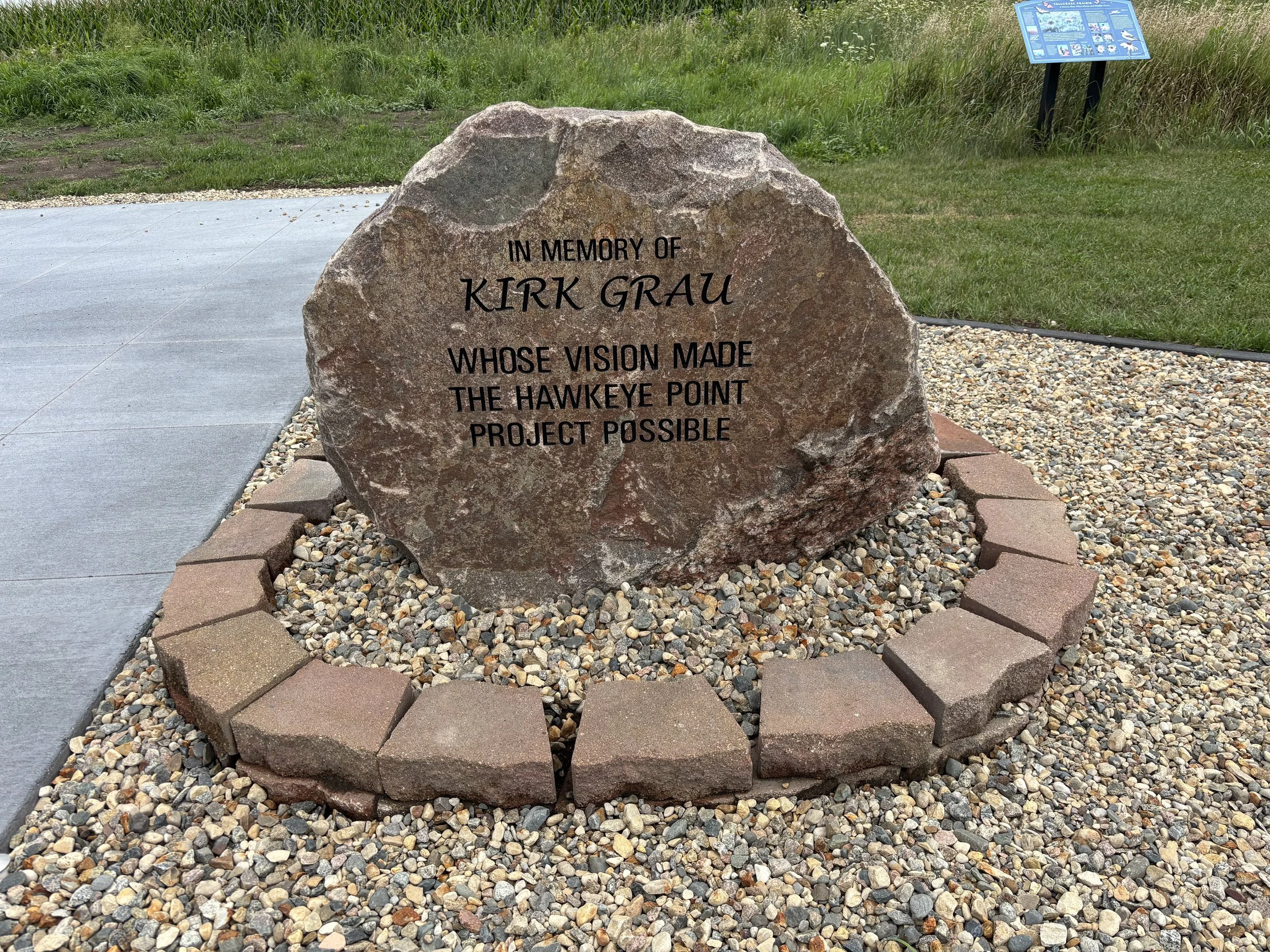
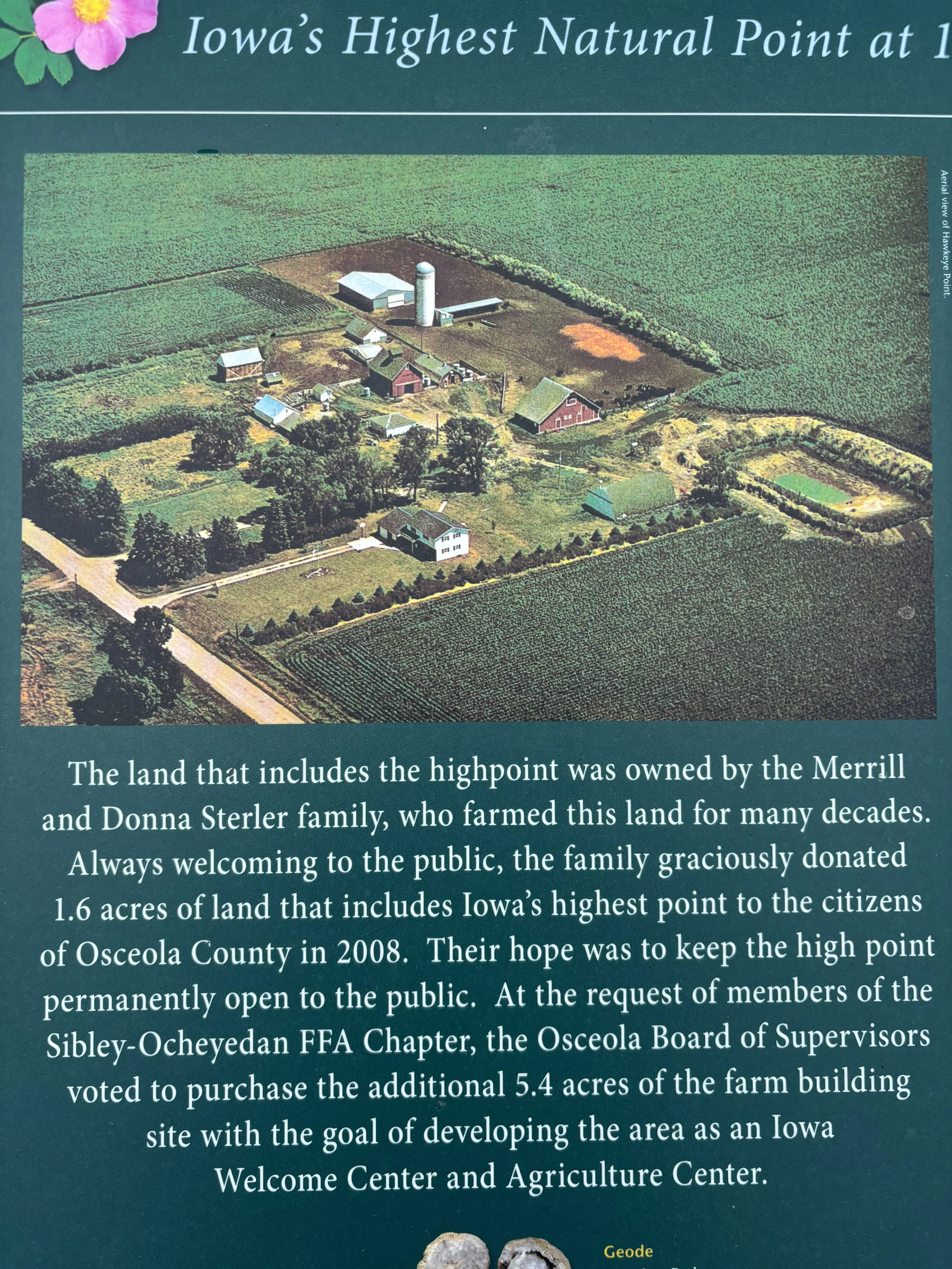
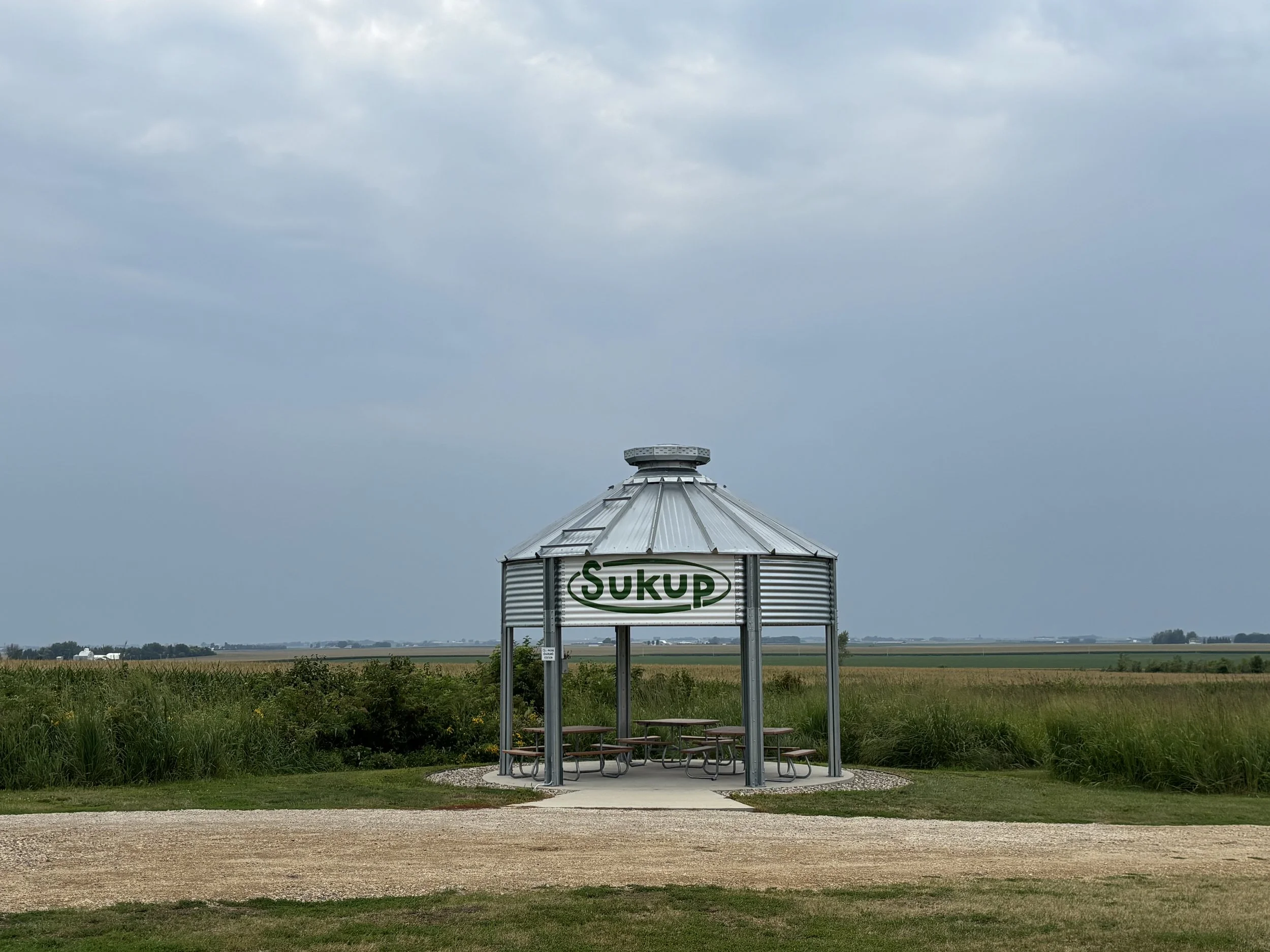
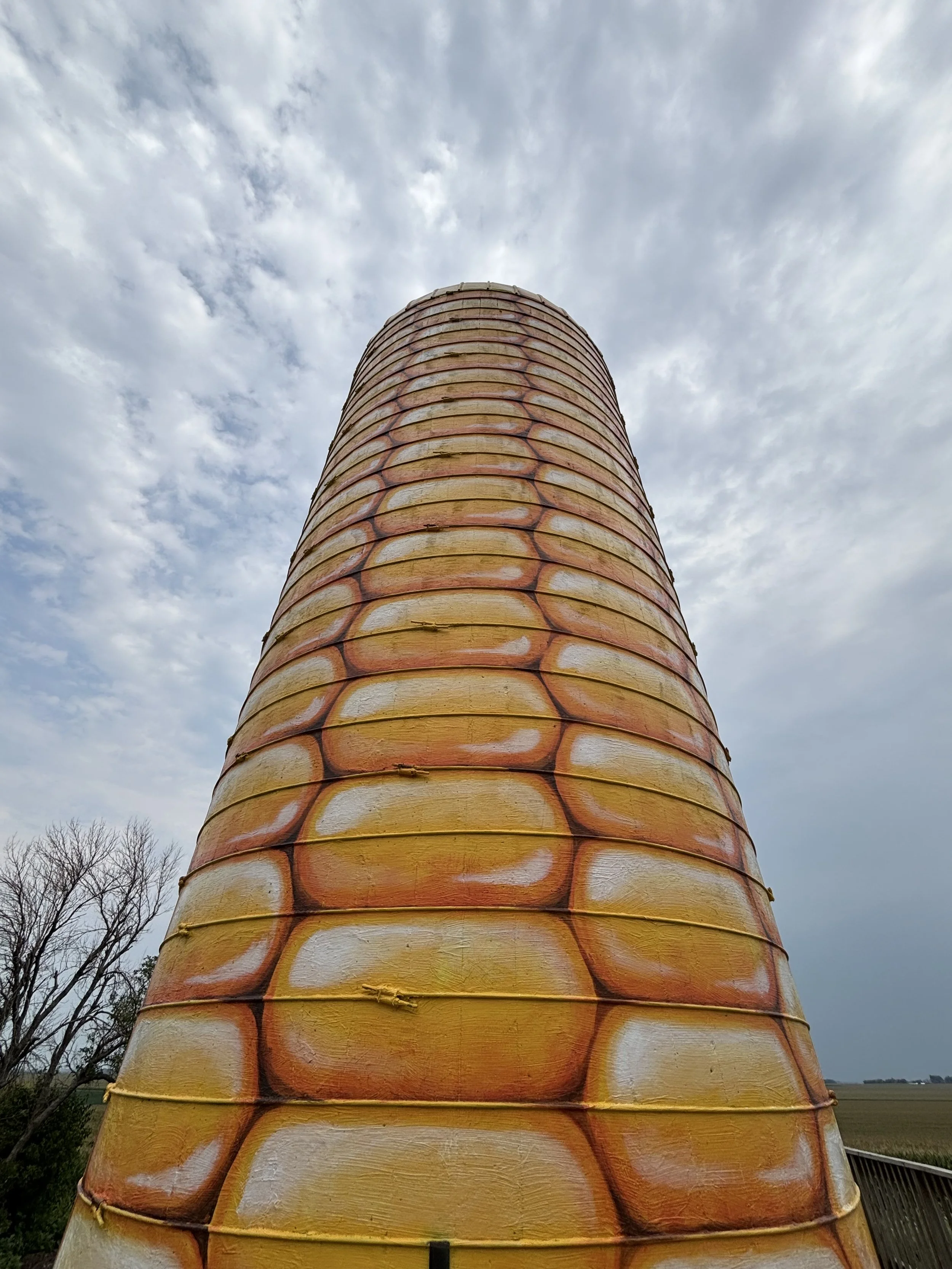
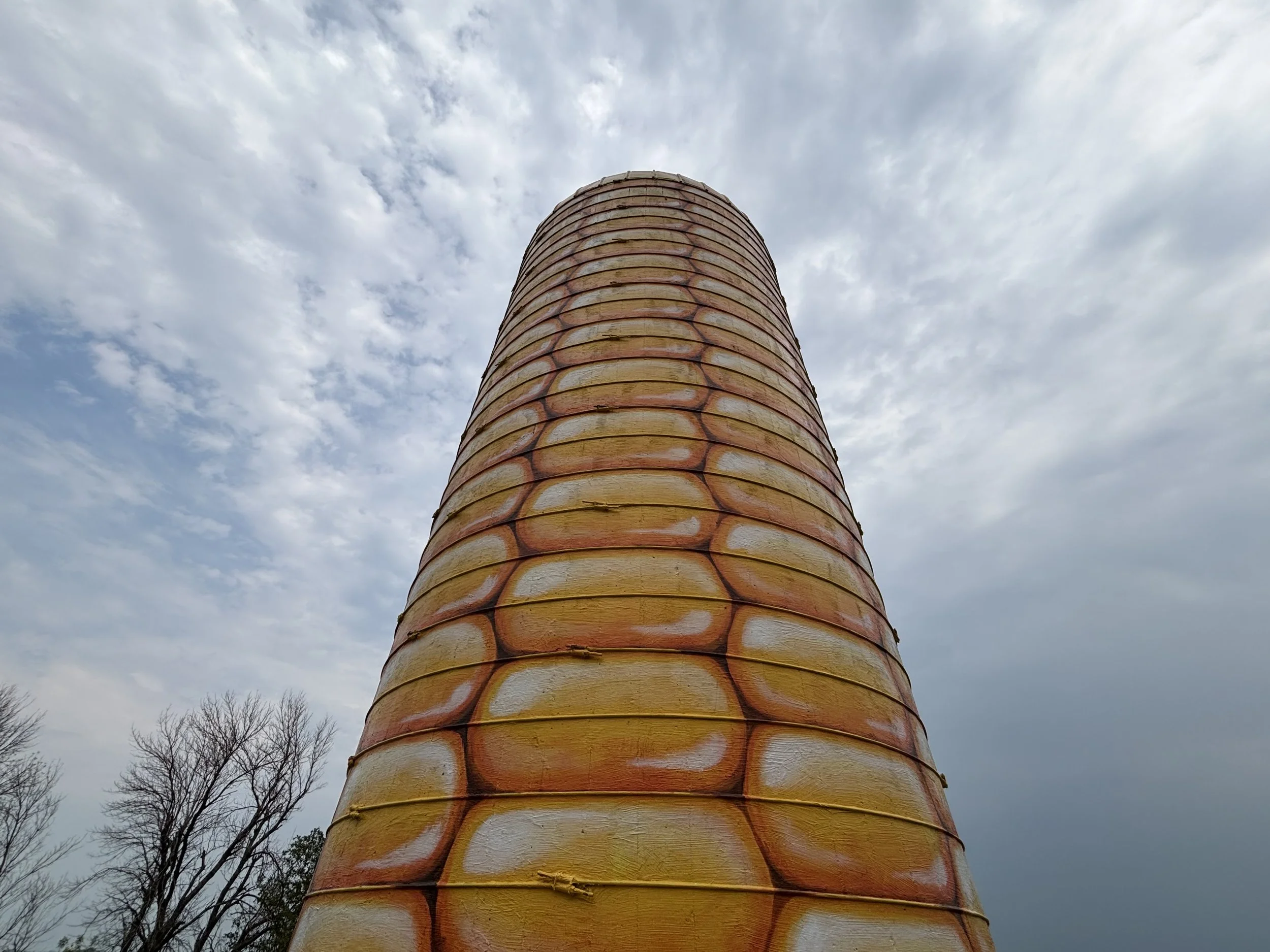
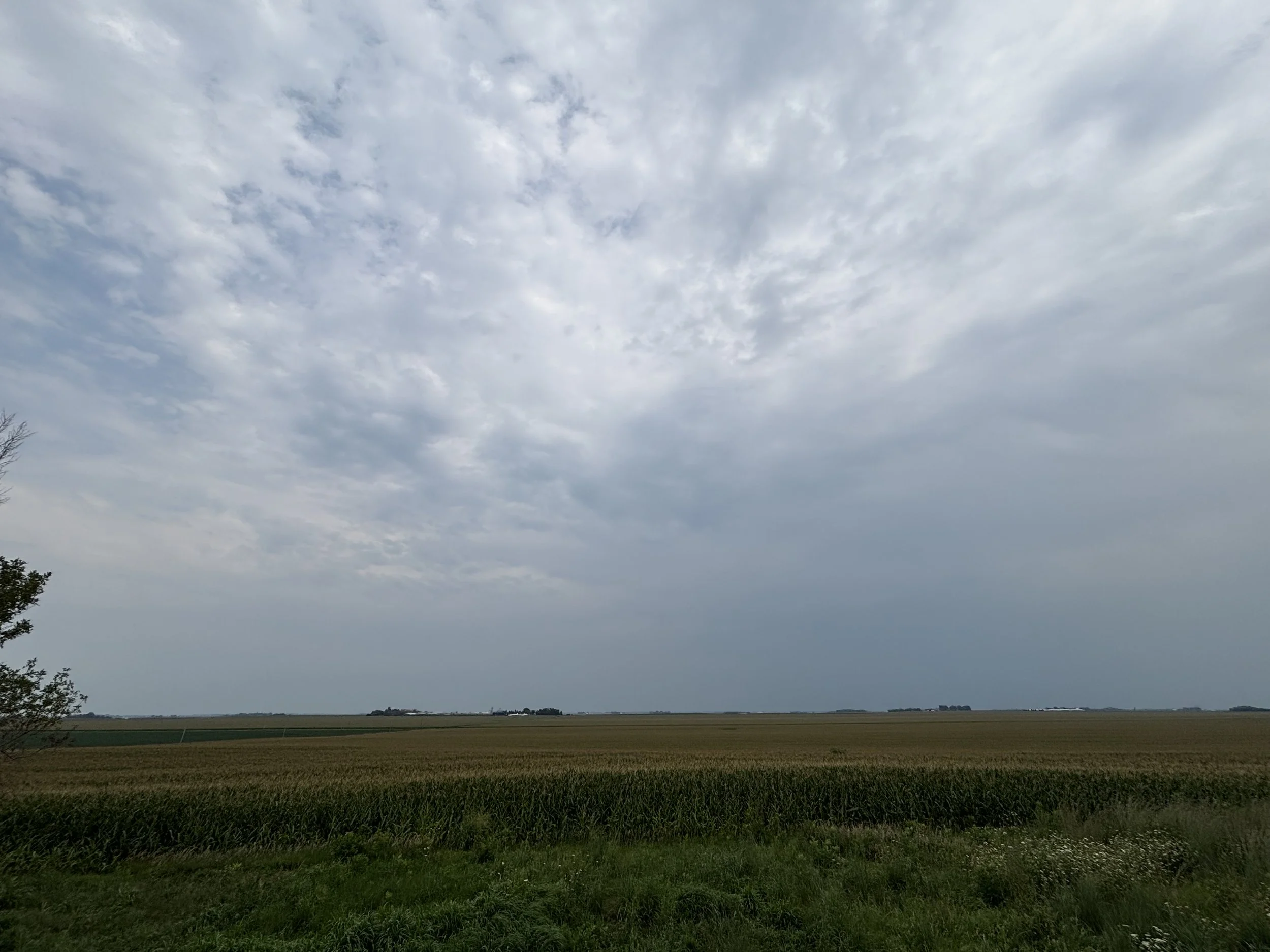
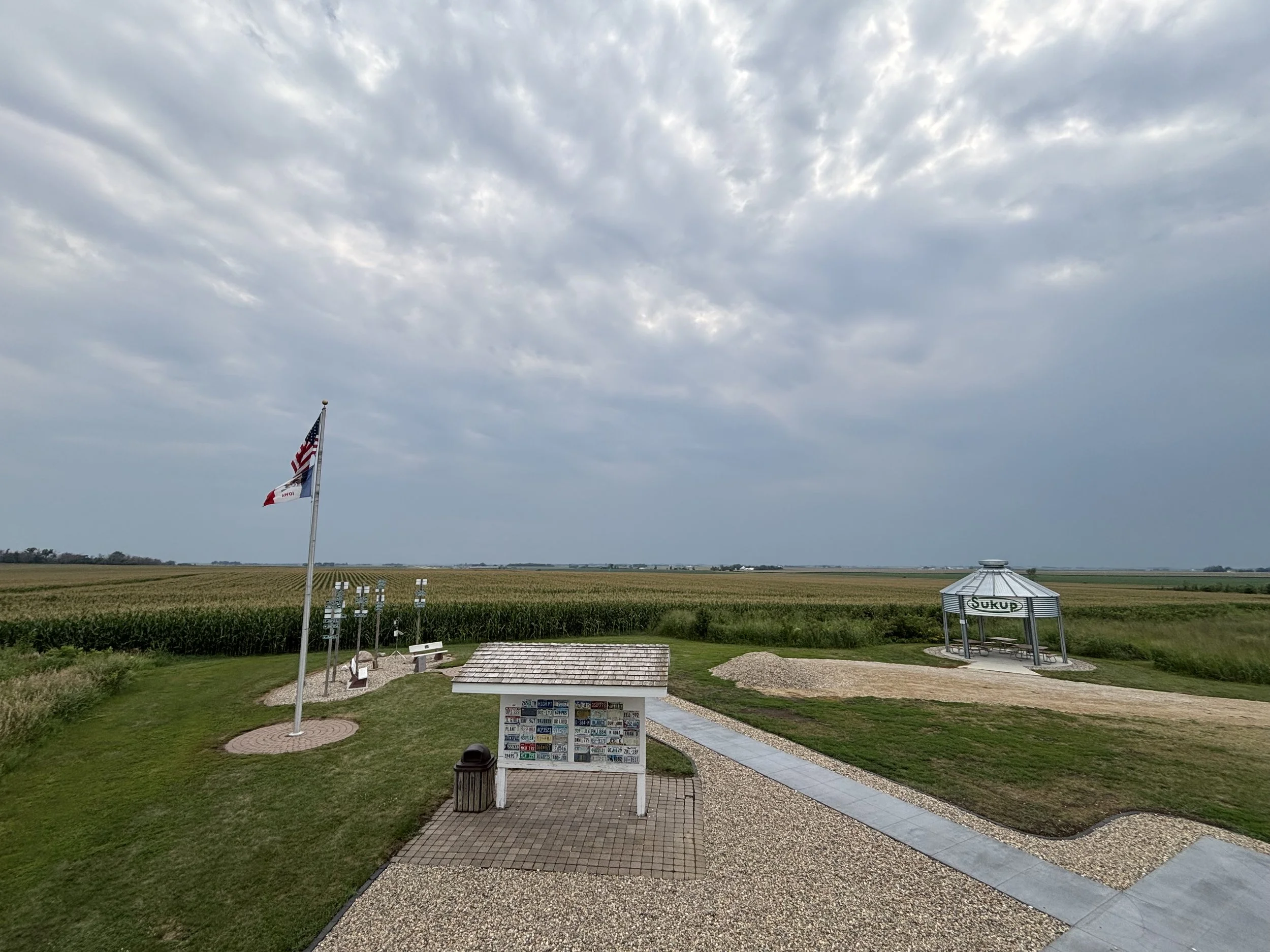
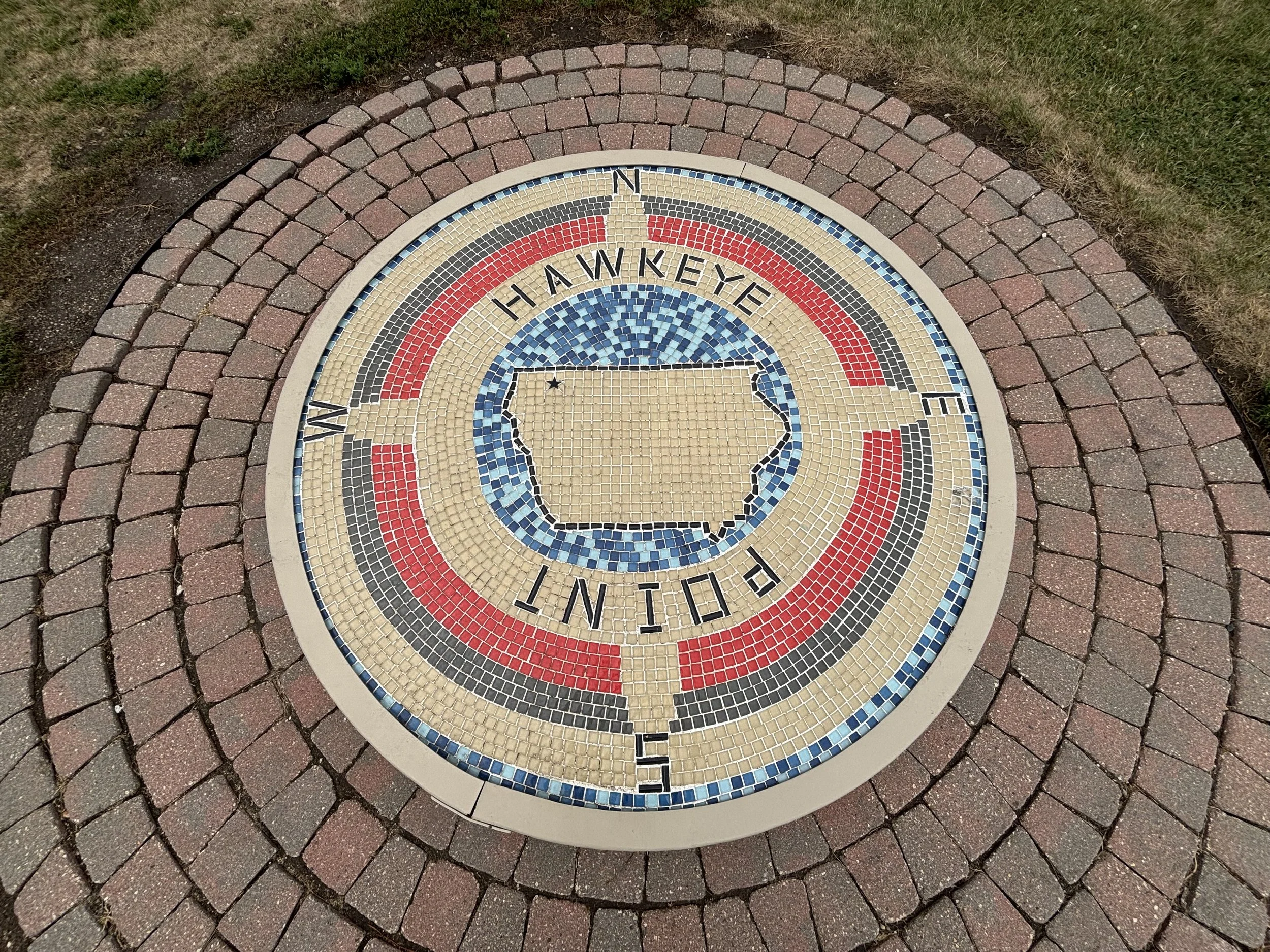
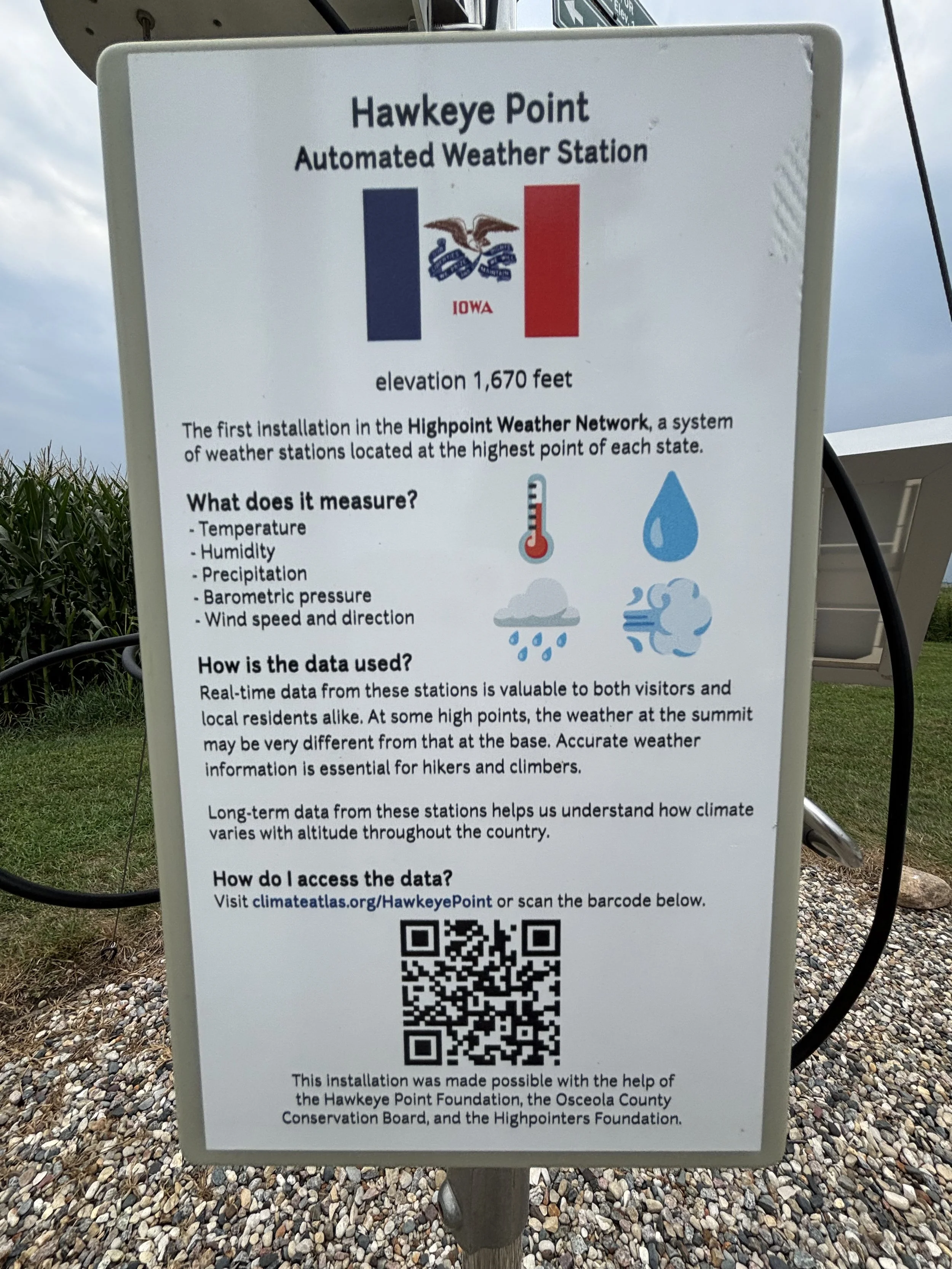
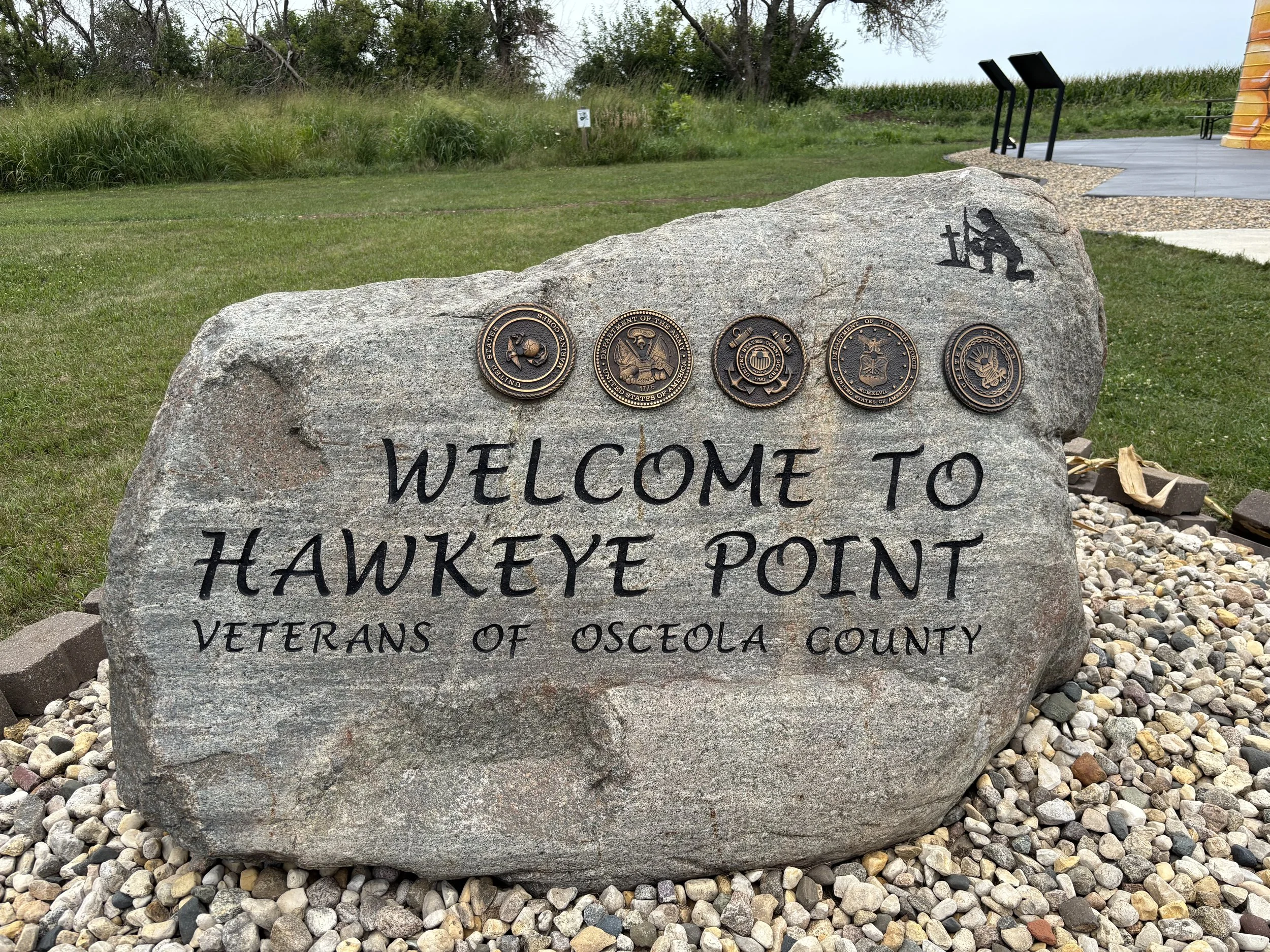
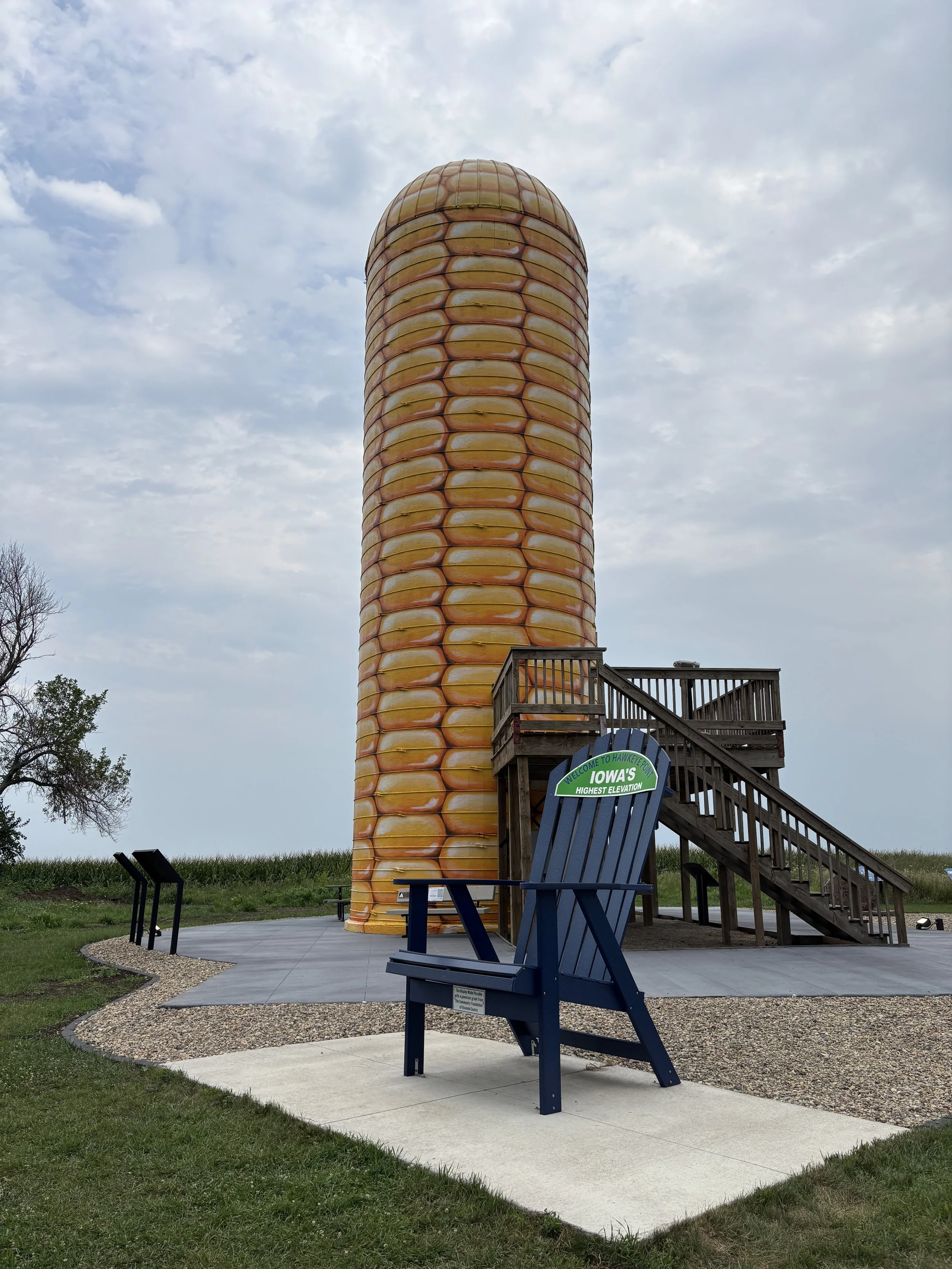
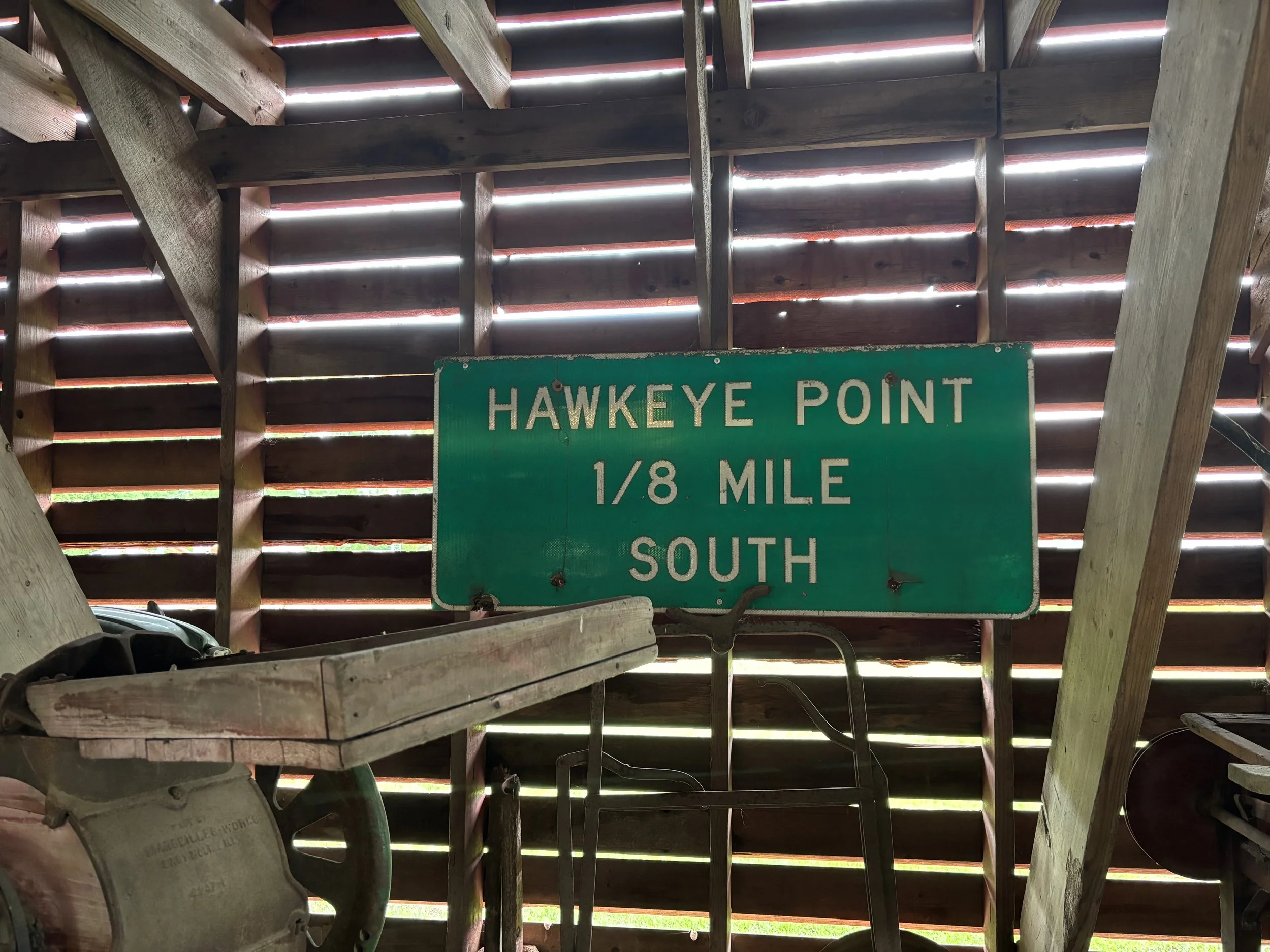
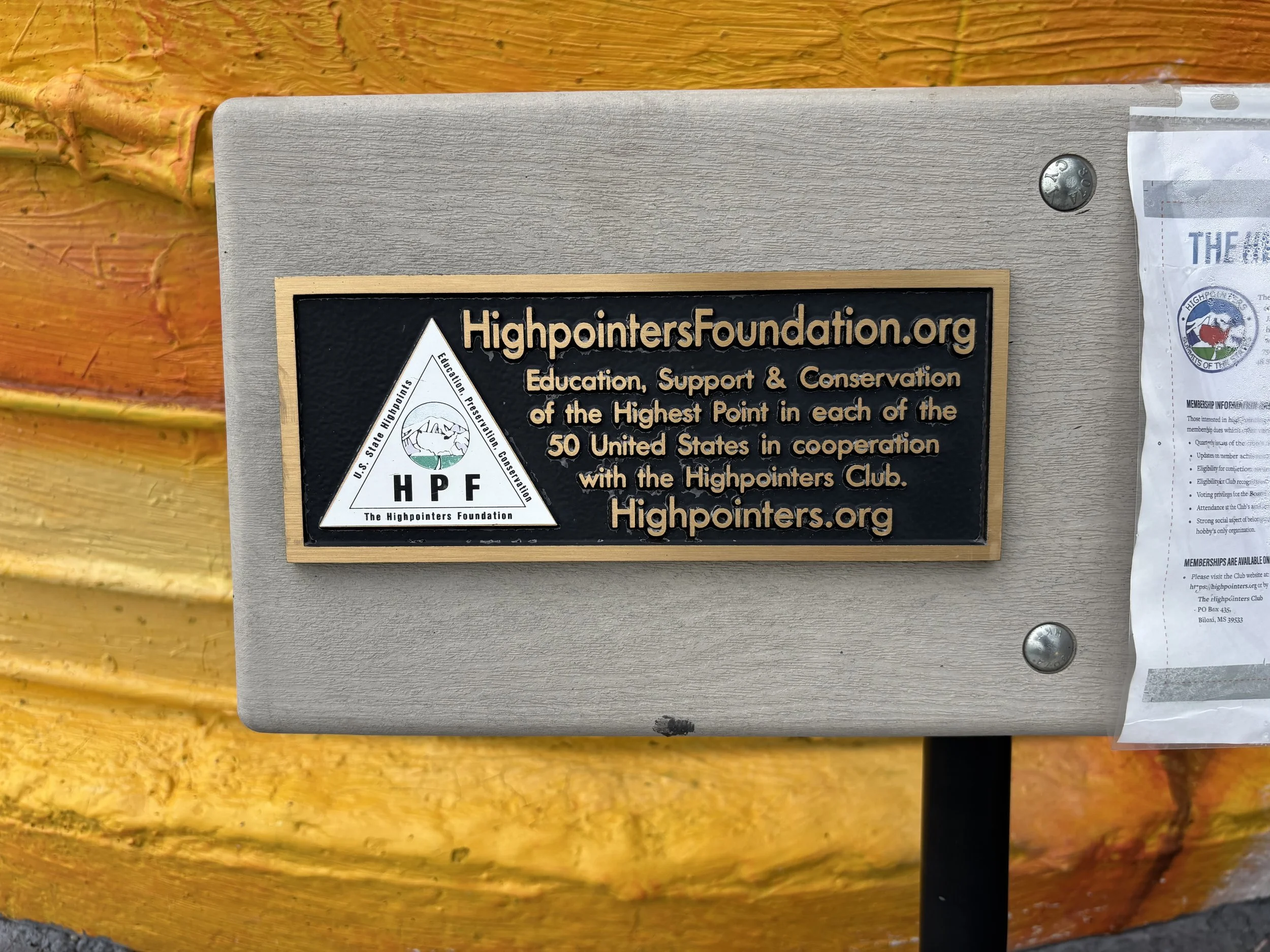
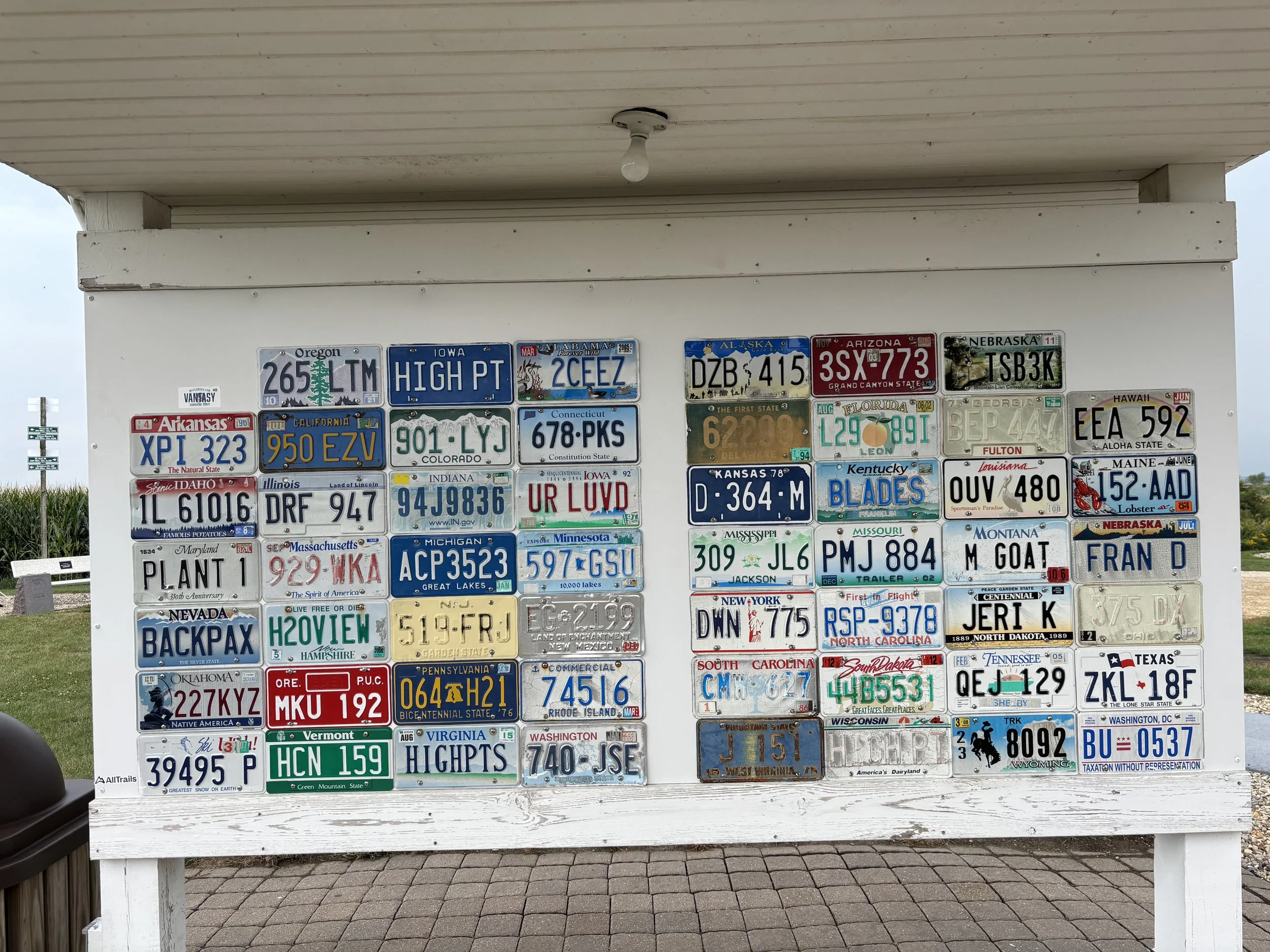
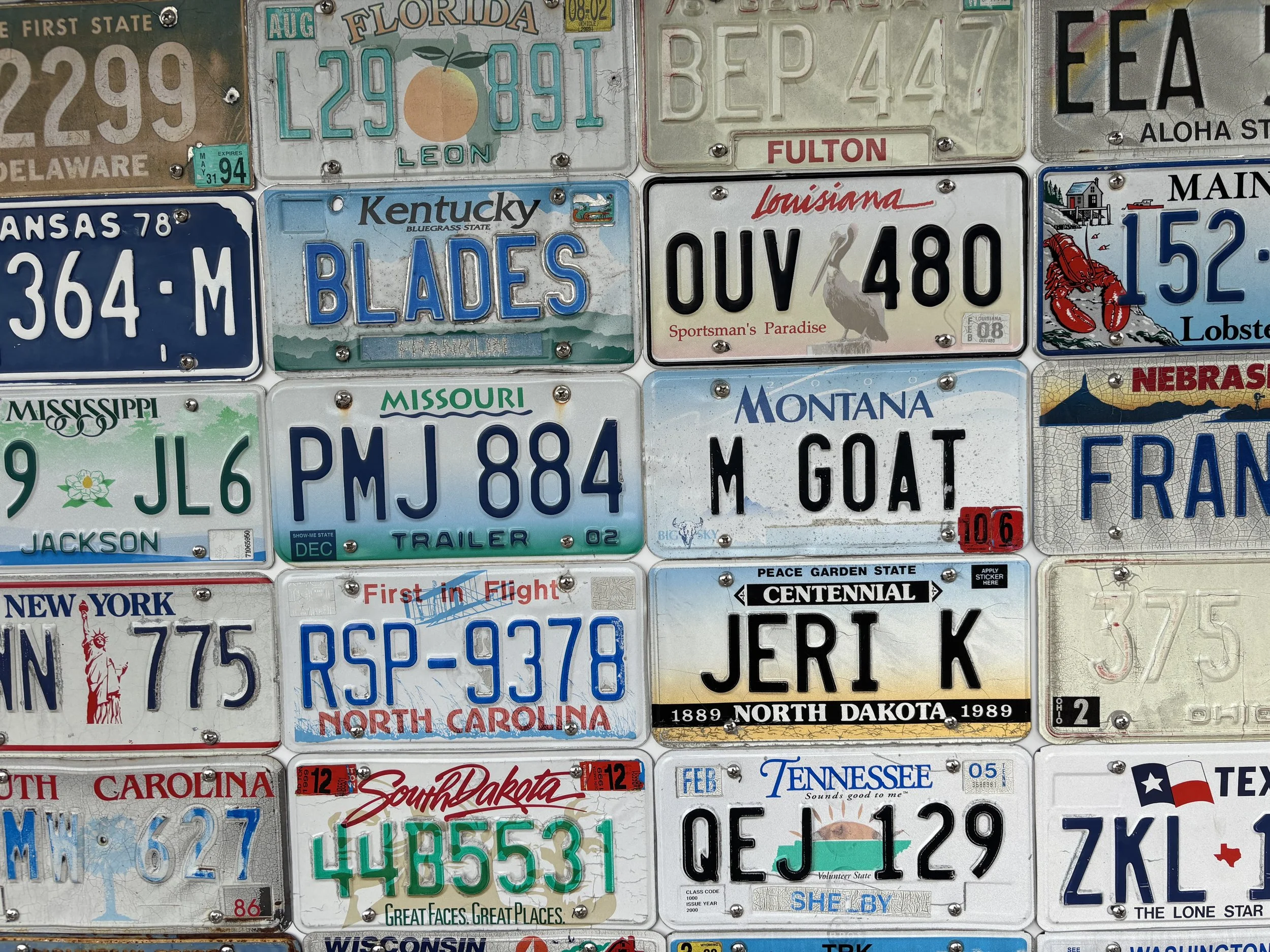
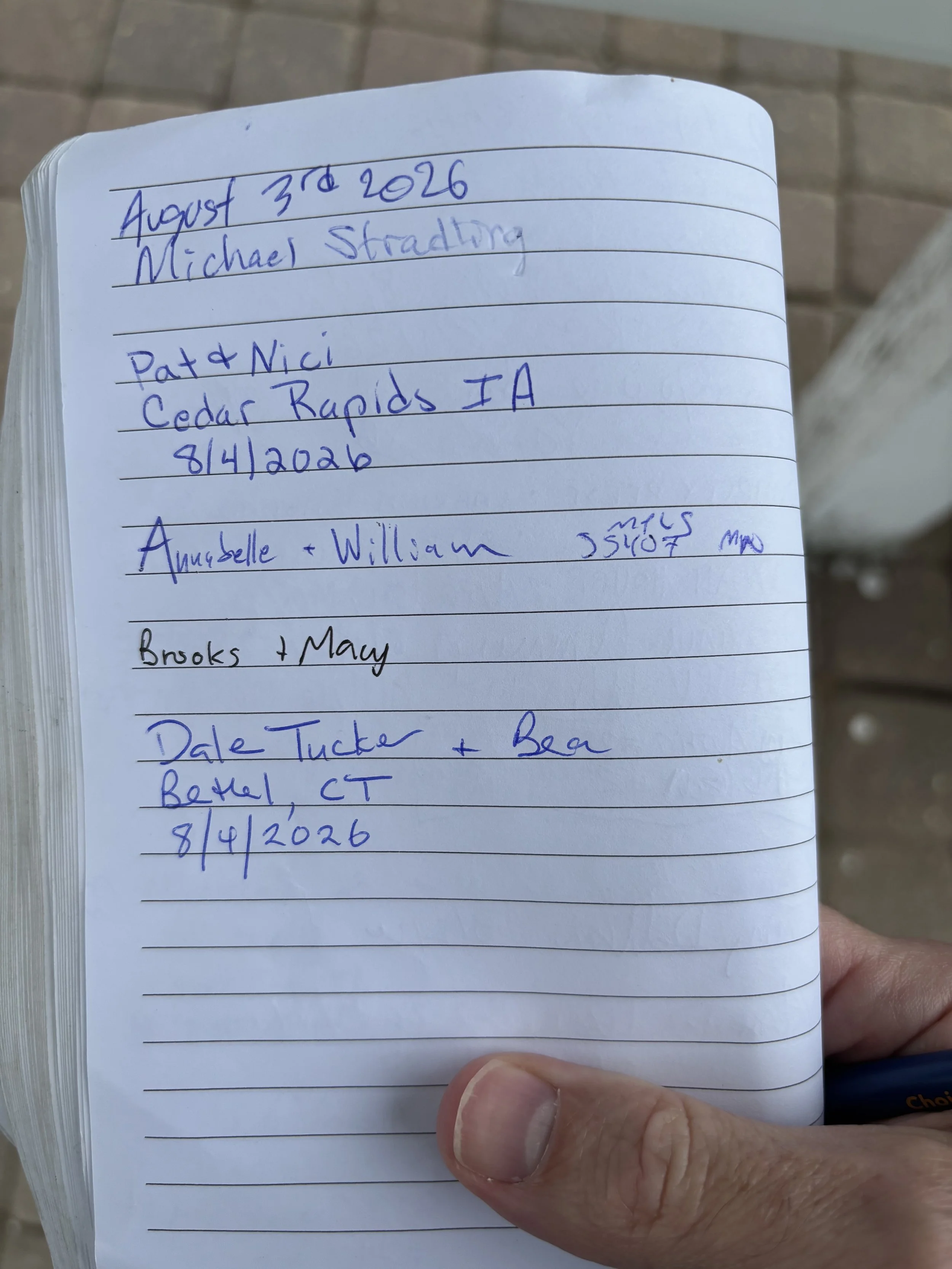
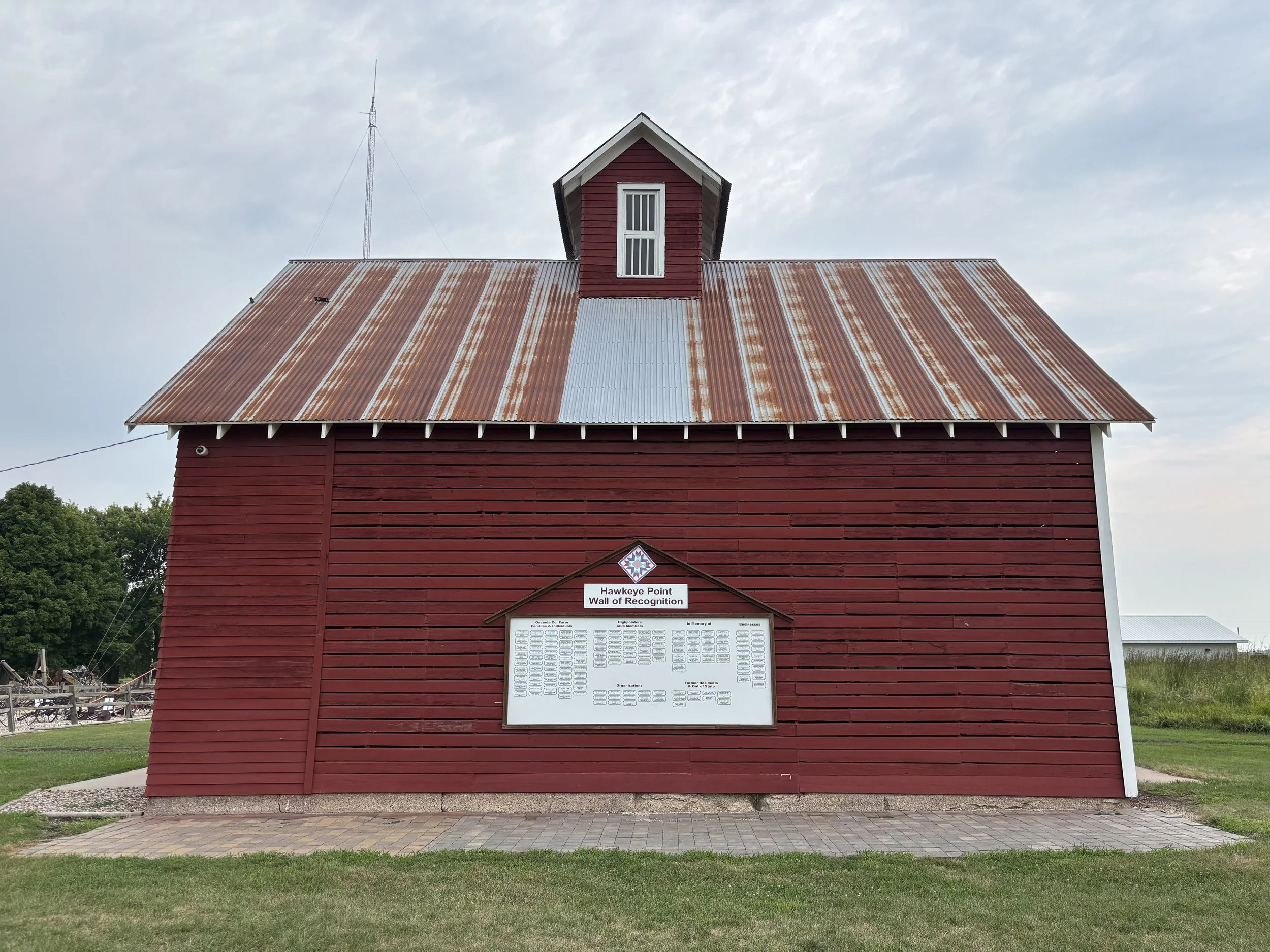
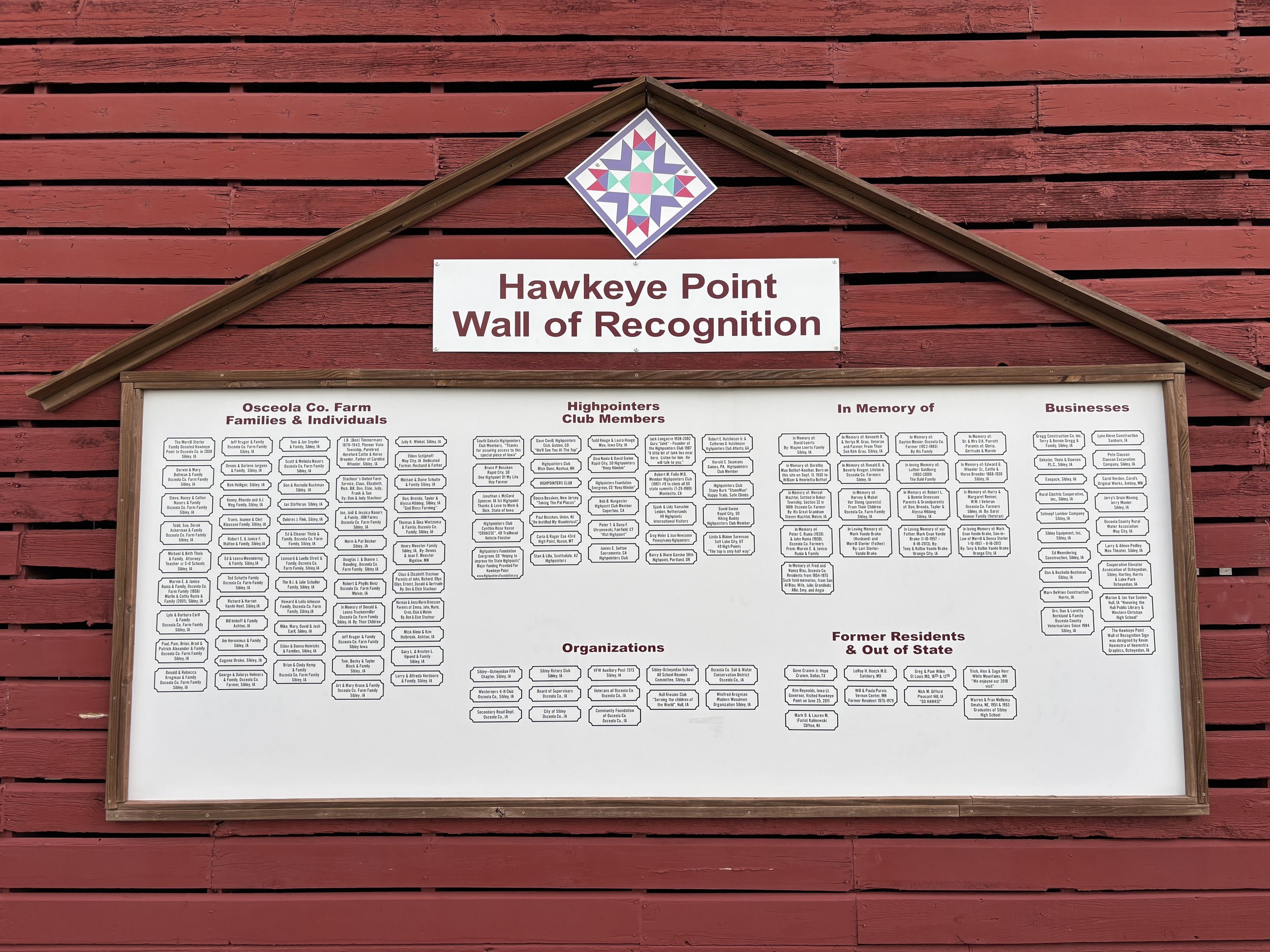
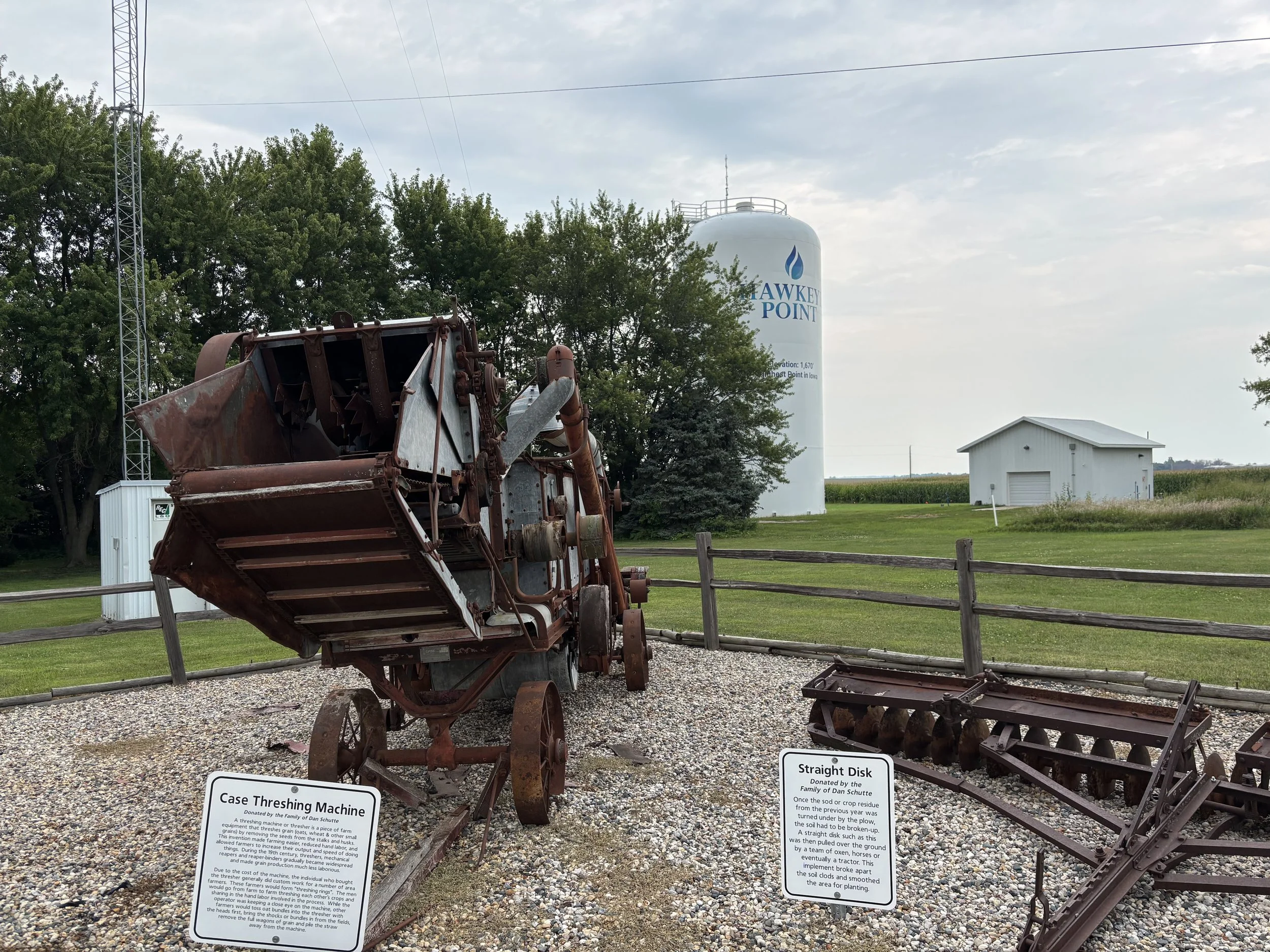
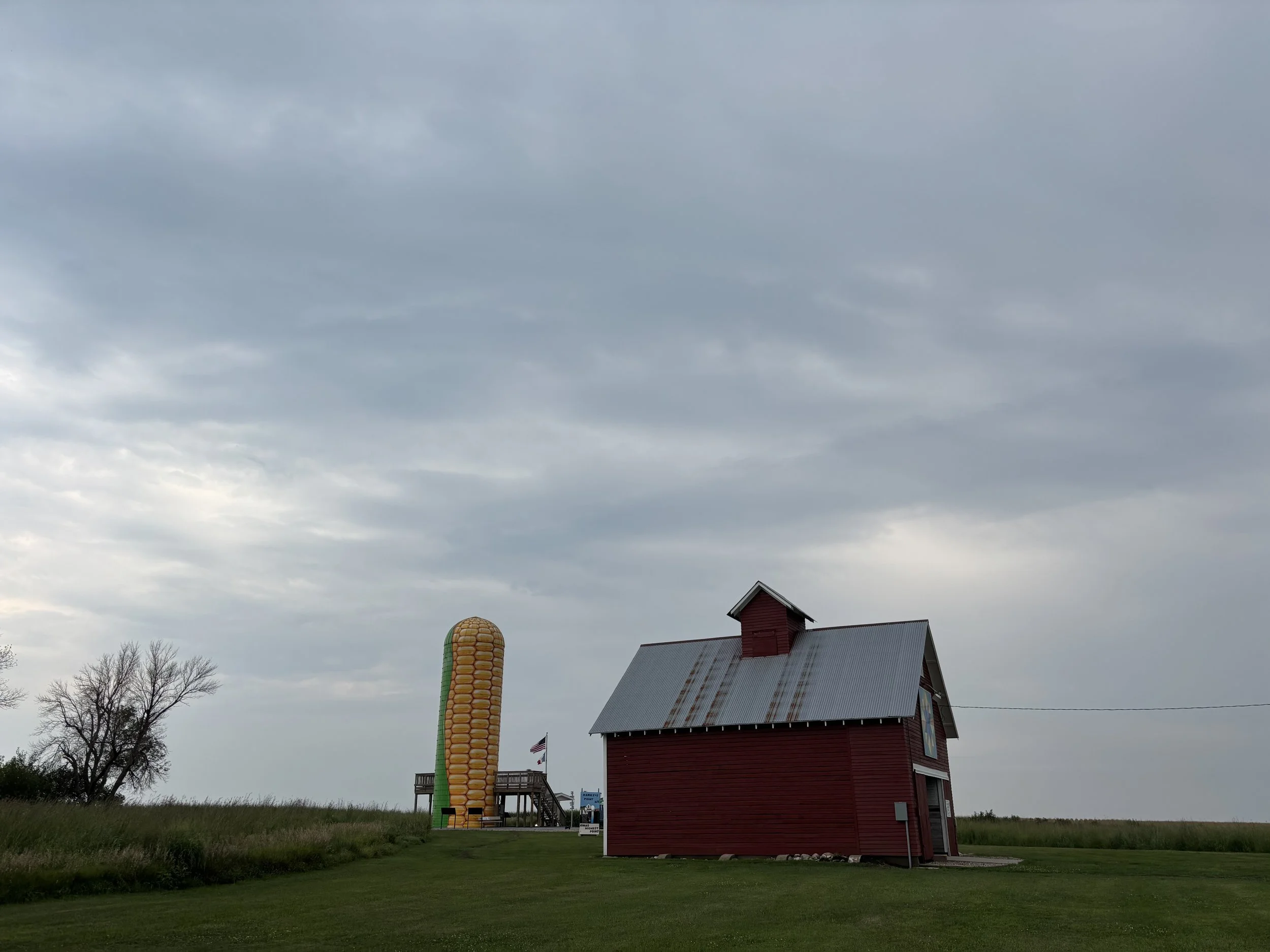
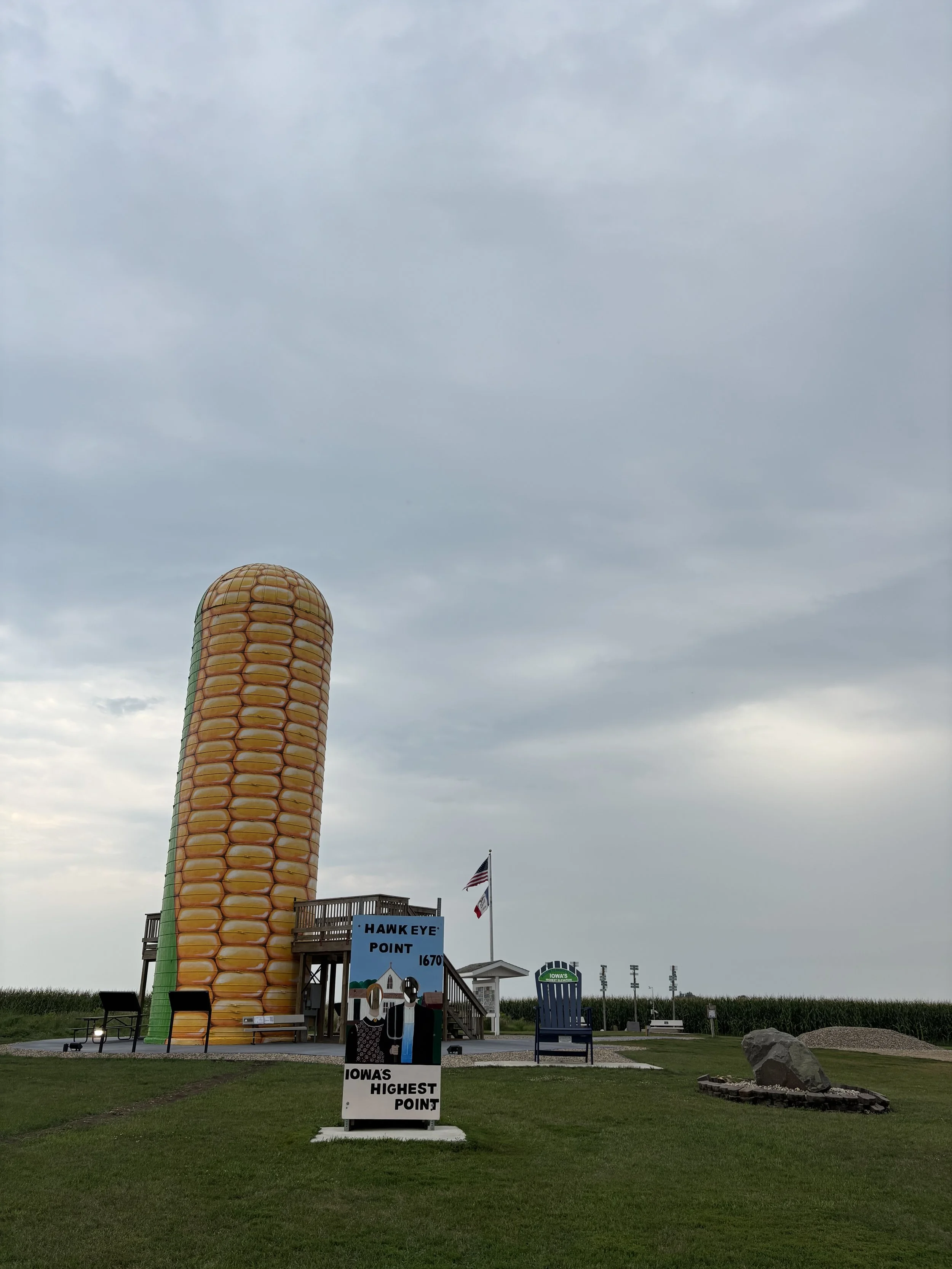
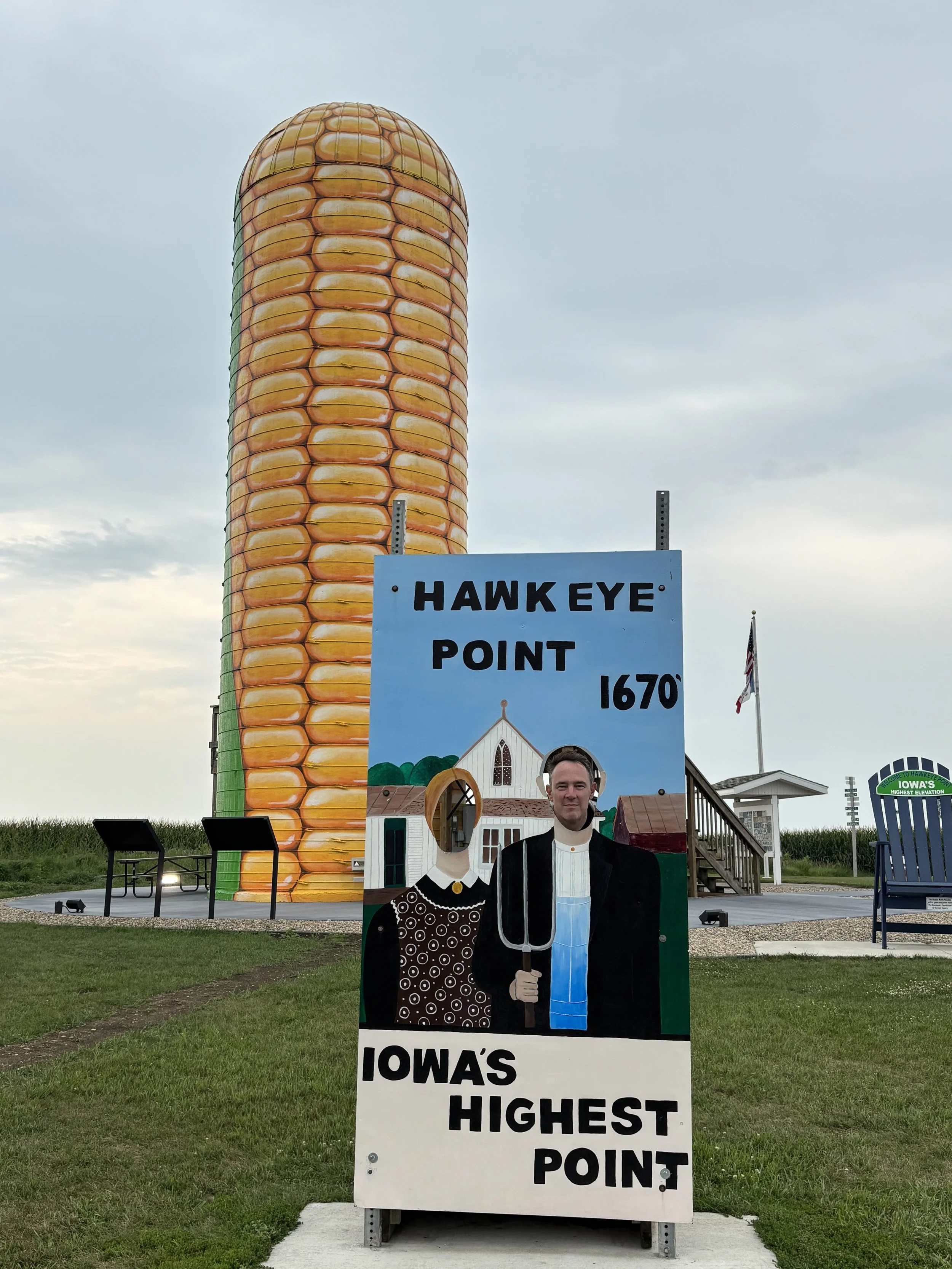
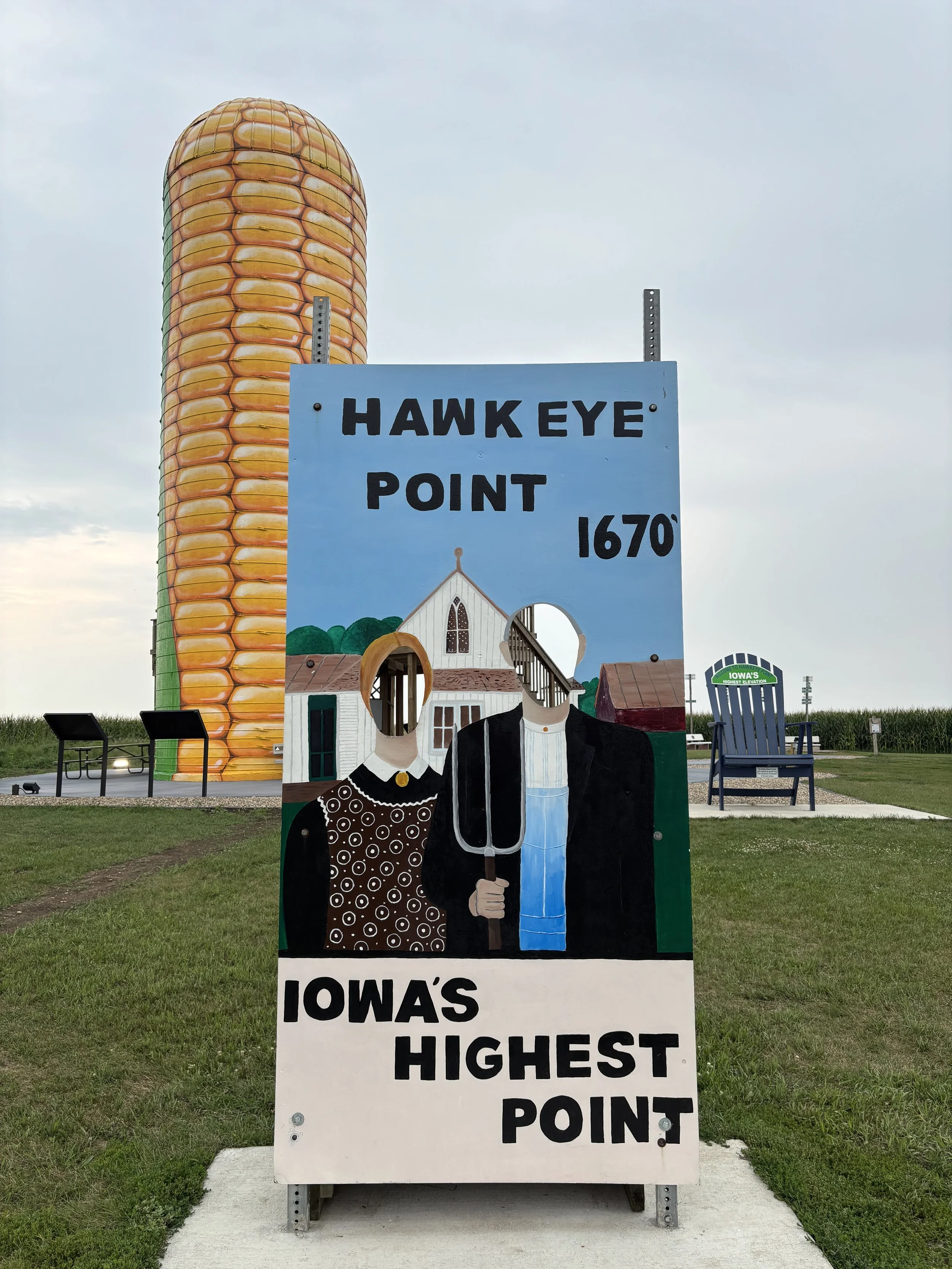
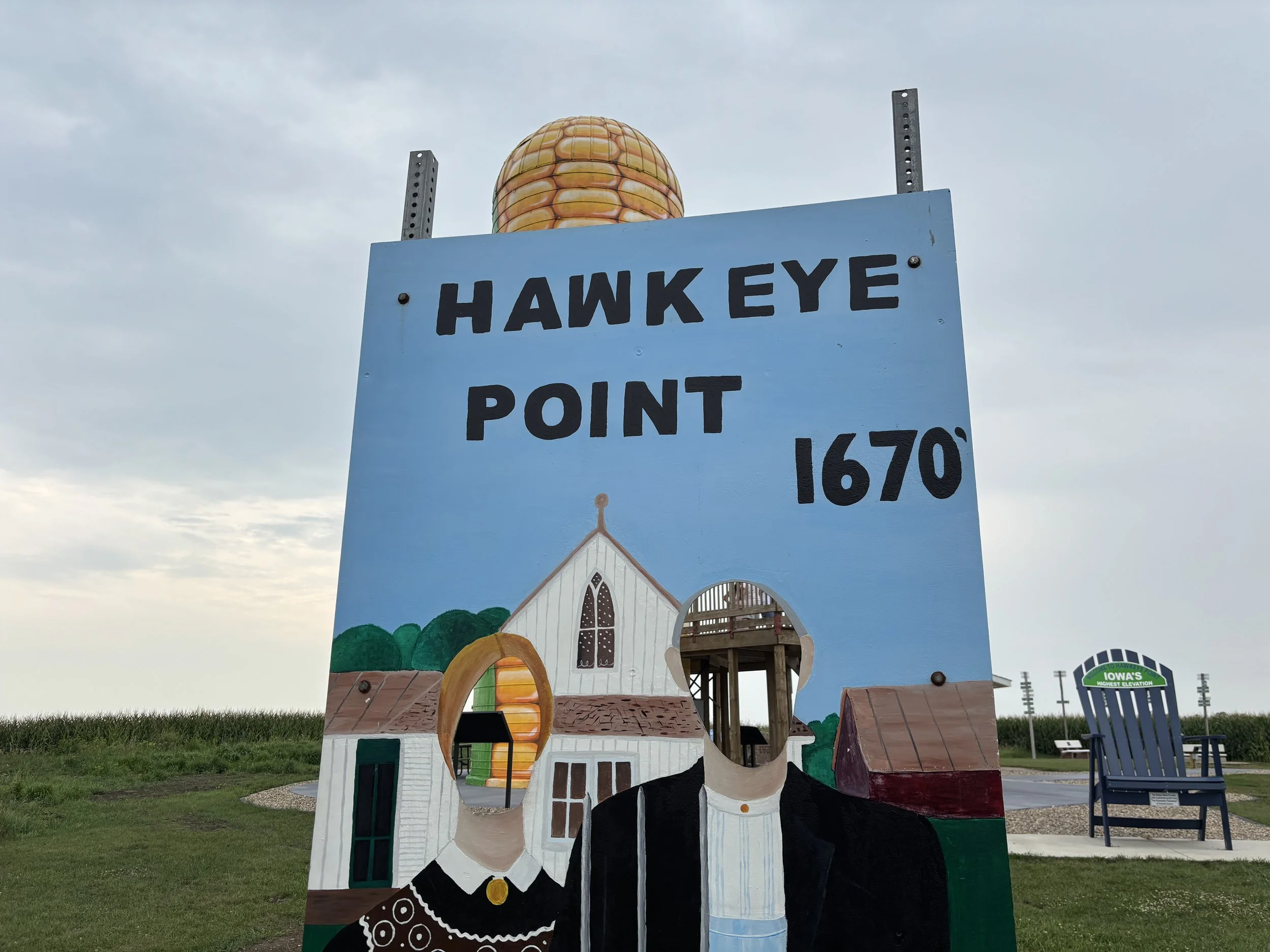
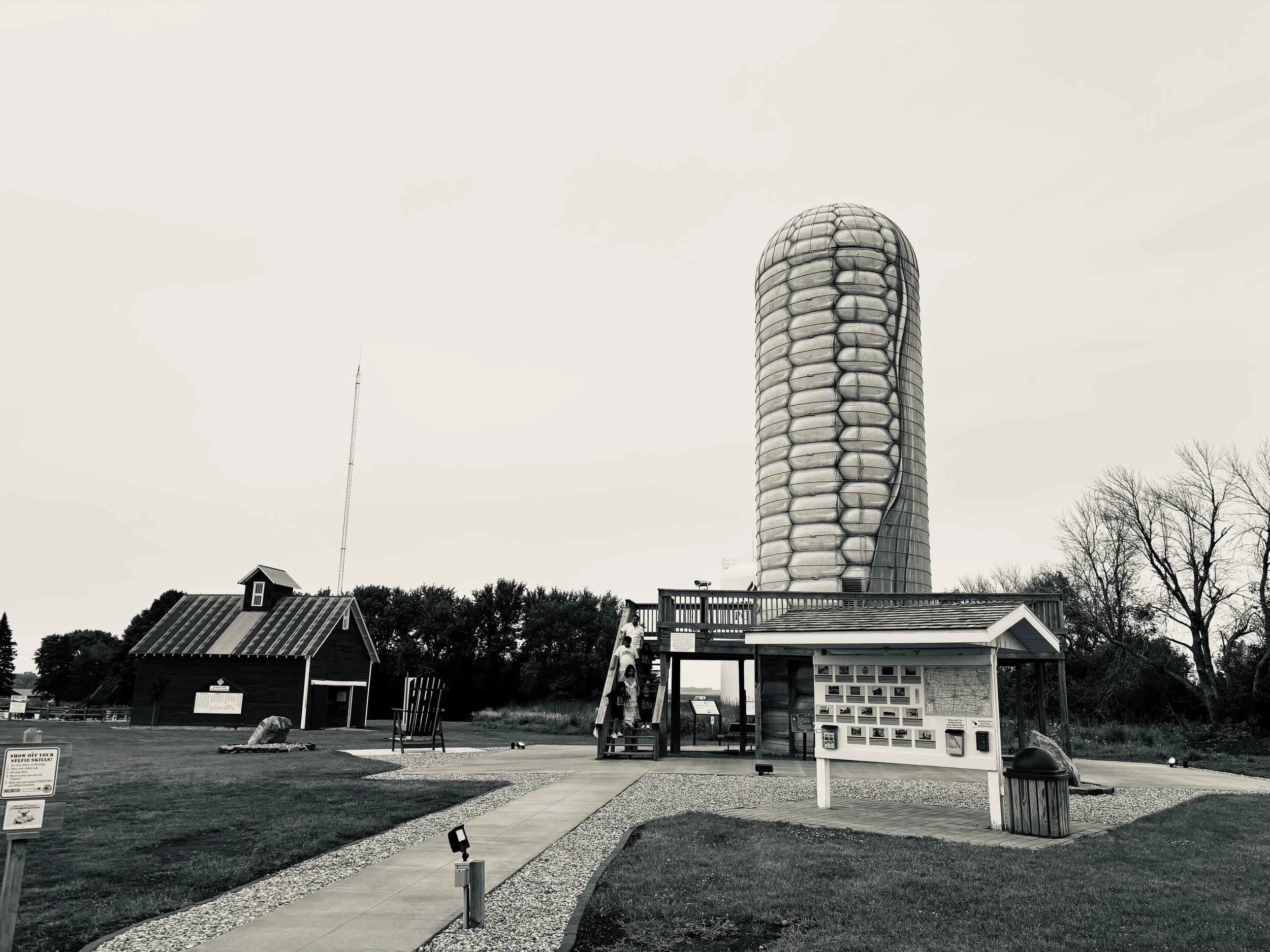
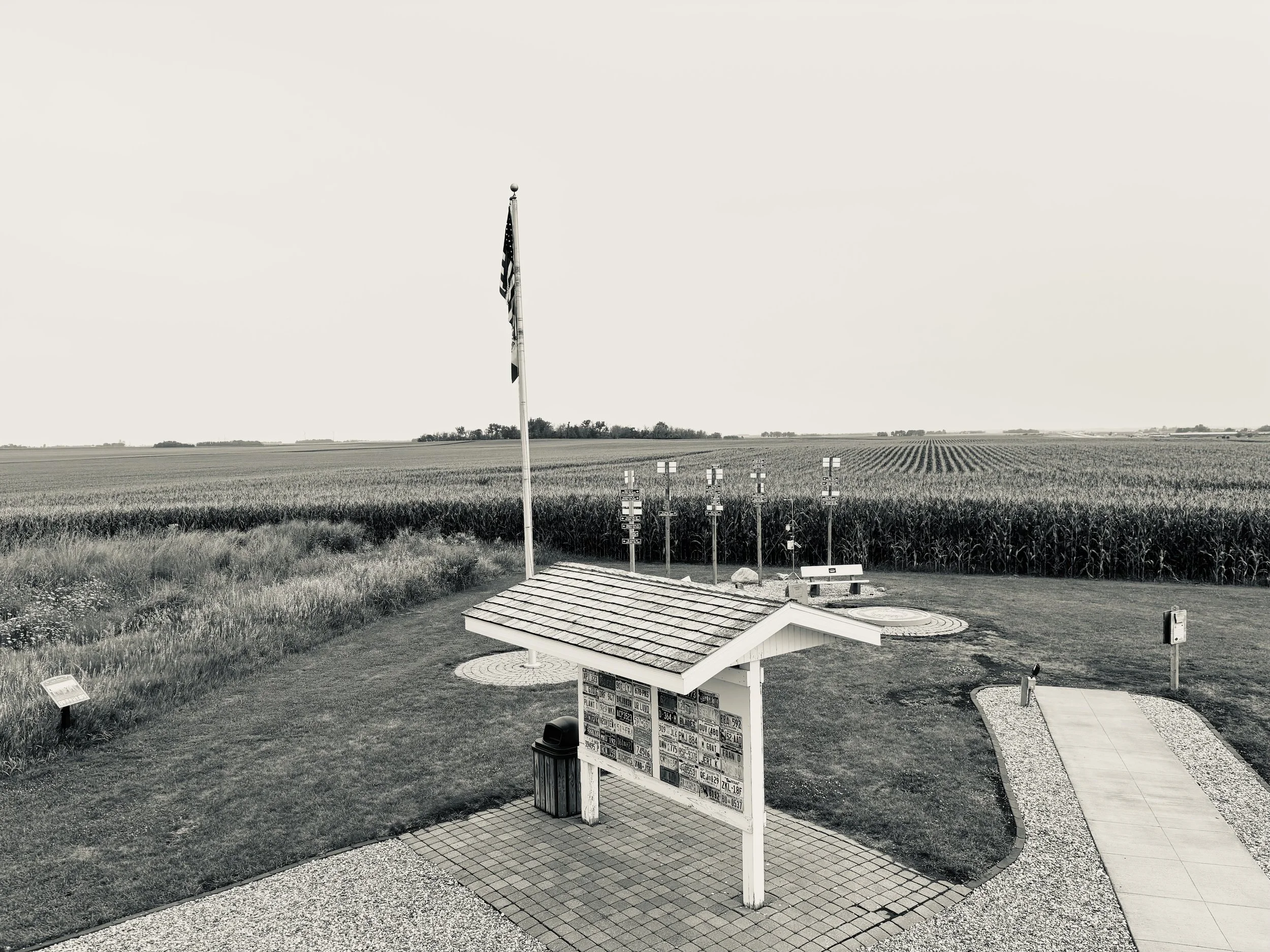
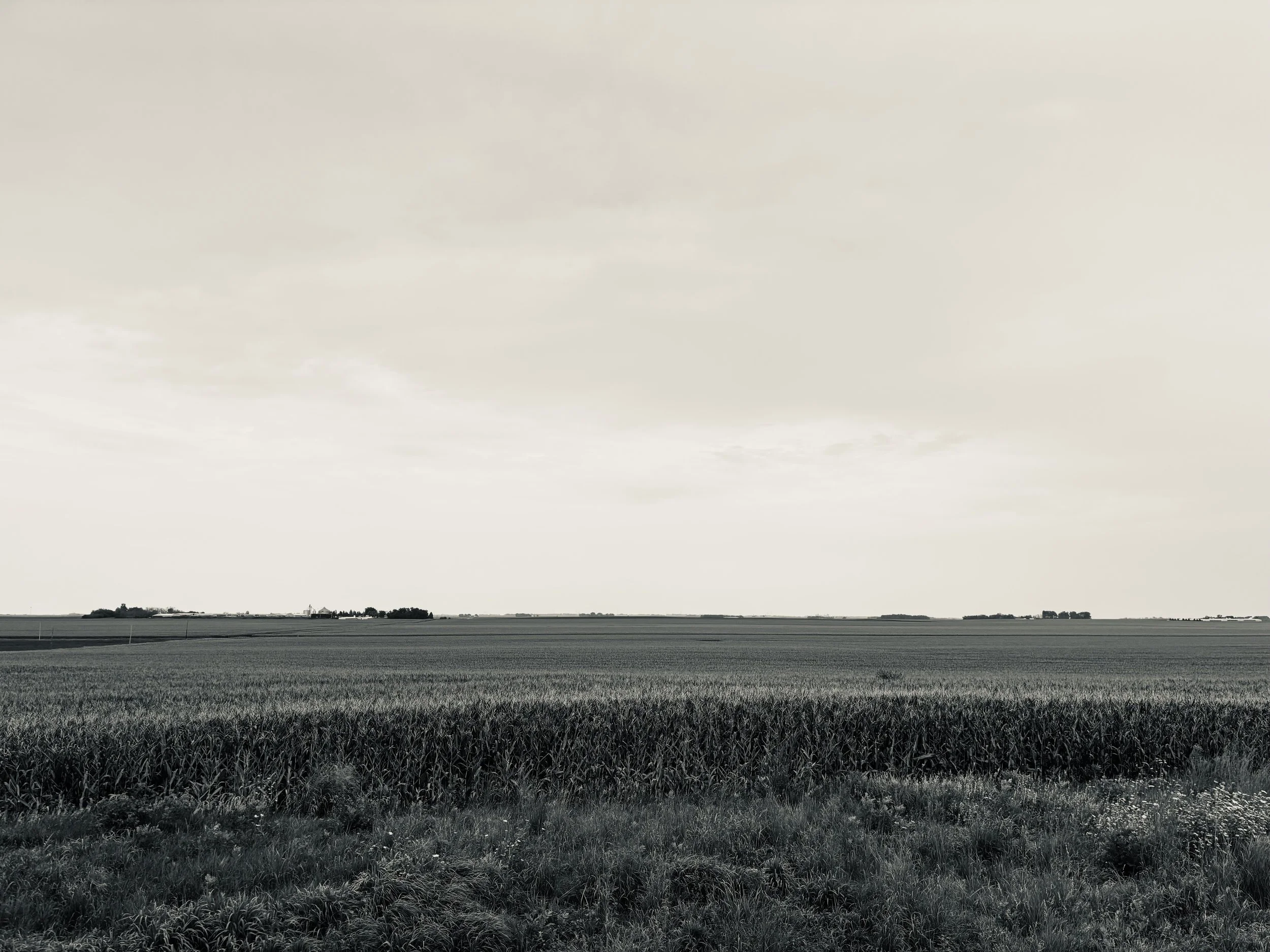
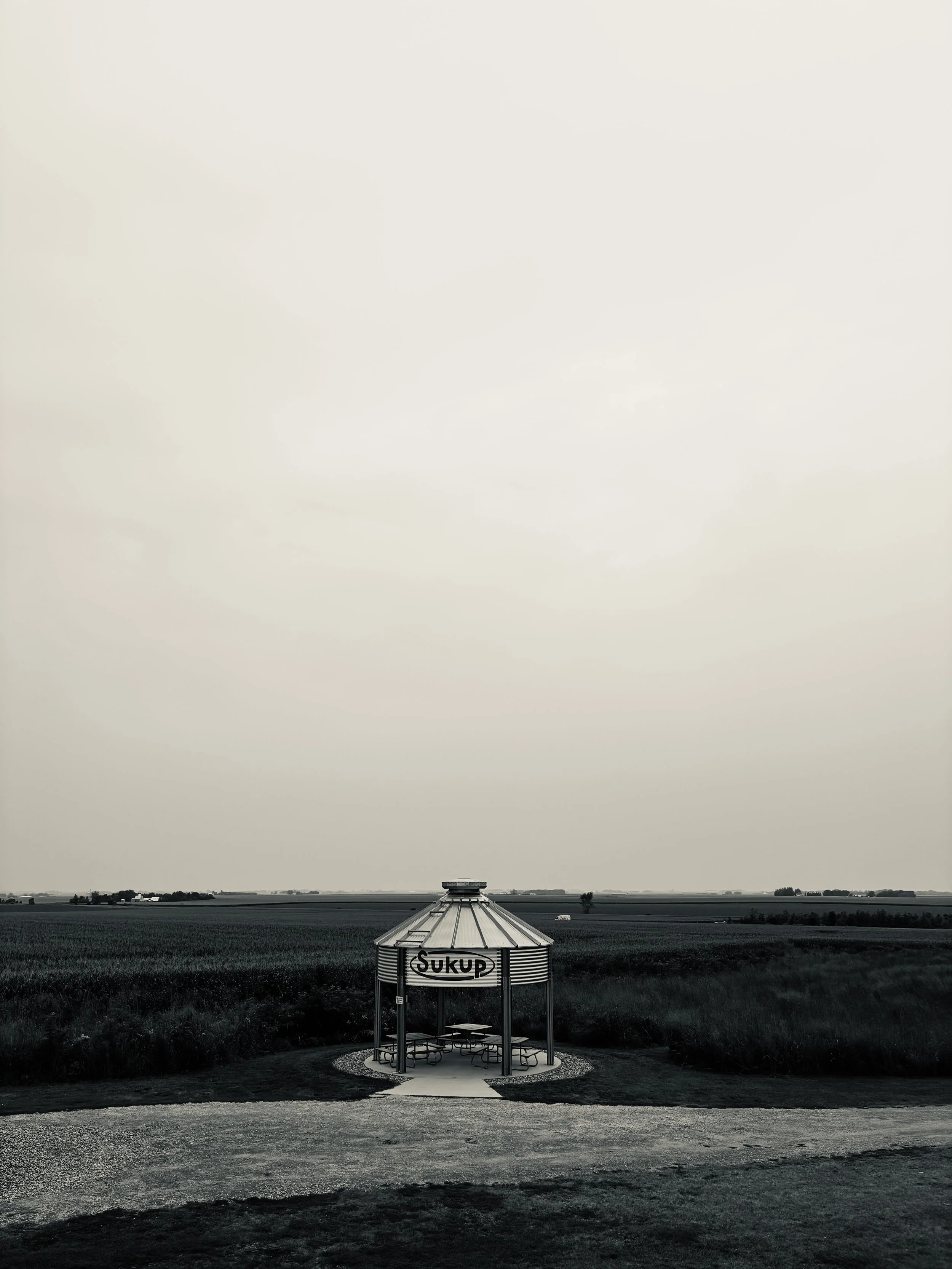
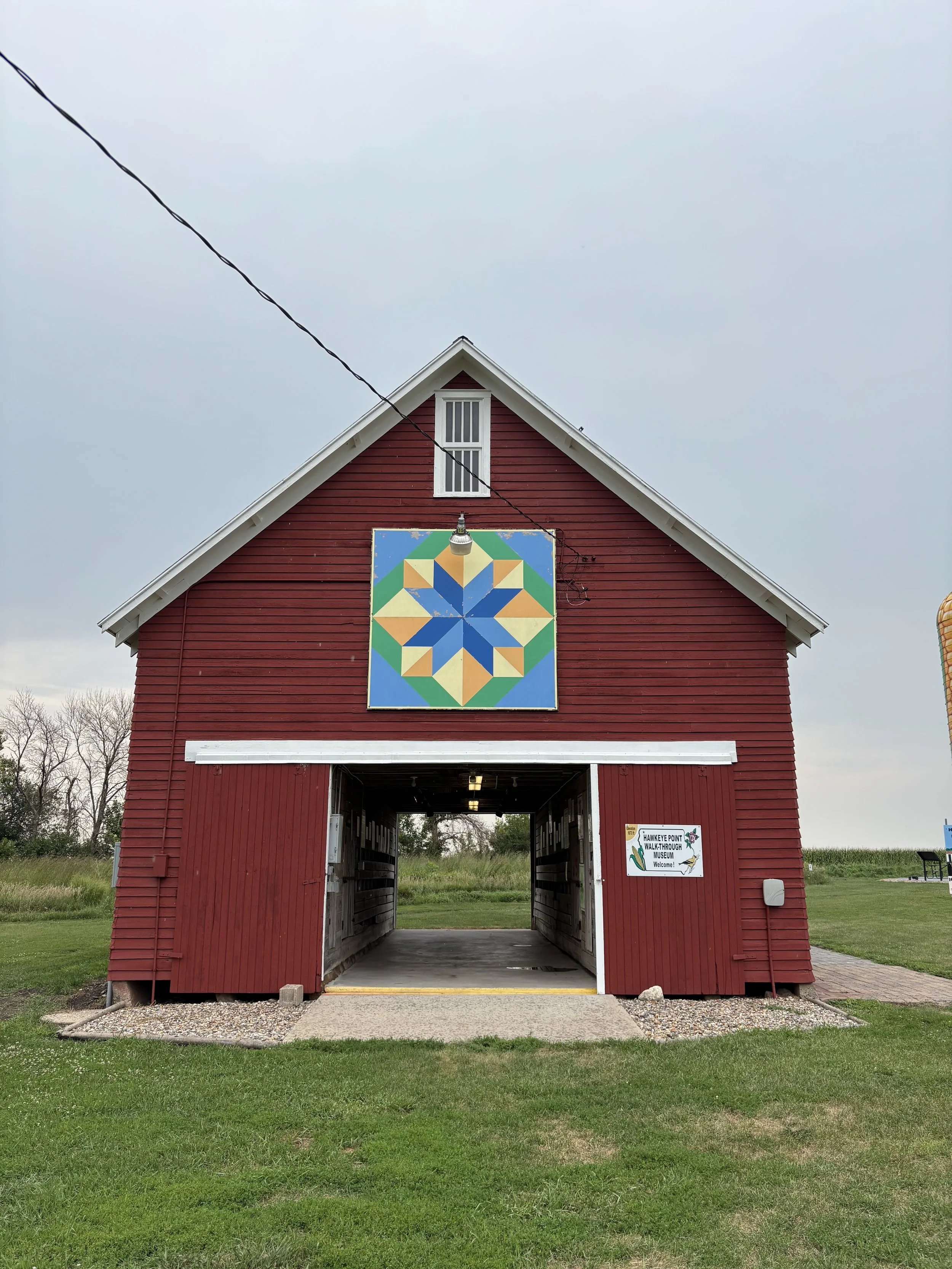
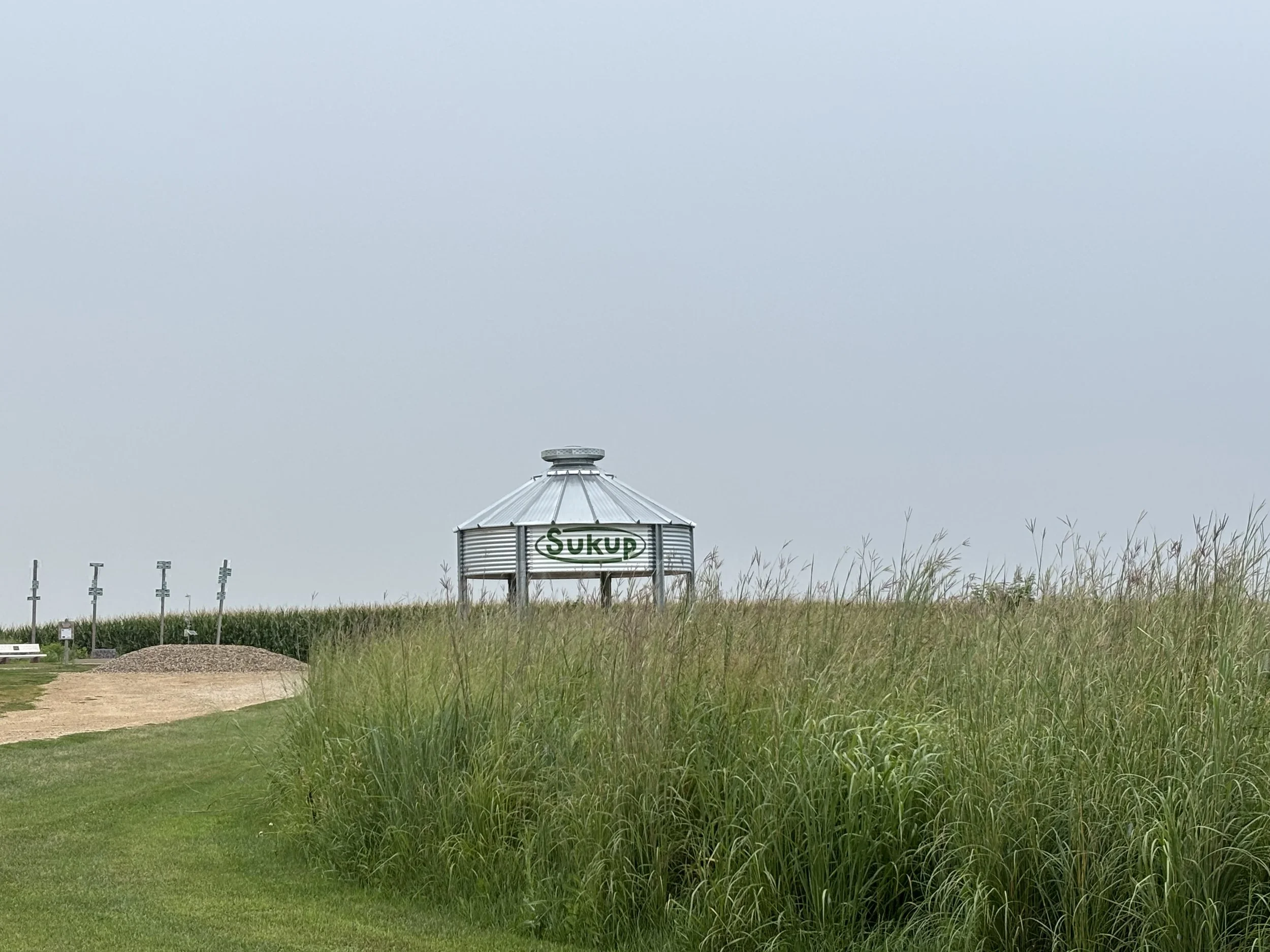
From Decorah we headed almost directly west along route 9—through Cresco and Saratoga, New Haven and Osage, Riceville and Lakota—until we peeled off in late afteroon, just before South Dakota, and first glimpsed the corn silo of Hawkeye Point thrusting skyward just off of the highway.
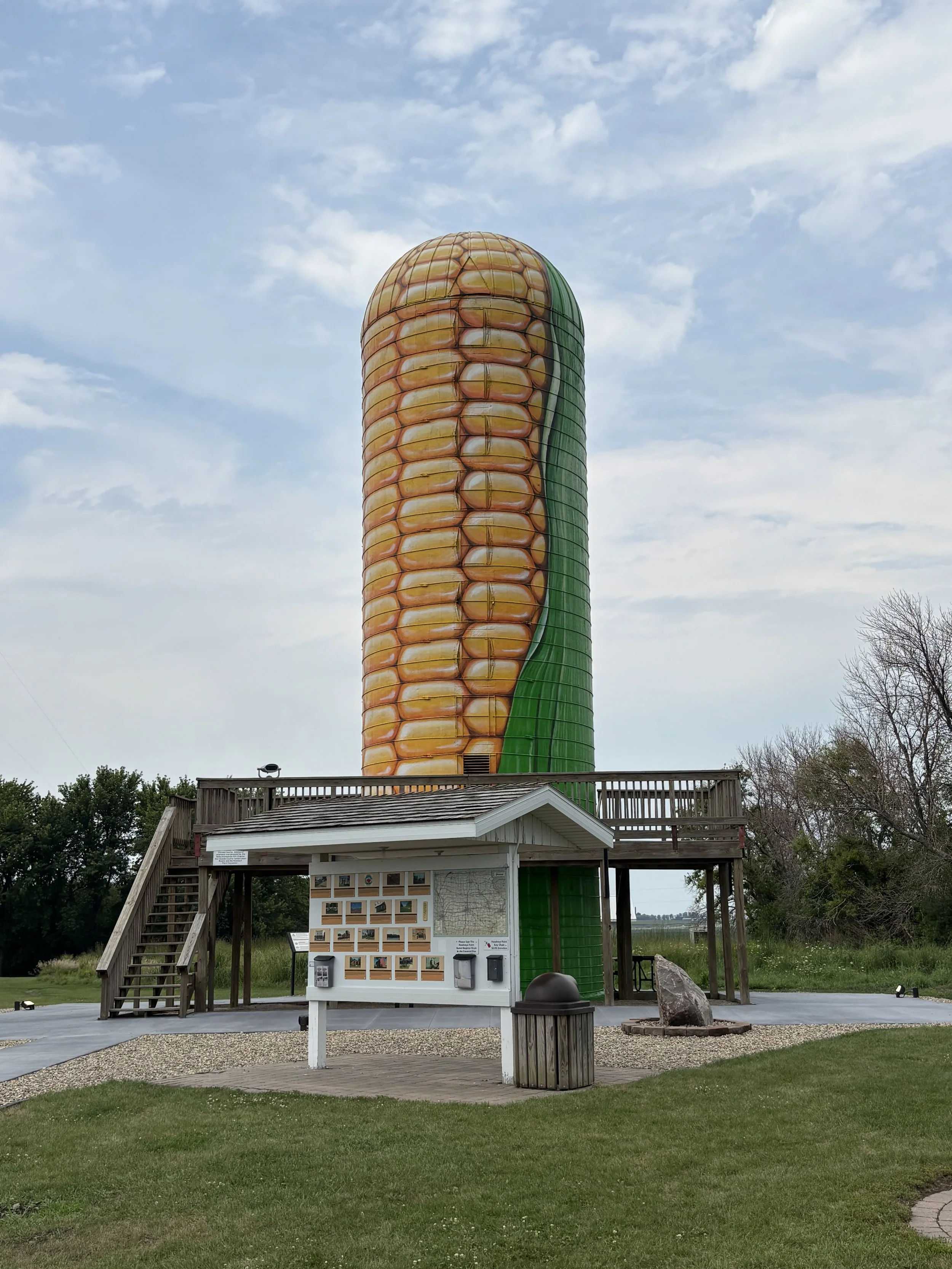
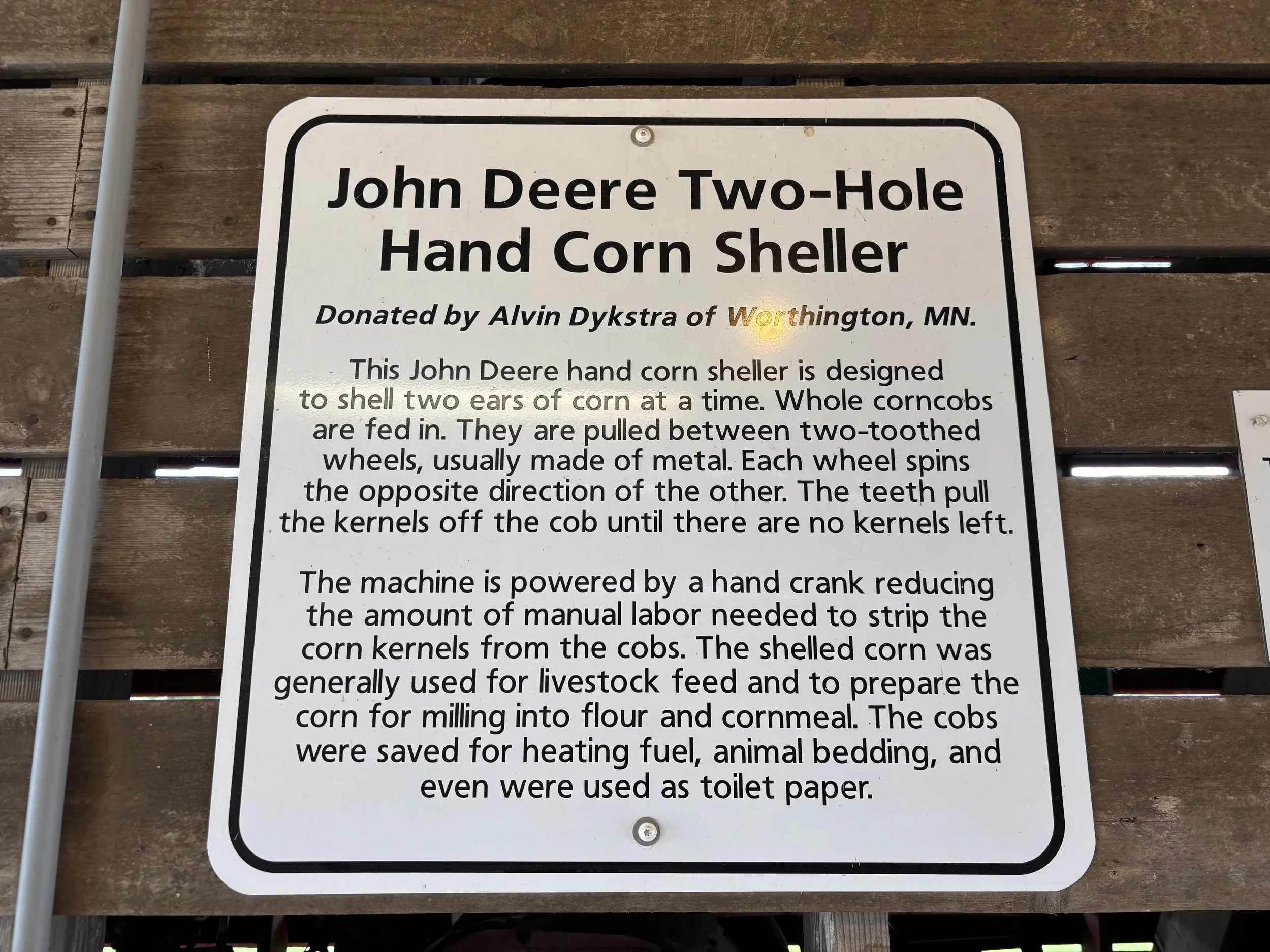
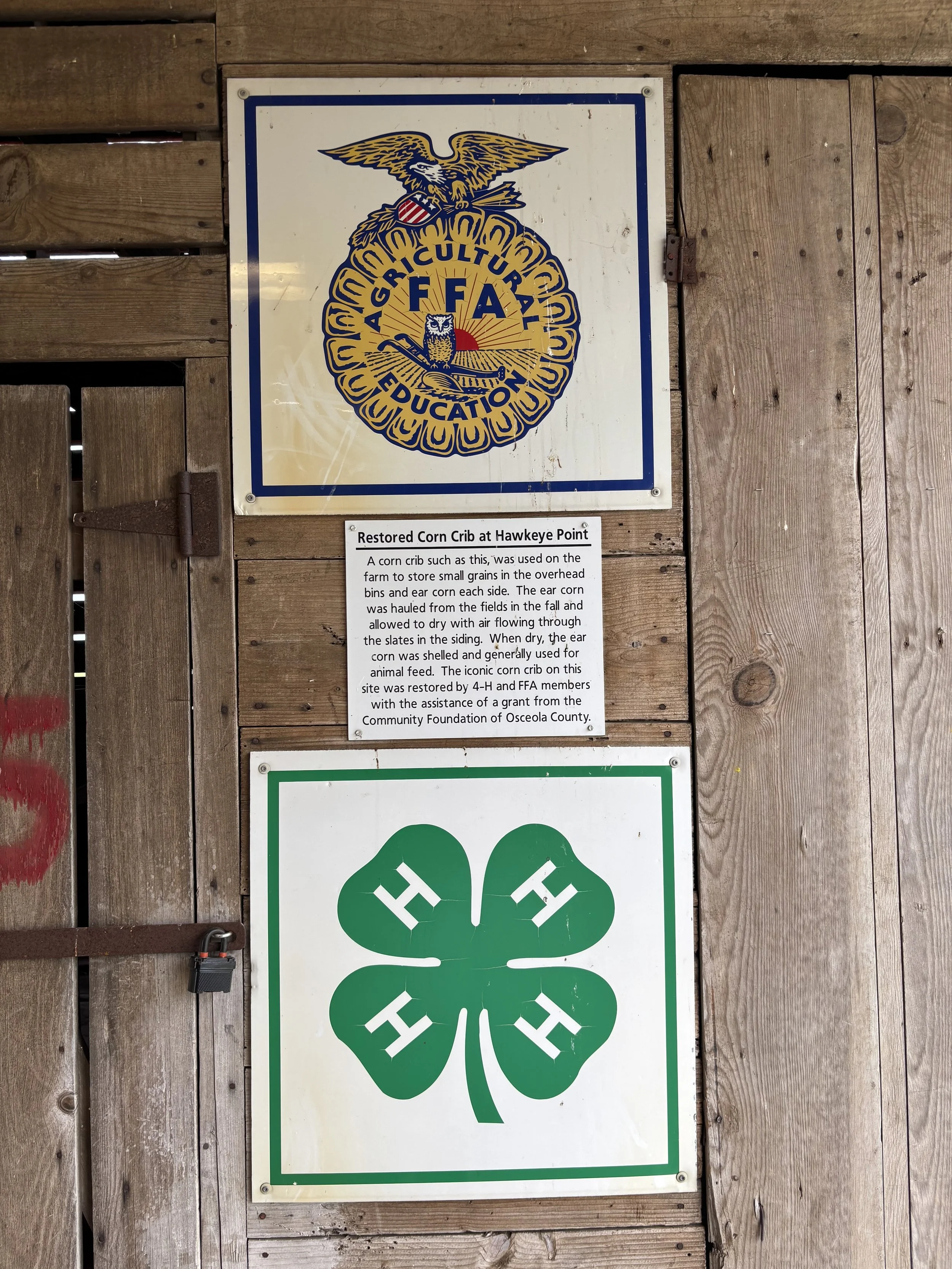
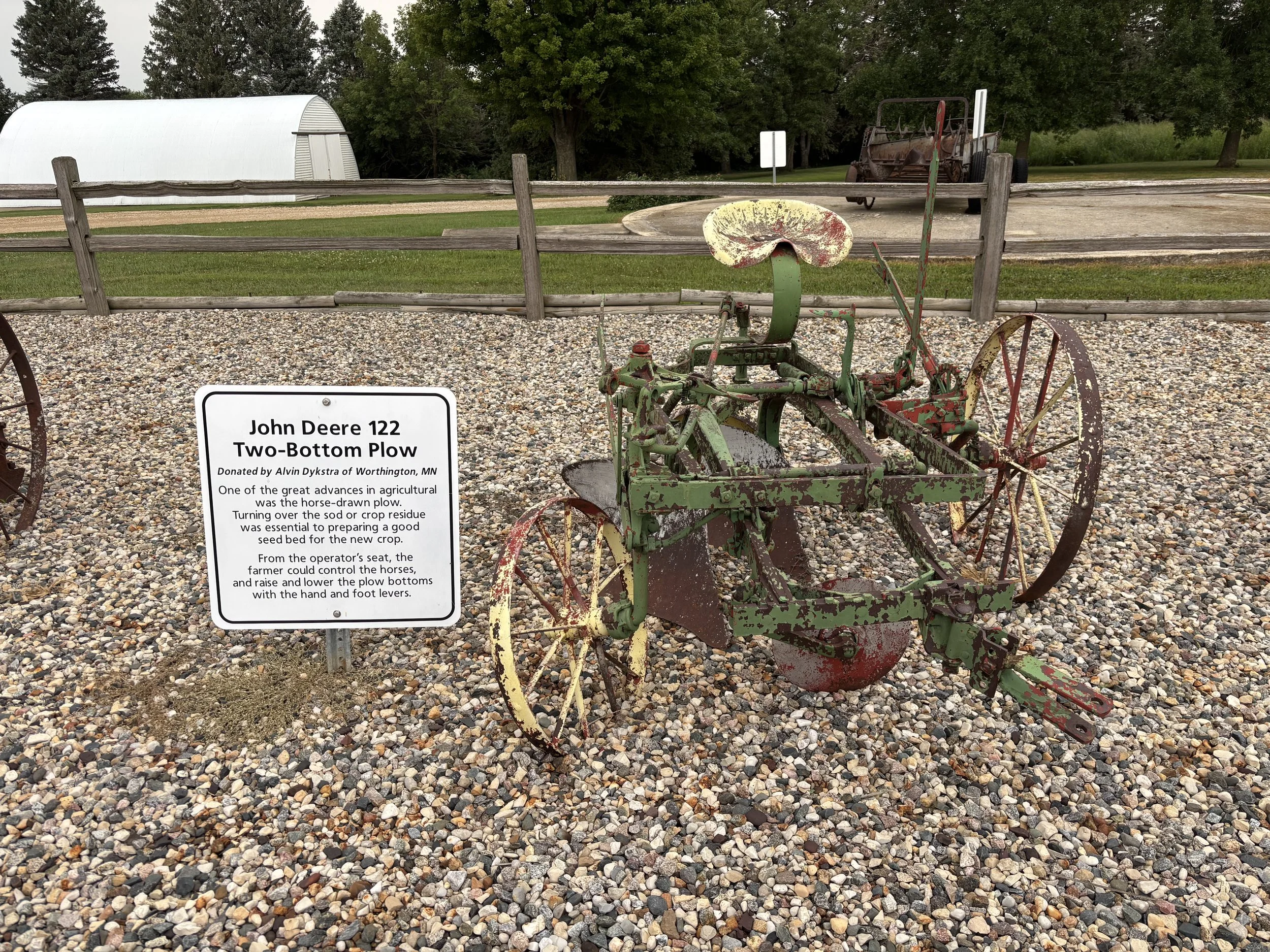
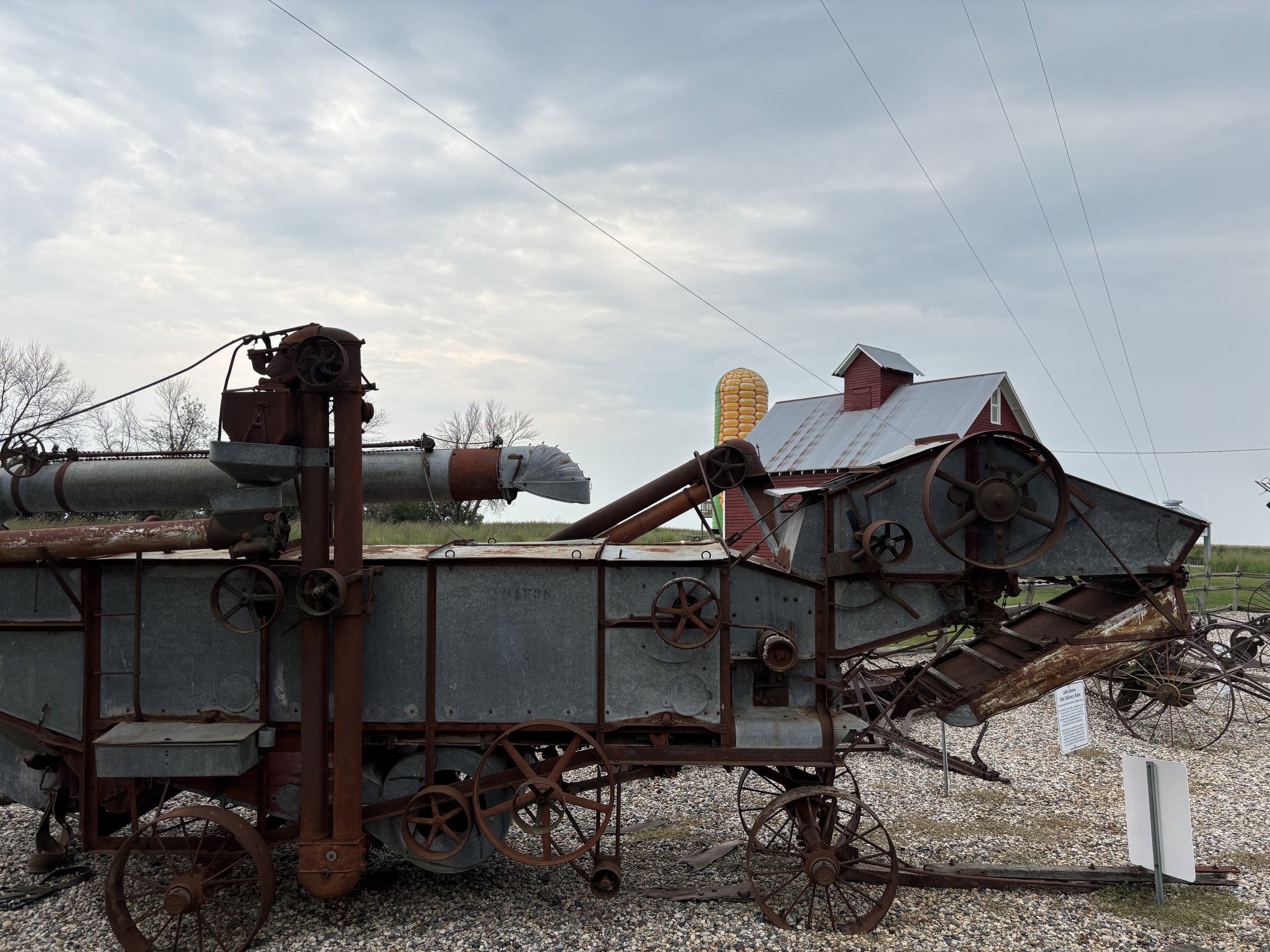
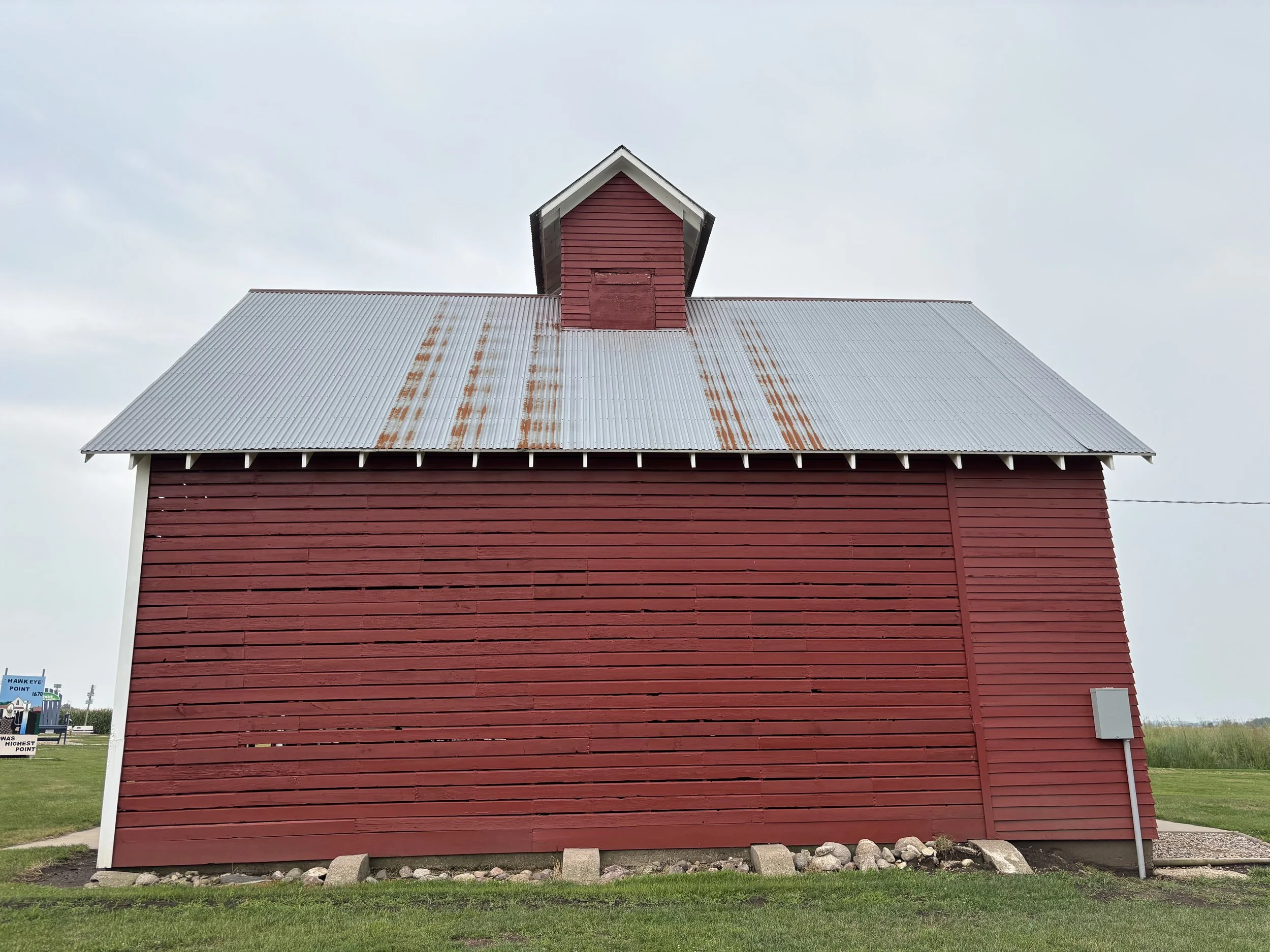
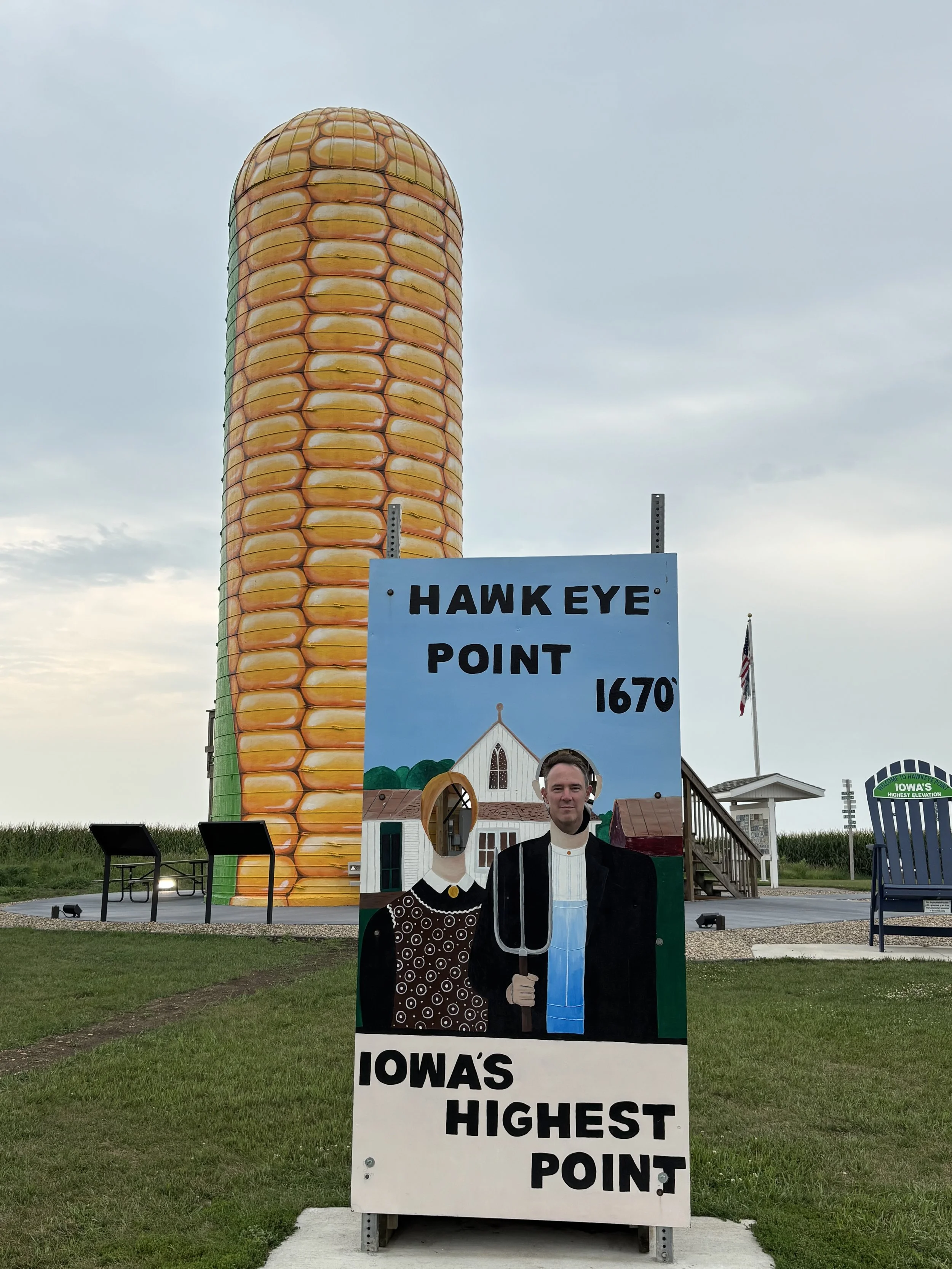
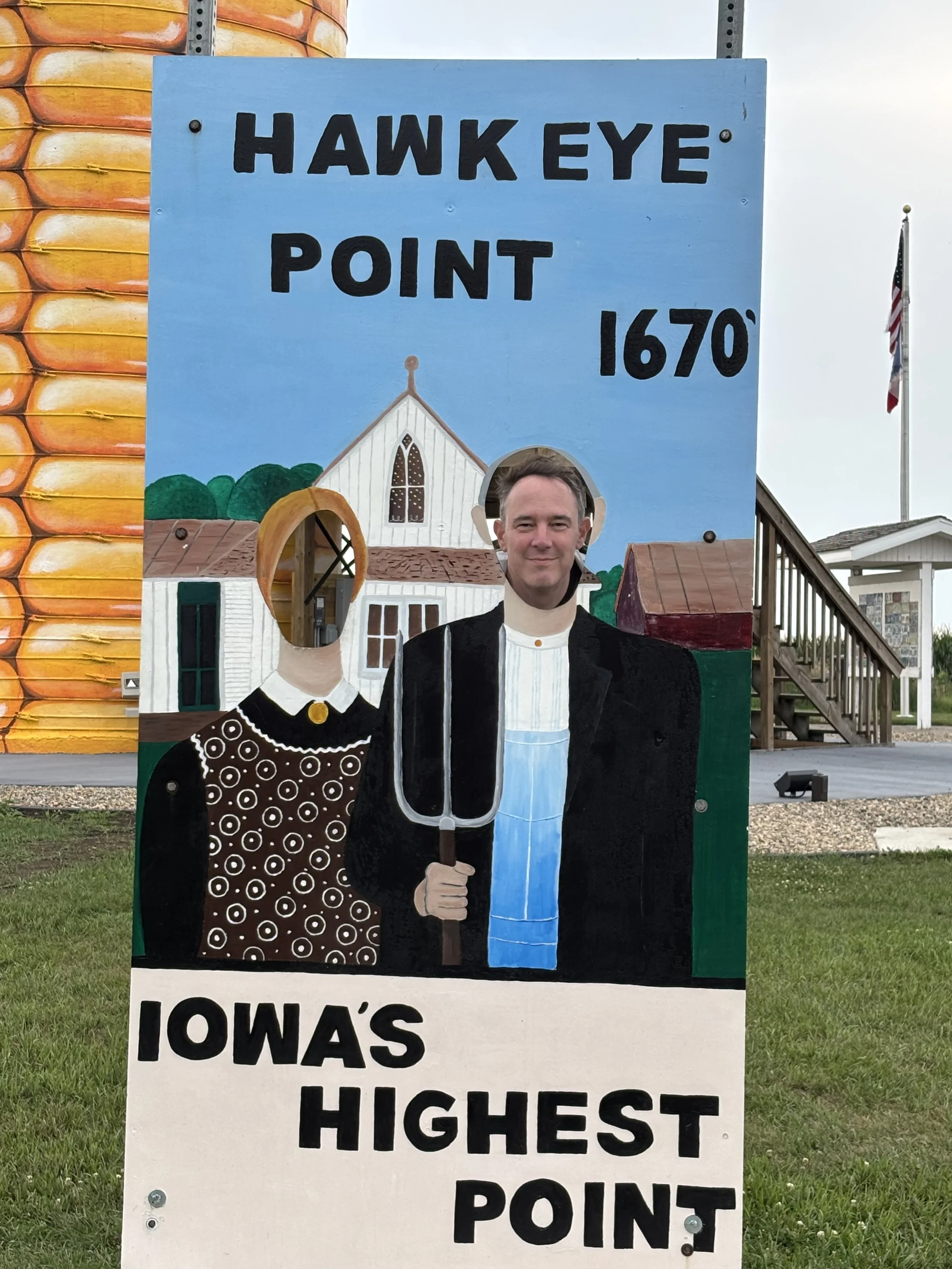
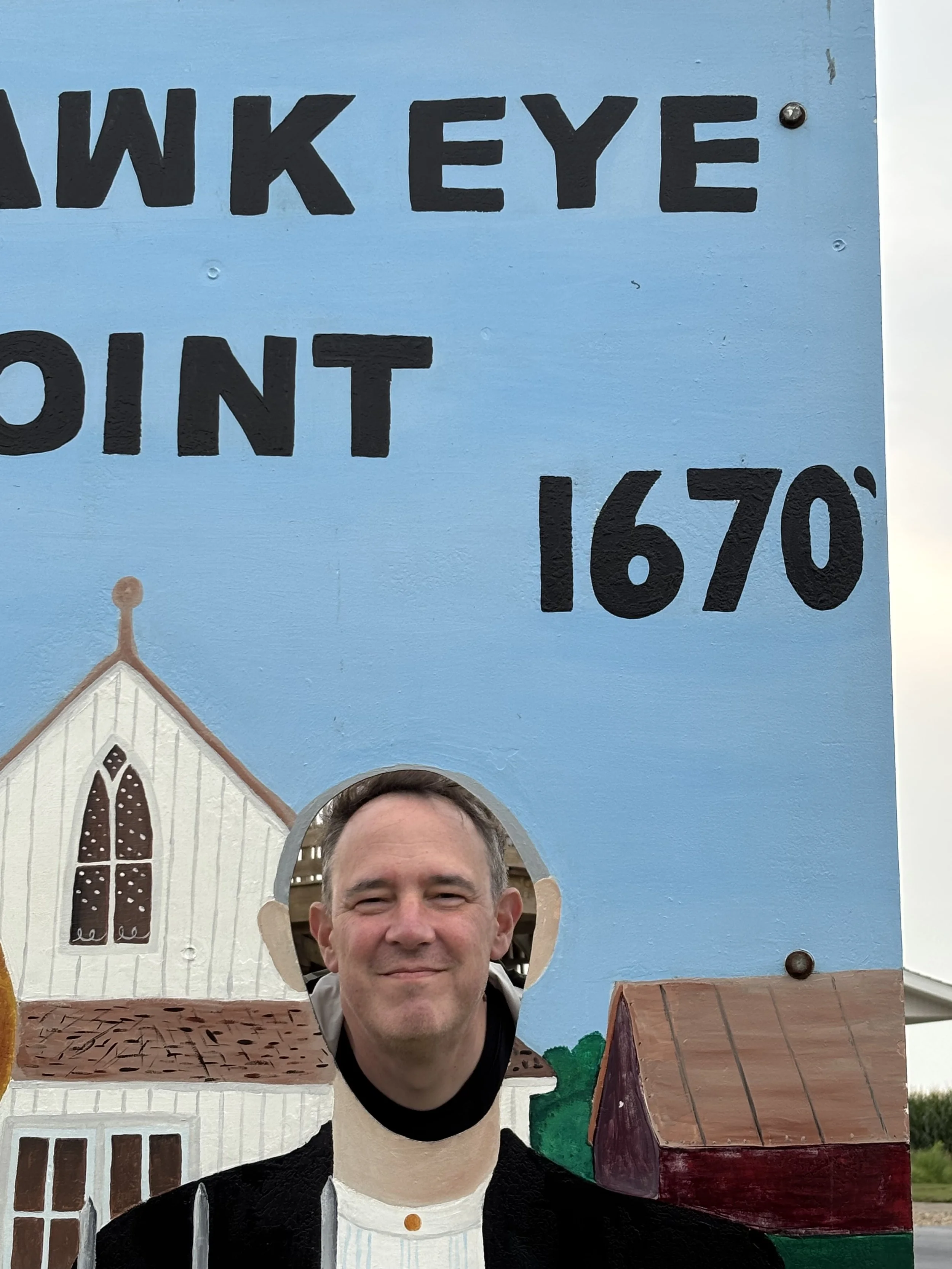
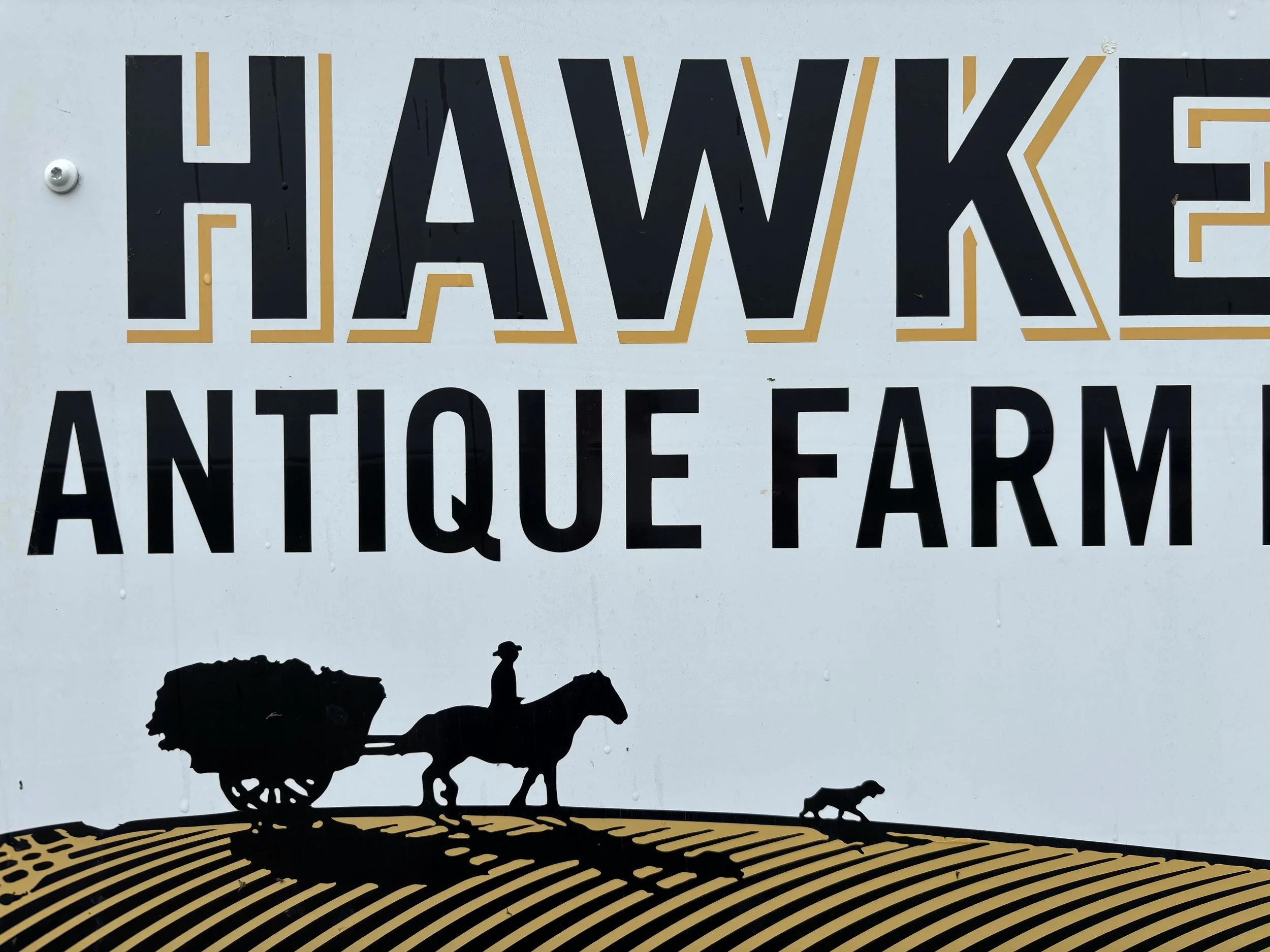
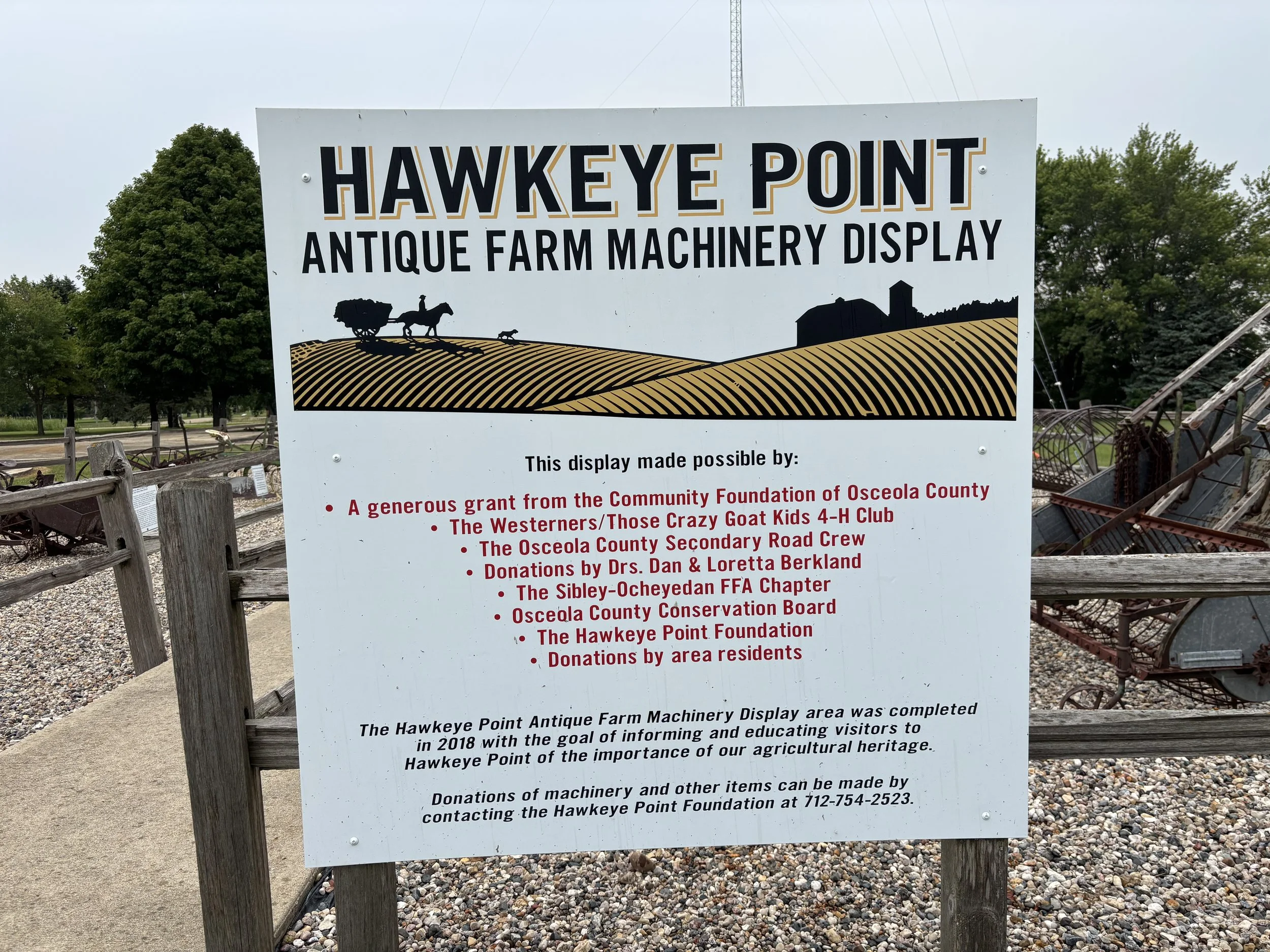
Rain began to splatter the rental car right as I finished shooting my little video of the outdoor tractor museum, which included a corn hiller, a potato planter, and a walk-behind plow. Bea refused to oblige as I alone stuck my head through the American Gothic billboard, cross-eyed with fatigue, looking not so distant from the puckered dentist in Grant Wood’s iconic original that I had stood before not days earlier among the pop-addled thrumming of the Art Institute.




Of Mazes and Effigies
At one point earlier in my life I had planned to ride my bicycle across Iowa. Some dreams do die, and this two-day jaunt will now forever suffice. Kudos to the custodians of Hawkeye Point, whose homage to the state and its fertile history is among the finest I’ve encountered.